
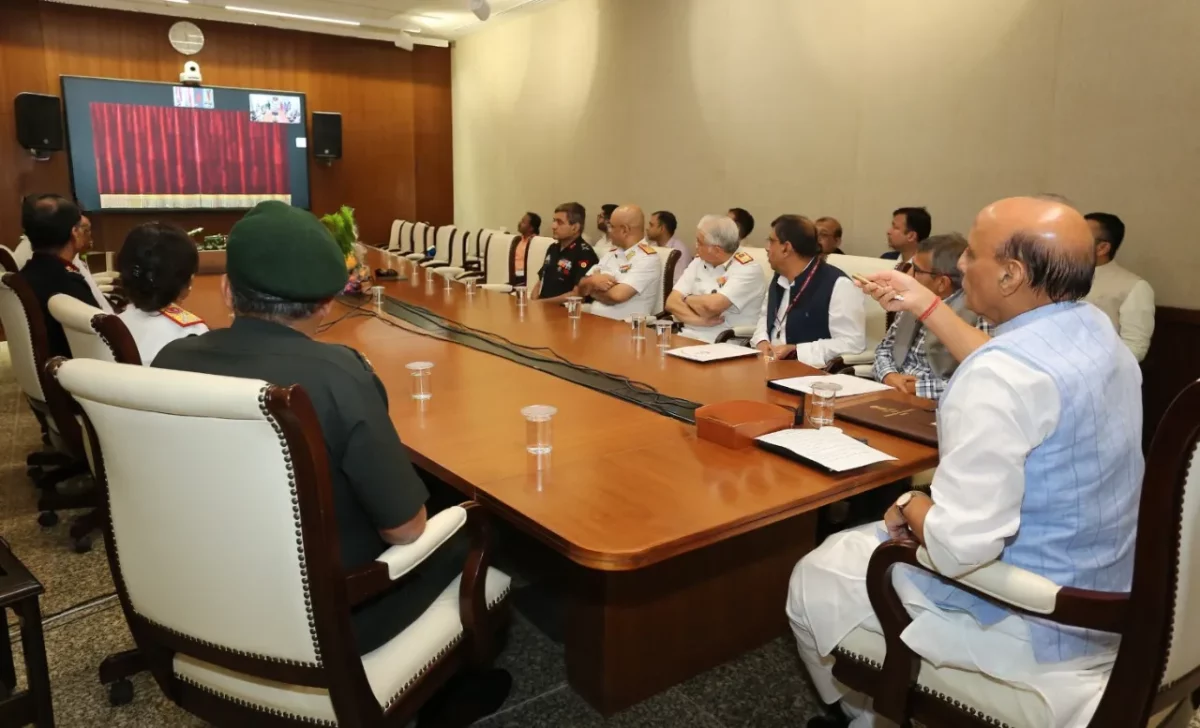
Raksha Mantri Rajnath Singh on Tuesday virtually inaugurated the Department of Military Medicine at the Command Hospital (Central Command) in Lucknow, marking the establishment of India’s first dedicated academic and operational department exclusively focused on military medicine. The landmark initiative is aimed at enhancing combat medical preparedness, advancing indigenous research, developing specialised military medical doctrines and equipping the Armed Forces to address emerging battlefield and humanitarian challenges.





Established under the aegis of the Directorate General of Medical Services (Army), the new department represents a major milestone in strengthening the operational medical preparedness of the Armed Forces Medical Services (AFMS). Designed as a research and development hub as well as a Centre of Excellence, the department will focus on developing specialised expertise to support military operations across conventional and non-conventional conflict scenarios while also enhancing India’s disaster response capabilities.
Addressing the inauguration ceremony virtually, Rajnath Singh emphasised that while economic growth and social development remain vital pillars of nation-building, the ultimate guarantee of a nation’s sovereignty and progress lies in the strength, confidence and morale of its armed forces. He expressed confidence that the Department of Military Medicine would significantly enhance national security by ensuring world-class medical support for soldiers deployed in demanding operational environments.
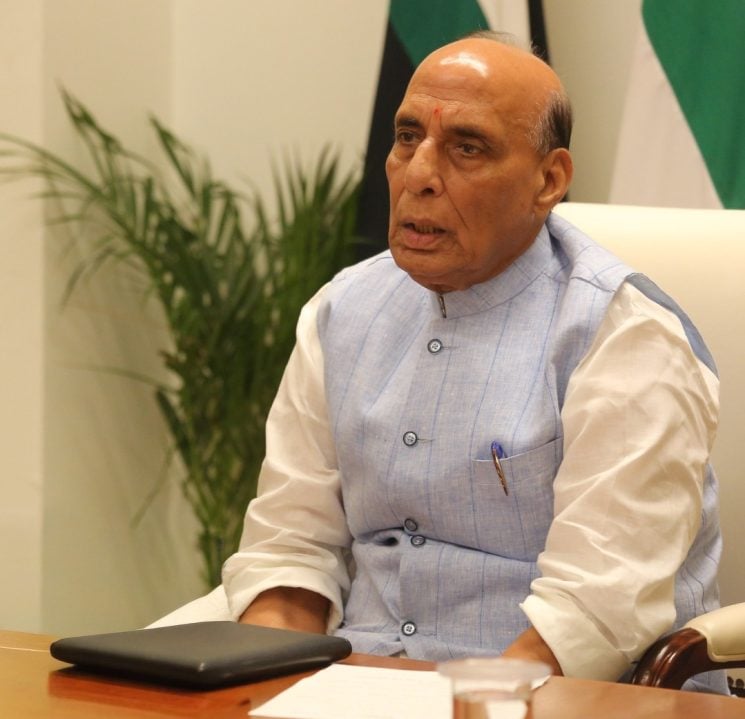
“The department will strengthen the confidence of our soldiers by assuring them that they will receive the best possible care and support whenever they need it,” the Defence Minister said, adding that medical preparedness is an indispensable component of combat effectiveness.
The Department of Military Medicine has been conceived as the principal academic, doctrinal and research institution for military medicine in India. It will provide structured education, specialised training and postgraduate programmes in disciplines such as combat medicine, combat surgery and trauma care while promoting indigenous research tailored to India’s unique operational requirements.
The department will focus on several critical domains including Military Trauma and Damage Control, Combat Psychiatry and Psychological Resilience, Environmental and Operational Medicine, Military Medical Logistics, Chemical, Biological, Radiological, Nuclear and Explosive (CBRNe) Medical Response, Emergency Medicine and Critical Care, Disaster Medicine, Humanitarian Assistance and Disaster Relief (HADR), as well as Research, Medical Audit and Data Analytics.
It will also drive innovation in emerging fields such as technology-enabled battlefield medicine, telemedicine, prolonged field care, simulation-based military medical training and AI-supported medical decision-making systems, ensuring that India’s military healthcare ecosystem remains aligned with the evolving character of warfare.
The Defence Minister highlighted that military medicine has become increasingly important in the modern security environment, where soldiers operate in some of the world’s harshest terrains and climatic conditions. Drawing a comparison with aerospace medicine, he explained that military medicine studies the physical and psychological impact of warfare and operational deployments on military personnel, enabling the development of specialised medical protocols suited to diverse operational environments.
“Our soldiers serve in some of the most challenging regions and climates across the world. This department will develop medical protocols specifically designed for such operational conditions,” Rajnath Singh observed.
Emphasising the changing nature of warfare, the Raksha Mantri noted that the threat posed by weapons of mass destruction, including chemical, biological, radiological and nuclear threats, continues to remain relevant despite advances in conventional weapon systems. He stated that the new department would function as a major research and development hub capable of preparing the nation to effectively counter emerging threats arising from rapid technological advancements and evolving battlefields.
The department is planned to be developed in multiple phases. The initial stage will focus on establishing academic programmes and institutional infrastructure. Subsequent phases will witness the creation of dedicated Centres of Excellence for Humanitarian Assistance and Disaster Relief (HADR) and CBRNe Medicine before ultimately evolving into a nationally and internationally recognised centre for military medicine and battlefield healthcare research.
Highlighting India’s expanding global role, Rajnath Singh pointed out that as one of the largest contributors to United Nations peacekeeping missions and a responsible global power, the Indian Armed Forces regularly undertake humanitarian assistance and disaster relief operations both within the country and overseas. He stated that the Department of Military Medicine would significantly enhance India’s expertise in disaster response, field hospital deployment, epidemic management and mass casualty care, thereby strengthening both national and international humanitarian missions.
The Defence Minister also stressed the importance of preventive healthcare, describing it as the first line of defence before medical treatment becomes necessary. He called for building a robust preventive healthcare framework centred on disease surveillance, immunisation, sanitation, nutrition, occupational health, physical fitness and regular medical screening for military personnel.
Rajnath Singh advocated the use of advanced technologies including artificial intelligence, wearable health-monitoring devices, predictive analytics and modern diagnostic systems to facilitate real-time monitoring of soldiers’ health and early identification of potential medical risks. According to him, preventive healthcare directly contributes to combat readiness and national security by ensuring that troops remain physically and mentally fit for operational duties.
The Defence Minister further expressed hope that the department would create a new avenue for young doctors serving in the Army Medical Corps by offering specialised education and super-specialisation in military medicine. He noted that this would not only strengthen the intellectual capital of the Armed Forces but also elevate India’s standing in military medical research at the global level.
The Department of Military Medicine is also expected to become an important training centre for young Army Medical Corps officers, particularly in battlefield nursing, advanced trauma life support and operational medicine, ensuring that military doctors remain prepared to deliver specialised care under combat conditions.
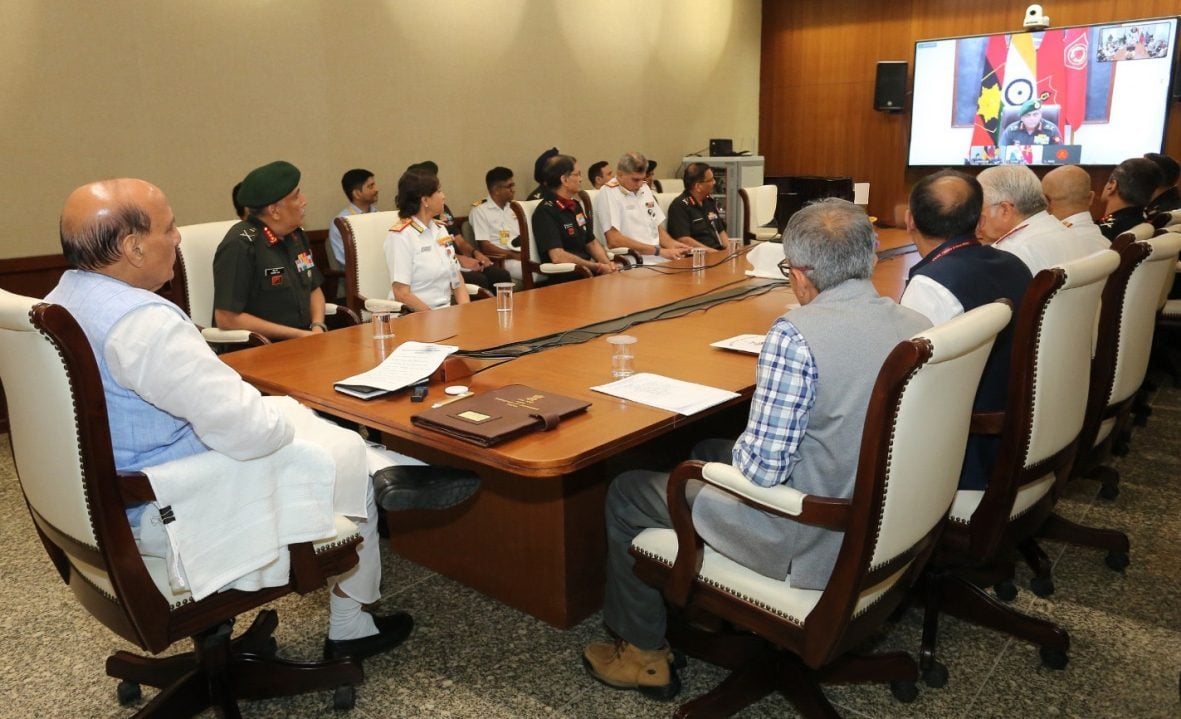
Concluding his address, Rajnath Singh described the establishment of the department as a revolutionary step in the transformation of India’s military healthcare system. He urged all stakeholders to work collectively towards developing it into the world’s finest Battlefield Medicine Research Centre capable of supporting the future requirements of the Indian Armed Forces.
The inauguration ceremony was attended by Chief of the Army Staff General Dhiraj Seth, Defence Secretary Rajesh Kumar Singh, Vice Chief of the Army Staff Lieutenant General Sandeep Jain, General Officer Commanding-in-Chief Central Command Lieutenant General Anindya Sengupta, Director General Armed Forces Medical Services Surgeon Vice Admiral Arti Sarin, Adjutant General Lieutenant General VPS Kaushik, Director General Medical Services (Army) Lieutenant General CG Muralidharan, Additional Secretary (Department of Defence) Manish Tripathi, Commandant of Command Hospital (Central Command) Major General Alok Bhalla and several other senior military and government officials.
The establishment of the Department of Military Medicine aligns with the Government of India’s vision of strengthening indigenous capabilities, enhancing defence preparedness and transforming the Armed Forces Medical Services into a modern, technology-enabled and operationally relevant healthcare system. It also complements the proposed Global Military Medicine Centre envisioned under the Raksha Strategy Vision 2026-30, positioning India to emerge as a global leader in military medicine, battlefield healthcare and humanitarian medical response.