

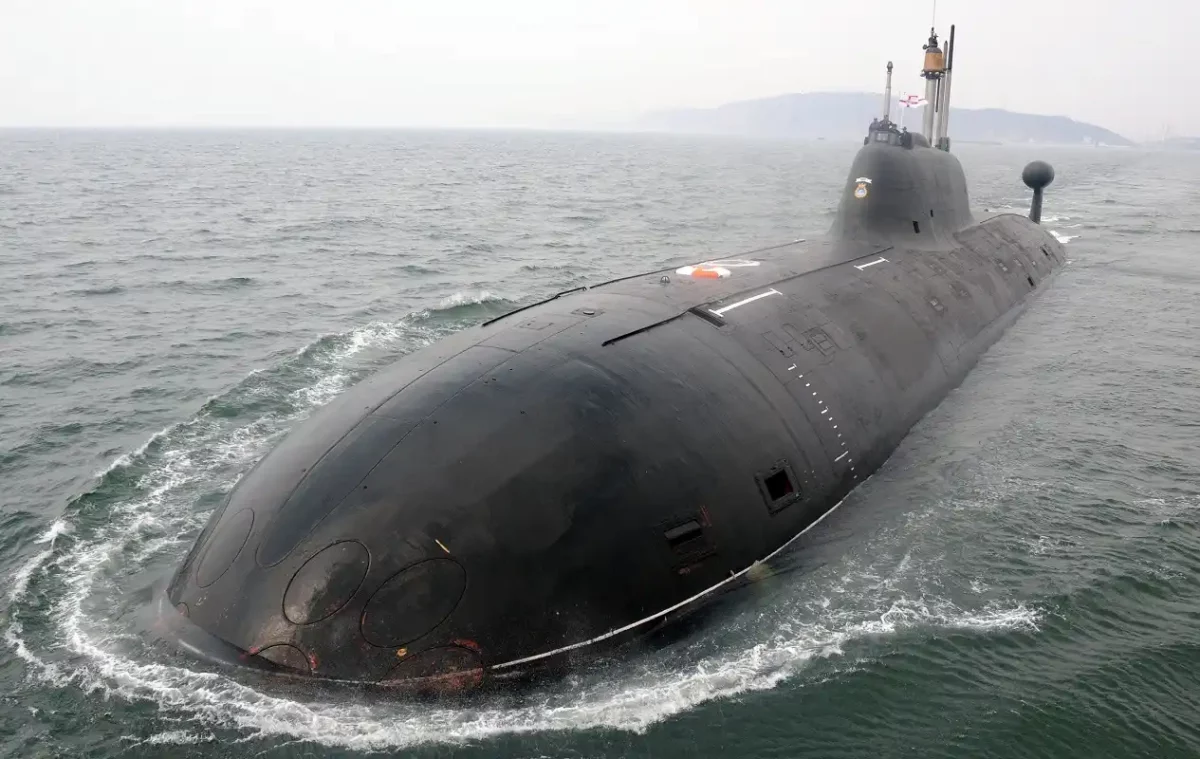
India and Germany are on the verge of concluding one of the country’s largest-ever defence procurement programmes, with the long-awaited Project-75(I) submarine agreement expected to be signed in the coming weeks. The deal, estimated at nearly €8 billion (over ₹90,000 crore), will pave the way for the construction of six next-generation conventional submarines in India, substantially strengthening the Indian Navy’s underwater combat capabilities while advancing the country’s defence self-reliance objectives.





German Ambassador to India Philipp Ackermann expressed confidence that the agreement could be finalised as early as next month, describing the project as a major milestone in Indo-German defence cooperation. Speaking on the sidelines of an industry event organised by the Indo-German Chamber of Commerce (IGCC), the envoy indicated that negotiations have reached an advanced stage and that both sides are optimistic about concluding the agreement soon.
The Project-75(I) programme will be executed through a strategic partnership between Germany’s ThyssenKrupp Marine Systems (TKMS) and India’s Mazagon Dock Shipbuilders Limited (MDL). Under the Government of India’s Strategic Partnership Model and the Make in India initiative, the submarines will be constructed at Mazagon Dock in Mumbai with extensive technology transfer and a progressively increasing indigenous content, strengthening India’s domestic submarine-building capability.
At the heart of the project is the German Type 214 diesel-electric attack submarine, one of the world’s most advanced conventional submarine designs. Developed by Germany’s Howaldtswerke-Deutsche Werft (HDW), the Type 214 combines the proven hull architecture of the widely exported Type 209 submarines with the cutting-edge hydrogen fuel-cell-based Air Independent Propulsion (AIP) technology developed for the Type 212A.
The AIP system is considered one of the submarine’s most significant operational advantages. Unlike conventional diesel-electric submarines, which must periodically surface or snorkel to recharge their batteries, an AIP-equipped submarine can remain submerged for extended periods, dramatically reducing its chances of detection. This enhanced underwater endurance makes it particularly effective for intelligence gathering, surveillance, sea denial operations and covert strike missions.
The Type 214 measures approximately 65 metres in length with a beam of 6.3 metres and a draught of around six metres. It has a surfaced displacement of about 1,690 tonnes and a submerged displacement of approximately 1,860 tonnes. Constructed using high-yield HY-100 ferromagnetic steel, the pressure hull has been specifically designed to minimise its magnetic signature, making it more difficult for enemy detection systems to locate.
Power is provided by two MTU 16V-396 diesel engines producing nearly 4 MW, coupled with a Siemens Permasyn permanent magnet electric motor generating approximately 2.85 MW. The submarine also features two Polymer Electrolyte Membrane (PEM) hydrogen fuel-cell modules developed by HDW, each producing 120 kW of power. The propulsion architecture is designed to operate with both conventional lead-acid batteries and future lithium-ion battery technologies, offering flexibility for future upgrades.
In terms of performance, the submarine can achieve speeds of 10 to 12 knots while surfaced and approximately 20 knots when submerged. During silent operations using the Air Independent Propulsion system, it cruises efficiently at speeds between two and six knots while remaining virtually undetectable.
The Type 214 is capable of operating at depths exceeding 250 metres, with some estimates placing its maximum diving depth at around 400 metres. It possesses an operational endurance of up to 84 days and can reportedly remain continuously submerged for nearly three weeks while operating exclusively on its fuel-cell-based AIP system. Its range extends to approximately 12,000 nautical miles on the surface and over 1,200 nautical miles underwater using fuel-cell propulsion.
The submarine is equipped with eight 533 mm bow torpedo tubes capable of launching heavyweight wire-guided torpedoes, including the advanced DM2A4 Seahake and Black Shark torpedoes. It can also deploy submarine-launched anti-ship missiles such as the UGM-84 Sub-Harpoon, providing it with potent anti-surface warfare capabilities.
Its combat management architecture includes the advanced ORCCA Combat Management System integrated with the ISUS-90 sonar and weapon control suite. The submarine also features the SPHINX-D Low Probability of Intercept navigation radar, advanced torpedo countermeasure systems and a modular payload architecture capable of accommodating future mission-specific equipment. Optical sensor configurations can be customised based on operational requirements, while dedicated facilities allow the deployment of Special Operations Forces during covert missions.
Stealth remains one of the defining characteristics of the Type 214. The submarine incorporates an X-rudder configuration that enhances underwater manoeuvrability while reducing hydrodynamic noise. Its permanent magnet electric propulsion system offers continuously variable speed control, significantly lowering acoustic emissions. Combined with reduced magnetic signatures and high shock-resistance standards, these features substantially improve survivability in contested maritime environments.
The Type 214 is operated by a crew of 27 personnel, including five officers and twenty-two sailors, reflecting its high degree of automation and efficient onboard systems.
For the Indian Navy, Project-75(I) represents one of the most significant capability enhancement programmes in recent decades. The Navy currently operates a mix of Kalvari-class (Scorpène), Kilo-class and Shishumar-class submarines, many of which are approaching the later stages of their service life. The induction of six advanced Type 214-based submarines will significantly strengthen India’s underwater warfare capabilities at a time when submarine activity in the Indian Ocean Region is steadily increasing.
Beyond operational capability, the project is expected to deliver substantial technological and industrial benefits. The transfer of advanced submarine design, construction and systems integration technologies will strengthen India’s indigenous defence manufacturing ecosystem while generating highly skilled employment and enhancing domestic expertise in one of the world’s most complex areas of naval engineering.
The agreement also reflects the growing strategic partnership between India and Germany, which has expanded significantly in recent years across defence, technology, maritime security and industrial cooperation. Once signed, Project-75(I) will not only bolster the Indian Navy’s ability to safeguard national maritime interests but also mark a major step towards achieving India’s long-term vision of defence self-reliance and indigenous naval capability development.