
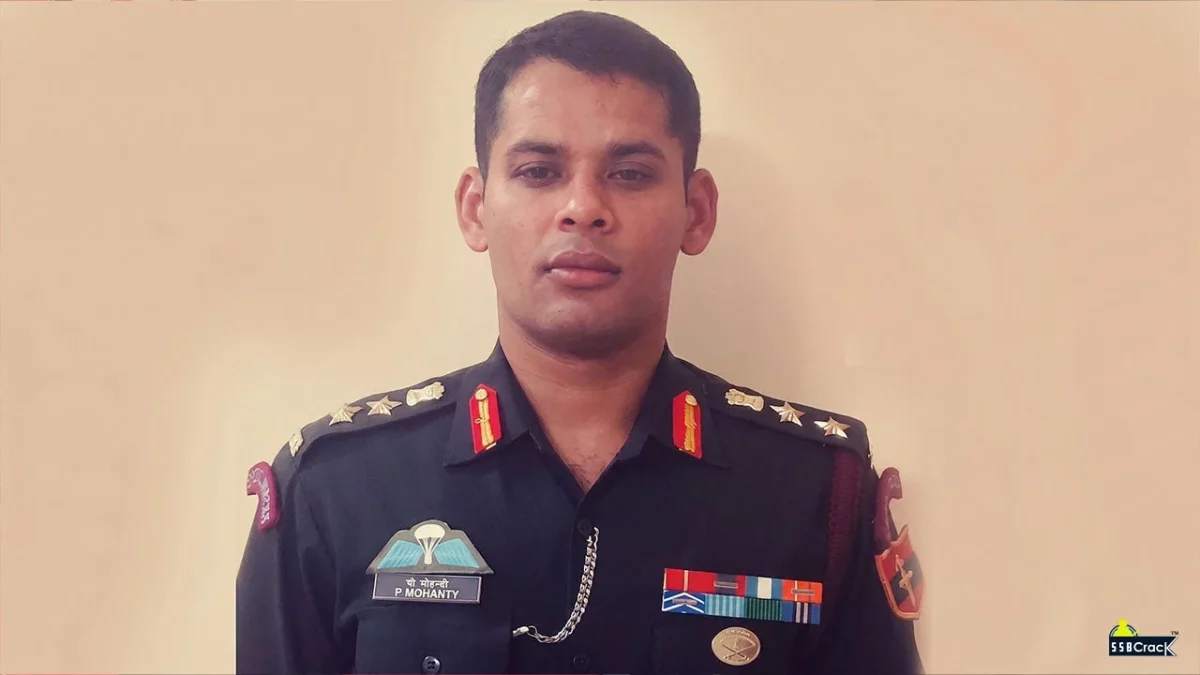
Colonel Punyabachi Mohanty, YSM, SM, is a decorated Indian Army officer from Odisha who served as the Commanding Officer of the prestigious 9th Battalion, The Parachute Regiment (Special Forces), commonly known as 9 Para SF. A second-generation military officer, Colonel Mohanty followed his father into the Indian Army and established an accomplished career of his own. His decorations recognise service in two markedly different operational environments: counter-terrorism duties associated with Jammu and Kashmir and military operations undertaken during the confrontation along the Line of Actual Control in Eastern Ladakh.
His journey reflects the combination of family tradition, professional competence and operational leadership required to command one of the Indian Army’s most respected Special Forces battalions.
A Distinguished Military Family
Colonel Punyabachi Mohanty comes from a family with a long association with the Indian Army.
His father, Lieutenant General J.K. Mohanty, PVSM, UYSM, SM, VSM, was a senior officer of the Dogra Regiment who rose to become General Officer Commanding-in-Chief of the Indian Army’s Central Command. Available records place his tenure as Army Commander from January 2009 to February 2010.
Lieutenant General Mohanty received several major military decorations during his career, including the Param Vishisht Seva Medal, Uttam Yudh Seva Medal, Sena Medal and Vishisht Seva Medal.
When Colonel Punyabachi Mohanty received the Yudh Seva Medal in 2021, Odisha-based reports highlighted the similarities between the careers of father and son. Both officers belonged to the Dogra Regiment, attained important operational appointments and were recognised with military decorations for their service.
However, Colonel Mohanty’s achievements were earned through his own progression in the Army, including the demanding process of volunteering for and serving with the Parachute Regiment’s Special Forces.
From the Dogra Regiment to Para Special Forces
Colonel Punyabachi Mohanty was commissioned into the Dogra Regiment, the same regiment in which his father had served.
He subsequently volunteered for the Indian Army’s Special Forces. Entry into a Para SF battalion is not automatic. Officers and soldiers volunteering for these units must undergo an exceptionally demanding probation designed to test their physical endurance, mental resilience, tactical ability, motivation and capacity to operate under extreme pressure.
Only those who successfully complete the selection process are permanently absorbed into a Special Forces battalion.
Colonel Mohanty became associated with the 9th Battalion, The Parachute Regiment (Special Forces). The unit is one of the oldest and most respected Special Forces formations in the Indian Army and has extensive experience in mountainous terrain, counter-terrorism operations and other strategically sensitive assignments.
His progression from a regimental officer to the commanding officer of 9 Para SF represented a major professional achievement. Command of any infantry battalion is considered one of the defining appointments in an Army officer’s career. Commanding a Special Forces battalion carries an additional level of responsibility because of the sensitive, specialised and often high-risk nature of its operational tasks.
Sena Medal in 2019
Colonel Mohanty, then holding the rank of Lieutenant Colonel, was awarded the Sena Medal in the Independence Day military awards announced in August 2019.
The official Ministry of Defence list identified him by service number IC-63780L and recorded his unit as the 9th Battalion, The Parachute Regiment (Special Forces).
Contemporary reporting also listed Lieutenant Colonel Punyabachi Mohanty among the recipients of the Sena Medal for gallantry.
Although detailed citations for Special Forces operations are frequently withheld because of operational-security considerations, reports from Odisha linked the decoration to his outstanding service while serving with 9 Para SF.
The award established him as an officer with significant operational experience even before he assumed command of the battalion.
Yudh Seva Medal in 2021
Colonel Punyabachi Mohanty received the Yudh Seva Medal as part of the Republic Day honours announced in January 2021.
The official awards list recorded him as:
IC-63780L Colonel Punyabachi Mohanty, SM, 9 Para (SF).
The 2021 Republic Day awards included 11 Yudh Seva Medals among the military decorations approved by the President of India.
The Yudh Seva Medal is awarded for distinguished service of a high order during war, conflict or military operations. Unlike the Sena Medal awarded specifically for gallantry, the Yudh Seva Medal is primarily an operational distinguished-service decoration.
Reports published at the time identified Colonel Mohanty as the Commanding Officer of 9 Para SF and associated his recognition with the Indian Army’s operations during the confrontation in Eastern Ladakh.
The broader military deployment undertaken in response to the border crisis was known as Operation Snow Leopard. It followed the sharp escalation in tensions between India and China along the Line of Actual Control in 2020.
Leadership During Operation Snow Leopard
The Eastern Ladakh crisis created one of the most serious military confrontations between India and China in decades.
Following the violent clash in the Galwan Valley in June 2020, the Indian Army reinforced its positions across Eastern Ladakh. Troops were deployed to strategically important areas at extreme altitudes, where they faced freezing temperatures, difficult terrain, limited oxygen and considerable logistical challenges.
Operation Snow Leopard involved the mobilisation and deployment of formations with different capabilities. Special Forces units provided specialised reconnaissance, rapid-response and tactical capabilities suited to difficult terrain and sensitive operational situations.
As the commanding officer of 9 Para SF during this period, Colonel Mohanty would have carried responsibility for maintaining the unit’s operational preparedness, training standards, administration and readiness for assigned missions.
Publicly available reports do not disclose the detailed activities undertaken by Colonel Mohanty or his battalion during the operation. Such information is understandably limited because Special Forces deployments and operational methods are rarely discussed in detail.
Nevertheless, the award of the Yudh Seva Medal indicates that his service and leadership during the operational period received recognition at the highest level.
Investiture Ceremony at Udhampur
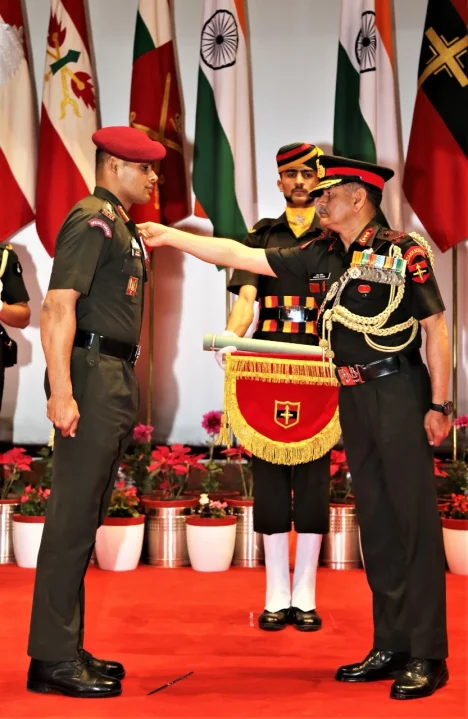
Colonel Mohanty was subsequently presented with the Yudh Seva Medal during a Northern Command investiture ceremony held at Udhampur in March 2022.
He was among several officers and soldiers recognised for distinguished service and operational achievements. Reports from the ceremony listed Colonel Punyabachi Mohanty among the recipients of the Yudh Seva Medal.
Images from the ceremony showing him receiving the decoration in uniform were widely circulated by defence-focused publications and online communities.
The ceremony brought wider public attention to an officer whose career had largely been spent within operational formations where individual details are seldom publicised.
Commanding the Elite 9 Para SF
The 9th Battalion, The Parachute Regiment (Special Forces), occupies a distinguished place in the history of India’s Special Forces.
The battalion traces its Special Forces legacy to the early development of commando capabilities within the Indian Army. Over the decades, it has operated in some of the country’s most challenging security environments.
Like other Para SF battalions, 9 Para SF is trained for a broad range of specialised missions. Depending on operational requirements, such units may be tasked with strategic reconnaissance, counter-terrorism, surveillance, direct-action operations and missions in mountainous or otherwise inaccessible terrain.
The exact activities and deployments of individual Para SF battalions are generally not disclosed publicly.
A commanding officer must ensure that the battalion remains prepared across all aspects of warfare while also maintaining the physical conditioning, specialised skills and operational cohesion expected of Special Forces personnel.
The appointment therefore requires more than personal bravery. It demands tactical judgement, administrative ability, emotional resilience and the confidence of both subordinates and senior commanders.
Recognition Across Two Operational Fronts
Colonel Mohanty’s two prominent decorations represent service in different forms of warfare.
His Sena Medal recognised gallantry while serving with 9 Para SF, a unit strongly associated with counter-terrorism and counter-infiltration operations.
His Yudh Seva Medal recognised distinguished service during a period of high-intensity military deployment connected with the confrontation in Eastern Ladakh.
Counter-terrorism operations and high-altitude deployments against a conventional military adversary present fundamentally different challenges.
Counter-terrorism operations often depend on precise intelligence, speed, surprise and the ability to make difficult decisions in populated or politically sensitive environments. High-altitude conventional deployments require large-scale preparedness, coordination, surveillance, logistical endurance and the ability to respond to rapidly changing military situations.
Recognition in both environments illustrates the broad operational demands placed upon Indian Army Special Forces officers.
Continuing His Father’s Legacy
Comparisons between Colonel Punyabachi Mohanty and Lieutenant General J.K. Mohanty are understandable.
Both served in the Dogra Regiment. Both held important command responsibilities. Both also received the Sena Medal and Yudh Seva Medal during their respective careers.
Yet Colonel Mohanty’s career should not be viewed only through the achievements of his father.
Volunteering for Special Forces, successfully completing probation, serving in 9 Para SF and eventually commanding the battalion required professional ability independent of family background.
His career therefore represents both continuity and individual accomplishment: continuity through a family tradition of military service, and individual accomplishment through his selection, performance and leadership in one of the Indian Army’s most demanding units.
A Career Marked by Quiet Professionalism
Special Forces officers rarely receive the same degree of public attention as prominent commanders or recipients of the country’s highest gallantry decorations.
Their assignments frequently remain classified, and even award announcements may provide little information about the operations for which they were recognised.
Colonel Punyabachi Mohanty’s publicly documented record nevertheless reveals an officer who commanded an elite battalion and received recognition for service in two major operational environments.
From his beginnings in the Dogra Regiment to his leadership of 9 Para SF, his career reflects the standards traditionally associated with the Indian Army’s Special Forces: resilience, discretion, operational credibility and leadership under pressure.
Colonel Mohanty’s story is also a notable example of India’s military tradition passing from one generation to the next—not as an inherited distinction, but as a responsibility that must be earned again through service in uniform.