

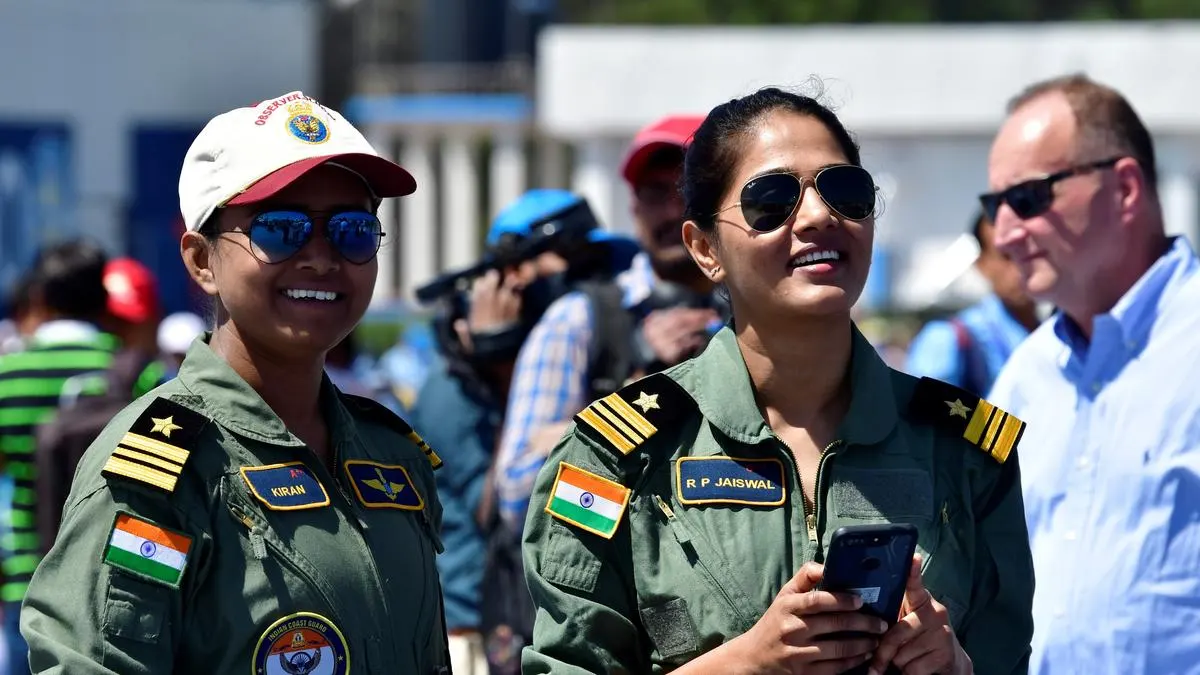
New Delhi, July 28, 2026 — In a significant step towards gender parity in India’s maritime security forces, the Ministry of Defence on Tuesday approved permanent commission for women officers in the Indian Coast Guard (ICG). Defence Minister Rajnath Singh unveiled the policy reforms in New Delhi, bringing the force in line with the Army, Navy and Indian Air Force after years of being treated as an outlier.




The government announced two major policy changes. The first establishes a gender-neutral framework for the induction of officers. Women candidates can now be inducted into both Short Service Appointments (SSA) and Permanent Appointments (PA) on the same terms as their male counterparts. Simultaneously, the Short Service Appointment stream has been opened to male candidates as well.
The policy ensures equal opportunities for career progression right from the initial training stage. Existing women officers serving on Permanent Appointments will be eligible for promotion to higher ranks, subject to meeting prescribed criteria. Women officers currently on Short Service Appointments will also have the option to convert to Permanent Appointments if they fulfil the stipulated conditions.
“This progressive step reflects the government’s commitment to Nari Shakti and equal opportunity in the nation’s maritime security apparatus,” the Defence Ministry stated.
Background and Supreme Court Pressure
Until this decision, the Indian Coast Guard remained the only major uniformed force that did not offer permanent commissions to women officers as a matter of policy. The Army, Navy and Air Force had already opened permanent career pathways following the landmark Supreme Court judgments in the Babita Puniya (Army) and Annie Nagaraja (Navy) cases in 2020, which rejected physiological arguments as sex stereotypes.
The Coast Guard’s continued resistance had drawn sharp criticism from the Supreme Court. In 2024, a bench led by then Chief Justice of India D.Y. Chandrachud heard a petition filed by Commandant Priyanka Tyagi, a woman officer who had served for 14 years before being discharged. The court called the ICG an “outlier,” questioned its “patriarchal attitude,” and linked the issue directly to the government’s public rhetoric on Nari Shakti. The judges warned the Centre: “If you do not do it, we will do it.” At the time of the hearings, women constituted only about 16 of the force’s roughly 1,586 officers.
Tuesday’s decision effectively ends that disparity.
Second Reform: Faster Relief for Families of Missing Personnel
Alongside the permanent commission policy, the government introduced a second reform aimed at easing the hardship faced by families of Coast Guard personnel who go missing at sea while on operational duty.
Under the new provisions, the competent authority will be empowered to declare a personnel reported missing at sea as “presumed dead” for the limited purpose of granting ex-gratia compensation and terminal benefits. This is expected to significantly reduce procedural delays and provide faster financial support to the next of kin during periods of uncertainty and distress.
Broader Context
Defence Minister Rajnath Singh praised the Indian Coast Guard’s five decades of service and said the reforms would enhance morale and operational effectiveness as the force prepares to mark its golden jubilee in 2027. He reiterated the government’s commitment to building a modern, capable and future-ready Coast Guard to meet India’s expanding maritime security requirements.
The policy changes come at a time when women officers have already demonstrated their capability across services, including in demanding operational and leadership roles. The opening of permanent entry pathways is expected to expand the talent pool, improve retention of trained women officers, and strengthen the overall effectiveness of the force responsible for coastal security, search and rescue, and maritime law enforcement along India’s vast coastline.
The reforms mark a clear policy shift from limited short-service opportunities to full career equivalence, aligning the Indian Coast Guard with the rest of the armed forces on the issue of gender-neutral permanent commissions.