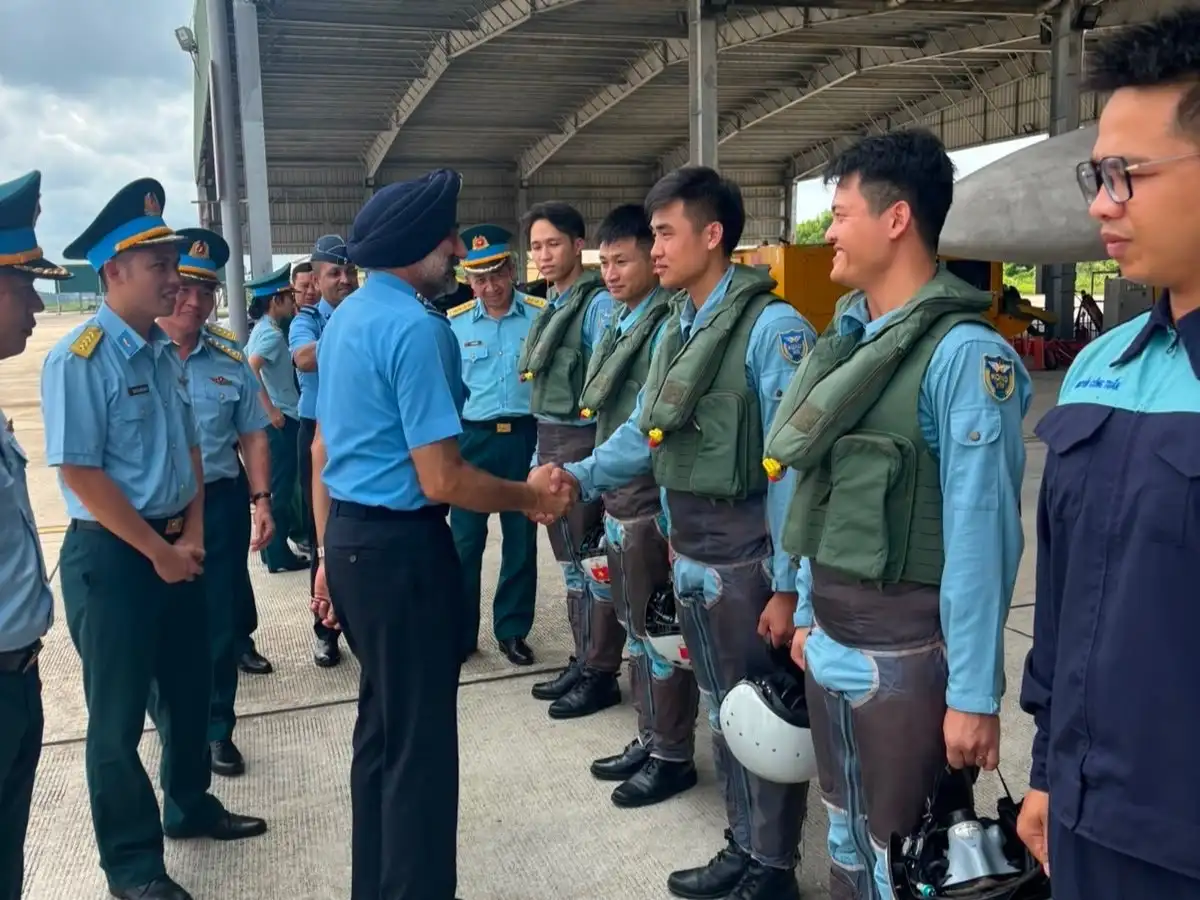
Air Chief Marshal A.P. Singh, Chief of the Air Staff, commenced a three-day official visit to Vietnam on 3 August 2026, reaffirming the growing defence partnership between the two countries. The visit aims to strengthen military cooperation, enhance operational collaboration and explore new avenues for engagement between the Indian Air Force (IAF) and the Air Defence-Air Force Service of the Vietnam People’s Army.





The IAF Chief was accorded a ceremonial welcome by the Vietnamese Air Force before holding bilateral discussions with Lieutenant General Vũ Hồng Sơn, Commander of the Air Defence-Air Force Service. During the meeting, both sides reviewed the progress of ongoing defence cooperation and discussed new initiatives to further strengthen the bilateral military relationship.
According to the Indian Embassy in Vietnam, the discussions focused on consolidating the existing defence partnership while identifying new areas of collaboration under the India-Vietnam Enhanced Comprehensive Strategic Partnership. The visit reflects the commitment of both nations to expand defence engagement amid evolving regional security dynamics in the Indo-Pacific.
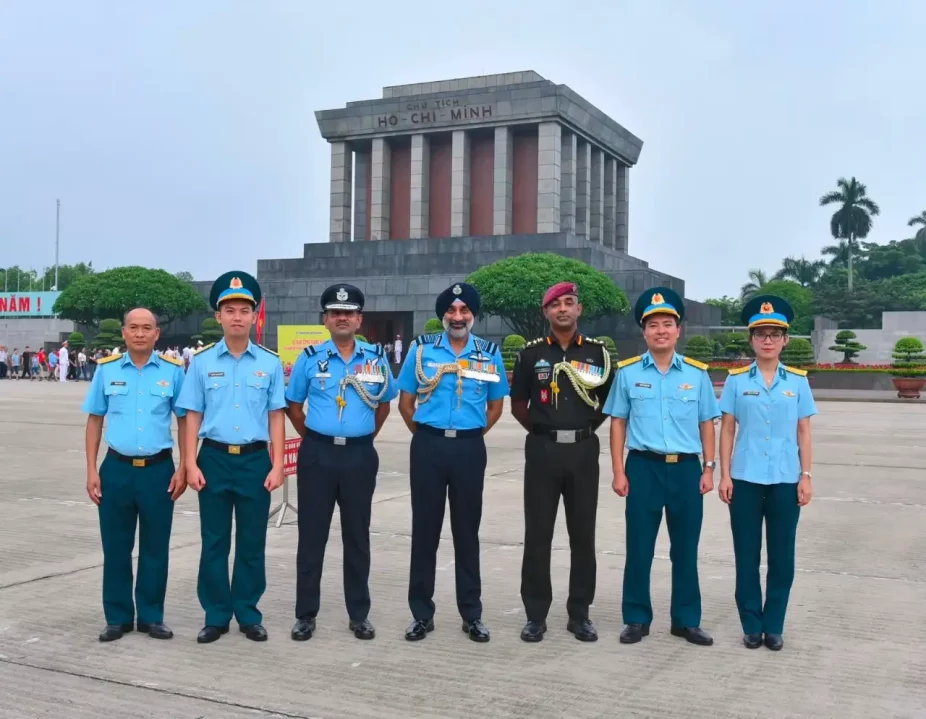
Before the official meetings, Air Chief Marshal A.P. Singh was briefed by Indian Ambassador to Vietnam Tshering W. Sherpa on the current status of India-Vietnam relations and the expanding strategic partnership between the two countries.
India and Vietnam have developed close defence ties over the past two decades, with military training forming a key pillar of cooperation. For nearly a decade, the Indian Air Force has been training Vietnamese pilots and technical personnel in operating and maintaining Sukhoi Su-30 fighter aircraft. Both air forces operate different variants of the Russian-origin fighter, making India’s operational experience valuable for Vietnam’s capability development.
Naval cooperation has also emerged as a significant aspect of bilateral defence ties. The Indian Navy has trained Vietnamese naval personnel in operating Kilo-class submarines, strengthening Vietnam’s underwater warfare capabilities and enhancing maritime cooperation between the two countries.
India has also supported Vietnam’s defence capacity-building through grants and technical assistance. A grant of US$1 million was provided for the construction of a foreign language classroom at Vietnam’s Air Force Officer School. Additionally, Indian assistance facilitated the establishment of an Artificial Intelligence laboratory at the Telecommunications University in Nha Trang, supporting technological advancement and research collaboration.
Future cooperation may also extend to aerospace maintenance and logistics. With both countries operating the Airbus C-295 transport aircraft, India and Vietnam are exploring opportunities to collaborate in maintenance, repair and overhaul (MRO) activities. India’s growing indigenous aerospace ecosystem, including the Airbus-Tata C-295 manufacturing and MRO facilities, could serve as a valuable platform for regional support.
Defence cooperation between India and Vietnam formally began with the signing of a bilateral defence agreement in March 2000. Under the agreement, India supported the overhaul of Vietnam’s MiG-21 fighter fleet while providing extensive training to Vietnamese fighter pilots and technicians. India also supplied follow-on spare parts and technical assistance through 2006.
Today, defence engagement between the two countries encompasses joint military exercises, defence policy dialogues, naval port calls, air force exchanges, training programmes, research collaboration and co-development of defence technologies. These initiatives have steadily elevated the relationship into one of India’s most significant defence partnerships in Southeast Asia.
Air Chief Marshal A.P. Singh’s visit underscores India’s continued commitment to strengthening defence cooperation with Vietnam as both nations work together to promote regional stability, enhance interoperability and build resilient defence capabilities in the Indo-Pacific region.