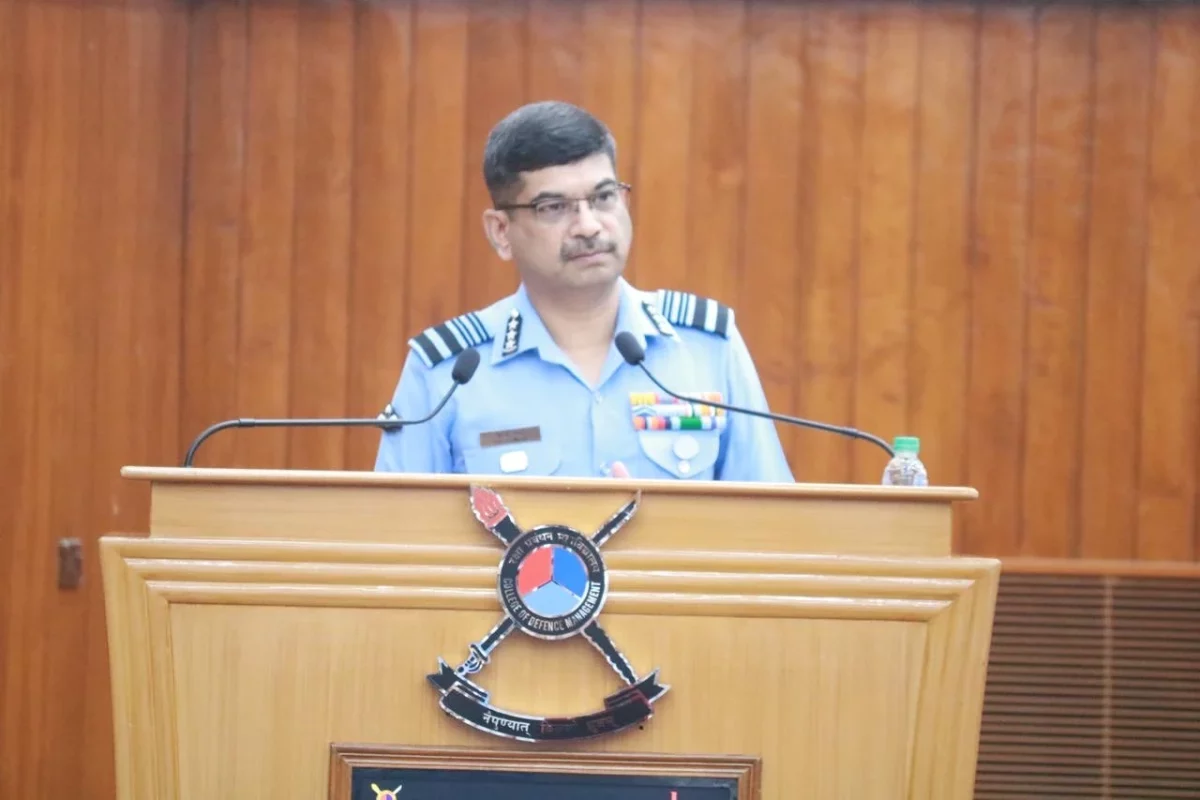
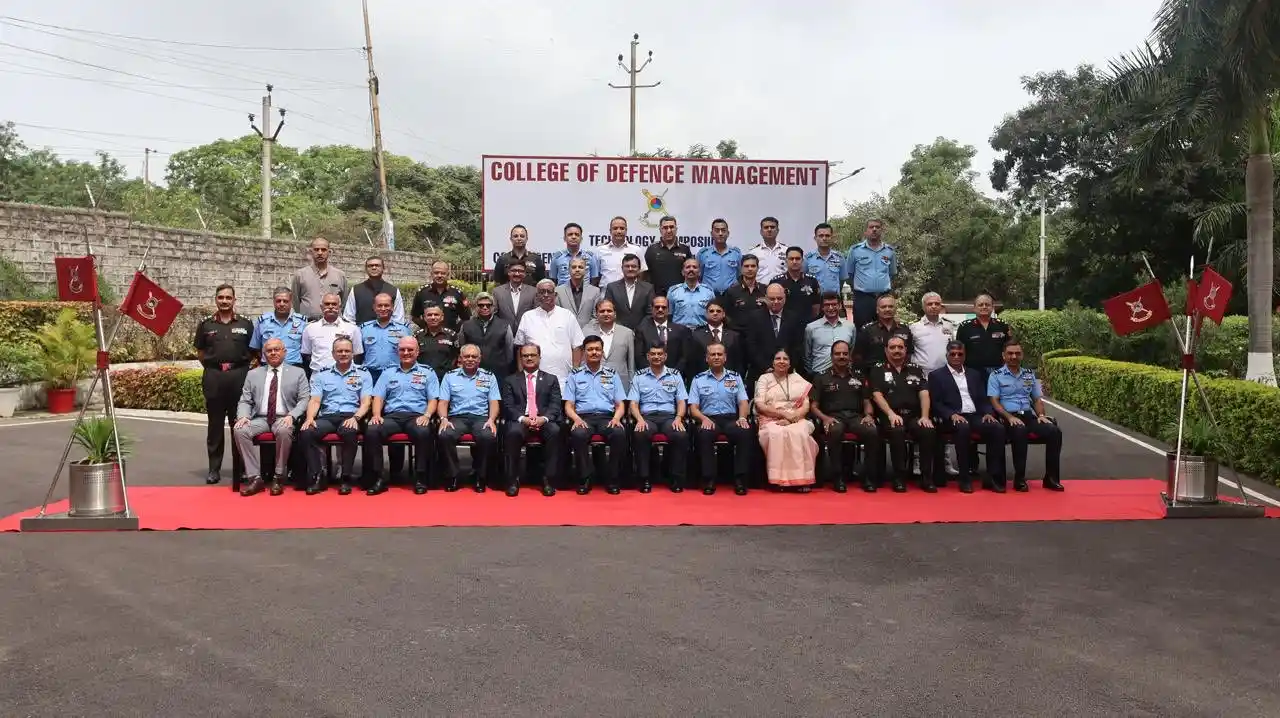
The College of Defence Management (CDM), Secunderabad, hosted a symposium on the theme “Convergence of Domains: Emergence of Future Warfare,” bringing together senior military leaders, defence scientists, industry experts and practitioners to deliberate on the rapidly evolving character of modern warfare and the technological transformations shaping future battlefields.





The symposium was inaugurated by Air Marshal Yalla Umesh, Air Officer Commanding-in-Chief (AOC-in-C), Maintenance Command, who highlighted the growing importance of integrating emerging technologies with military strategy to prepare the Armed Forces for future security challenges. The event served as a platform for collaborative discussions on the convergence of operational domains and the increasing complexity of modern conflicts.
The deliberations focused on how technological advancements are fundamentally changing the nature of warfare, requiring armed forces to adopt integrated approaches that combine capabilities across land, air, sea, cyber and space domains. Participants examined the need to develop flexible and adaptive operational concepts capable of responding to increasingly multidimensional and technology-driven threats.
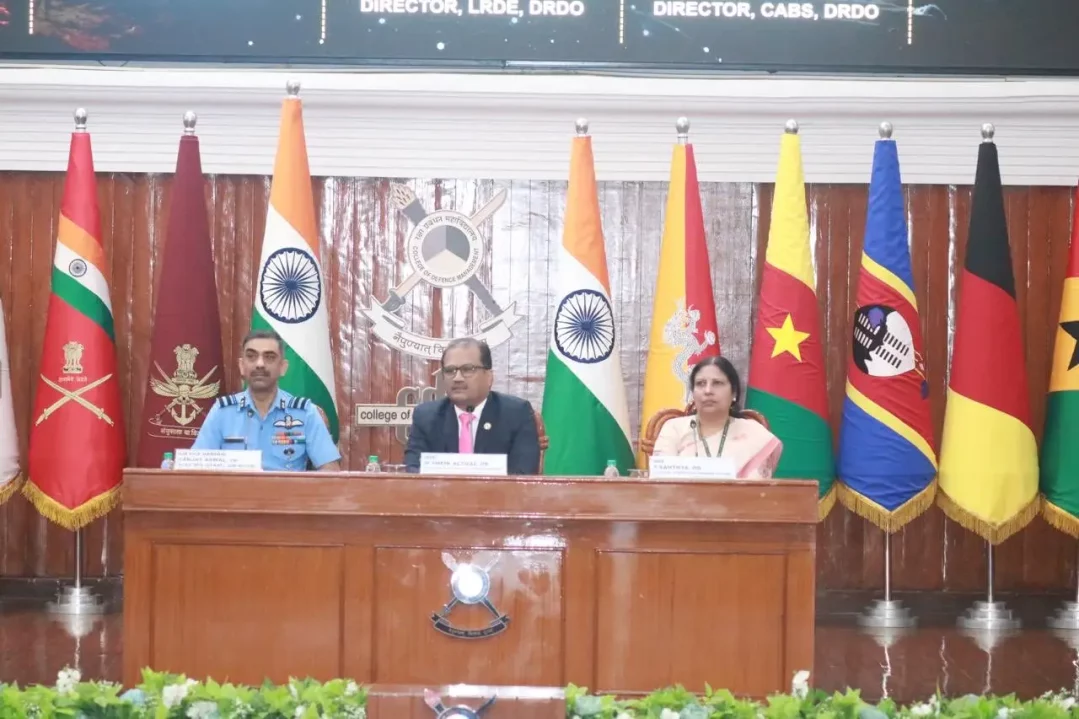
A major area of discussion centred on Multi-Domain Operations (MDO), with experts analysing how future military campaigns will depend on the seamless integration of capabilities across multiple operational environments. Speakers highlighted the importance of synchronising conventional military power with cyber capabilities, space assets, electronic warfare and information operations to achieve operational superiority.
The symposium also explored the transformative impact of emerging technologies, including artificial intelligence, autonomous systems, unmanned platforms and advanced decision-support tools. Participants discussed how these technologies are reshaping command and control, intelligence gathering, surveillance, logistics and battlefield decision-making while creating new opportunities and challenges for military planners.
Experts emphasised that artificial intelligence and unmanned systems are expected to play an increasingly central role in future conflicts by enabling faster decision-making, enhancing situational awareness and improving operational effectiveness across the full spectrum of military operations. Discussions also addressed the need to develop indigenous technological capabilities to ensure strategic autonomy and long-term defence preparedness.
The event witnessed participation from experts representing the three Services, the Defence Research and Development Organisation (DRDO) and leading defence industry partners. Scientists from DRDO’s Electronics and Radar Development Establishment (LRDE) and Centre for Airborne Systems (CABS) shared insights into ongoing technological advancements and future defence capabilities being developed to support India’s military modernisation efforts.
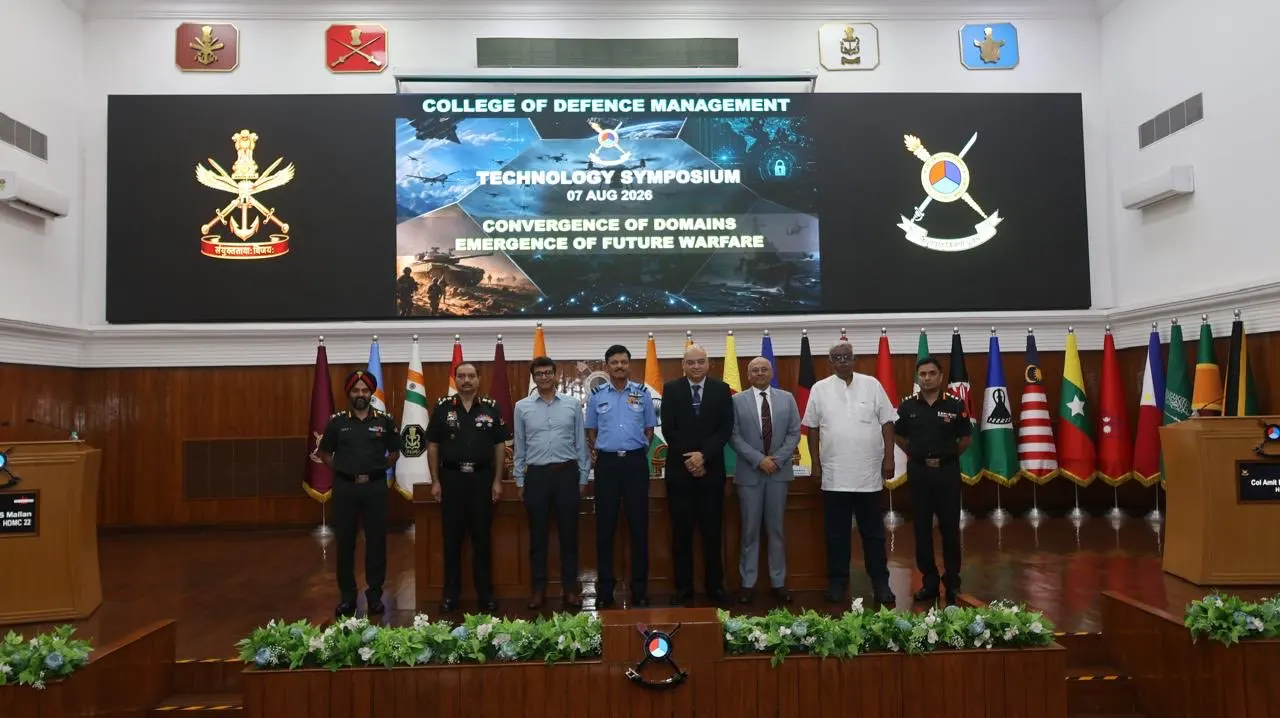
Representatives from defence technology companies including Zuppa Geo Nav, Zen Technologies, Tecknotrove Systems and Tractrix Opto Dynamics contributed industry perspectives on innovation, simulation technologies, autonomous systems, navigation solutions and emerging defence applications. Their participation highlighted the growing importance of collaboration between the Armed Forces, research organisations and private industry in accelerating defence innovation.
Throughout the symposium, participants examined how evolving operational environments demand closer integration between technological development, strategic planning and military doctrine. The discussions underscored the importance of fostering a whole-of-ecosystem approach involving the Services, academia, research institutions and industry to build capabilities suited for future conflicts.
The deliberations concluded with a shared recognition that future wars will increasingly be fought at the intersection of strategy and technology. Participants agreed that success in future battlefields will depend not only on advanced military platforms but also on the ability to integrate emerging technologies, information superiority, artificial intelligence and multi-domain operational concepts into a cohesive warfighting framework.
The symposium reaffirmed the College of Defence Management’s role as a premier institution for higher defence management education and strategic thought, while reflecting the Indian Armed Forces’ continued commitment to preparing for the evolving nature of warfare through innovation, jointness and technology-driven capability development.