
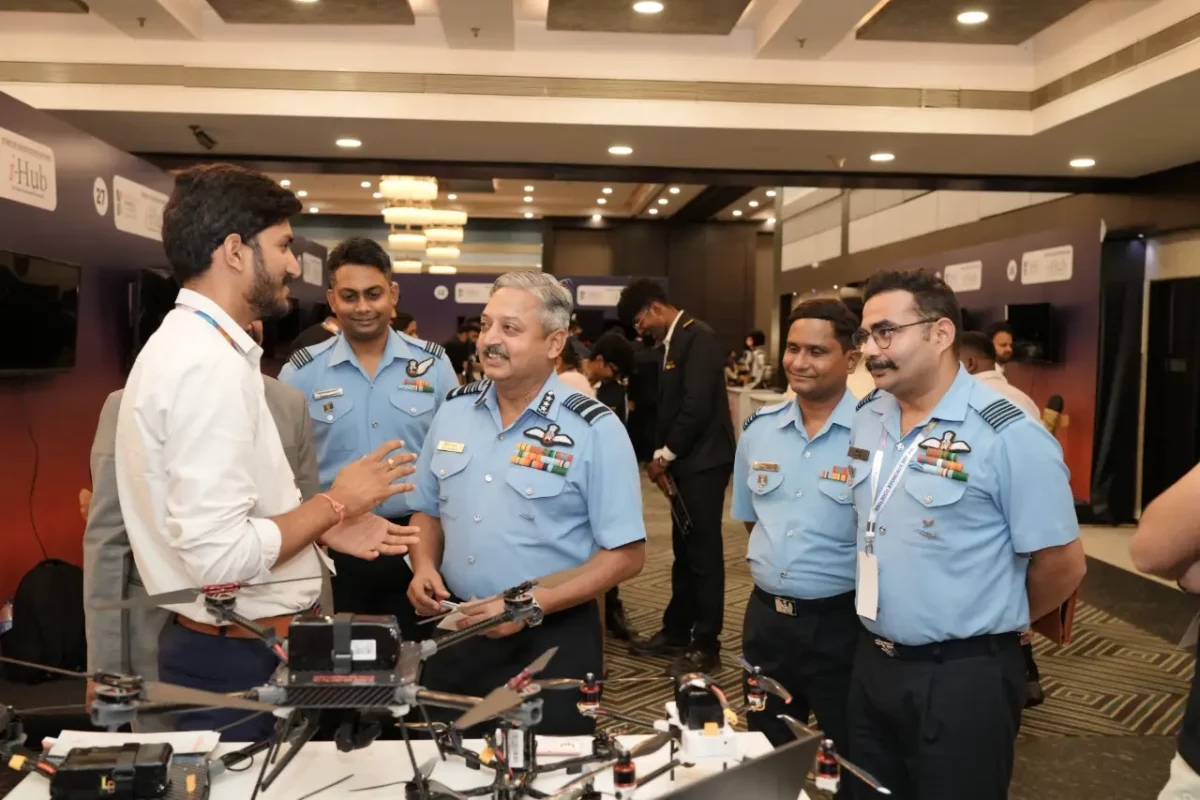
Air Marshal Venkat Shivanand Palaparthy, Air Officer Commanding-in-Chief (AOC-in-C) of the South Western Air Command (SWAC), delivered the valedictory address at the concluding session of Day 1 of SKYTECH India 2026 – Space Economy & Drone Innovation Summit in Ahmedabad, highlighting the growing importance of indigenous innovation and stronger collaboration between India’s Armed Forces, academia, researchers and the country’s technology ecosystem.





Addressing participants at the summit, Air Marshal Palaparthy spoke about various measures being undertaken by the Government and the Armed Forces to nurture India’s indigenous startup ecosystem and encourage the development of technologies capable of addressing emerging national security and aerospace requirements.
He emphasised that closer cooperation between academia, researchers, innovators, startups and the Armed Forces would be crucial for accelerating the development and adoption of advanced indigenous technologies.
The summit brought attention to two rapidly developing technology domains—space and unmanned aerial systems. Both sectors are increasingly important not only for the civilian economy but also for defence, surveillance, communications, logistics and a wide range of military applications.
Air Marshal Palaparthy’s address highlighted the importance of creating an ecosystem in which innovative ideas originating from academic institutions, research organisations and startups can be developed into practical solutions relevant to the Armed Forces.
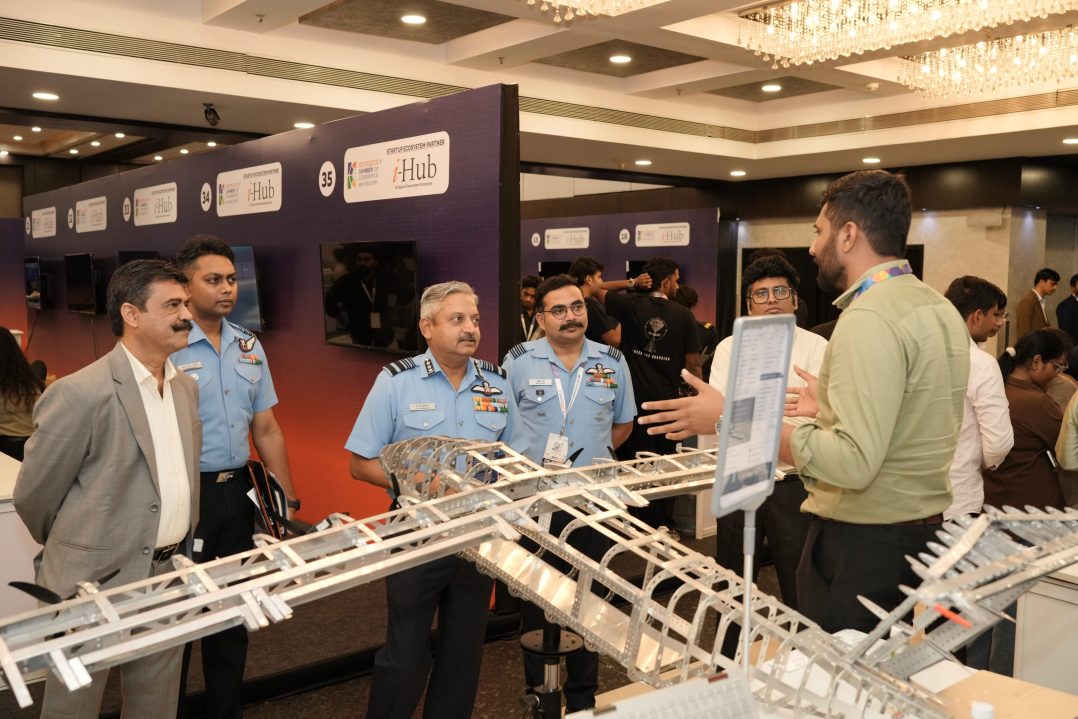
Such collaboration can help shorten the journey between research, prototype development, testing and eventual operational deployment. Interaction between technology developers and military users is particularly important because it allows innovators to better understand operational requirements while enabling the Armed Forces to identify promising technologies at an early stage.
India has placed increasing emphasis on indigenous defence manufacturing and the participation of private companies and startups in developing next-generation capabilities. Emerging fields such as drones, artificial intelligence, autonomous systems, space-based technologies, sensors, communications and advanced electronics have created new opportunities for smaller technology companies and entrepreneurs to contribute to the country’s defence ecosystem.
Drone technology, in particular, has witnessed rapid development in recent years. Unmanned platforms are finding applications across intelligence, surveillance and reconnaissance, logistics, disaster response and several other operational areas.
At the same time, developments in the space sector are becoming increasingly relevant to modern military operations. Satellite communications, navigation, remote sensing and space-based situational awareness can play important roles in supporting networked and information-driven operations.
The convergence of space technologies, drones, artificial intelligence, advanced sensors and secure communications is also changing the character of contemporary warfare. This makes continuous engagement between operational users and India’s technology community increasingly important.
As the Air Officer Commanding-in-Chief of South Western Air Command, Air Marshal Venkat Shivanand Palaparthy leads an important operational command of the Indian Air Force. His participation in SKYTECH India 2026 reflected the Armed Forces’ engagement with emerging technology ecosystems and the importance being attached to innovation-driven capability development.
The summit also provided startups and entrepreneurs with an opportunity to showcase ideas, exchange knowledge and interact with stakeholders involved in India’s expanding space and drone sectors.
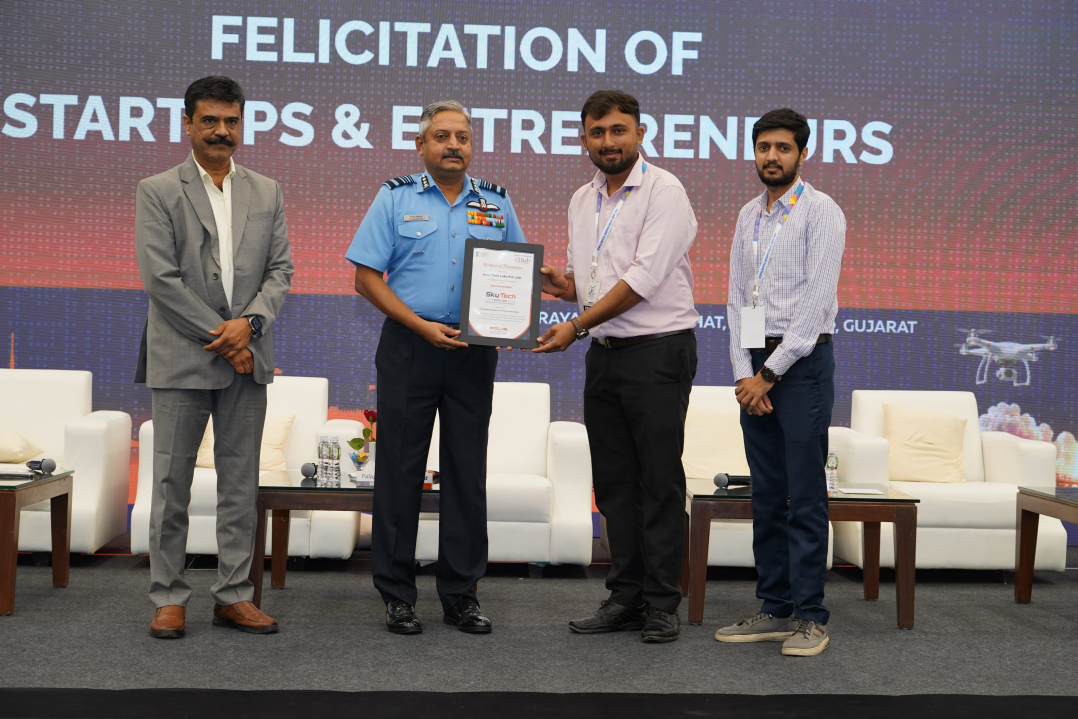
The concluding session of Day 1 ended with the distribution of certificates of participation to startups and entrepreneurs who took part in the event.
Air Marshal Palaparthy’s valedictory address reinforced the message that India’s future technological capabilities will depend significantly on collaboration across institutional boundaries. Bringing together the Armed Forces, government agencies, academic institutions, researchers, established industry and emerging startups can help create a stronger pathway for indigenous technologies to progress from innovative concepts to operationally useful solutions.
SKYTECH India 2026 in Ahmedabad thus served as a platform for strengthening interaction between innovators and stakeholders in the space, drone and defence technology sectors, while highlighting the broader national objective of building a technologically advanced and increasingly self-reliant indigenous ecosystem.