
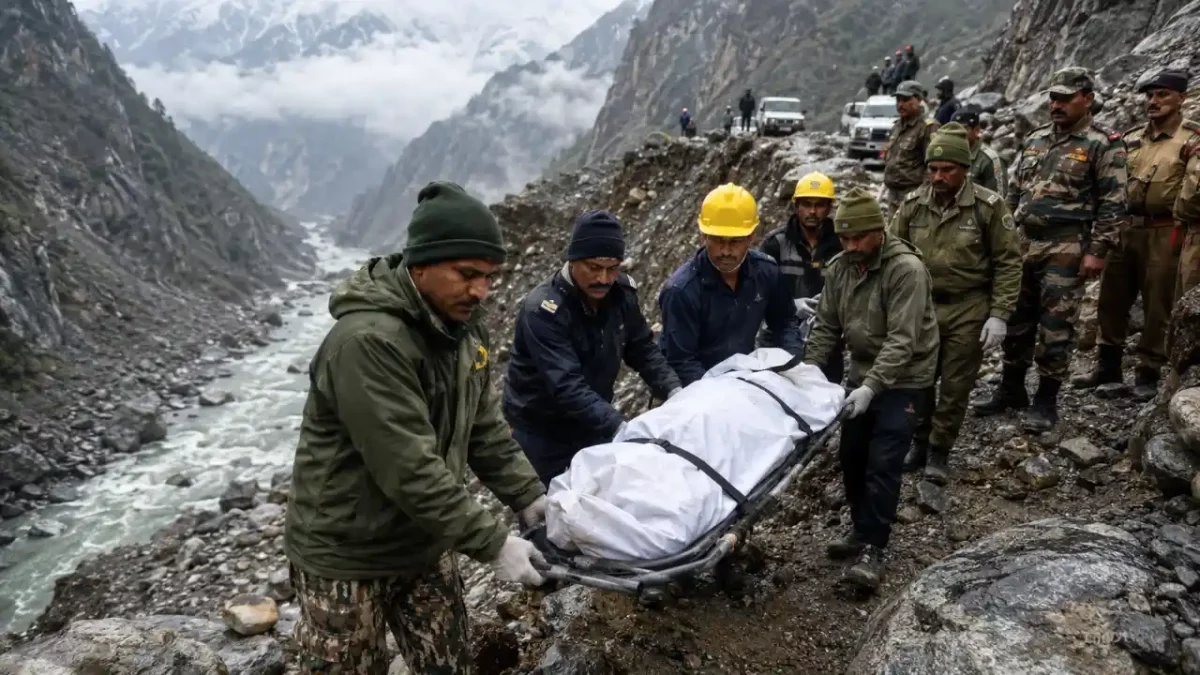
Gopeshwar / Chamoli (Uttarakhand), August 22–23, 2026: The body of Border Roads Organisation (BRO) Havaldar Pankaj Rudhaula, who went missing for 12 days after being swept away in a sudden flash flood in Chamoli district, was recovered on Saturday. Police and rescue officials confirmed that the mortal remains were found near Bhalagaon on the banks of the Dhauliganga river during an intensive multi-agency search operation that had continued uninterrupted since the incident.

Rudhaula, posted as a driver with the 123 unit (associated with 123 Border Roads Task Force) of the BRO, went missing on the evening of August 10. He was swept away by a powerful surge of water and debris in the Tamak Nala (Tamak drain) near Long Segdi village in the Jyotirmath (Joshimath) tehsil of Chamoli district. The sudden rise in water levels, triggered by heavy rains in the Niti Valley region, also washed away the Bailey (valley) bridge constructed by the BRO over the nala on the strategically important Jyotirmath–Malari / Niti motor road.
The Incident of August 10
On August 10, continuous heavy rainfall in the upper reaches of the Dhauliganga valley caused the Tamak Nala to swell dramatically. Officials reported that the force of the water and accompanying debris completely washed away the Bailey bridge at the site. A vehicle (described in some reports as a camper) was also carried away by the current. Havaldar Rudhaula, who was present near the location—either observing the rising waters or involved in related operations—was swept into the torrent and went missing.
The collapse of the bridge immediately disrupted road connectivity to approximately 12–17 villages in the remote Niti Valley, including areas such as Niti, Malari, Jumma, Dronagiri and Gamshali, which lie close to the India-China border. Vehicular movement towards the border area was suspended as a precautionary measure. District authorities, with support from the BRO and disaster response teams, rapidly constructed a temporary alternative route using large concrete Hume pipes, restoring limited connectivity within a day or two.
Niti Valley is a high-altitude, strategically sensitive region where the BRO plays a critical role in maintaining all-weather road infrastructure essential for both civilian access and military logistics along the northern borders.
12-Day Intensive Search Operation
From the moment Rudhaula went missing, a large-scale, coordinated search and rescue effort was launched. Teams from the local police (including Jyotirmath police), State Disaster Response Force (SDRF), National Disaster Response Force (NDRF), BRO personnel, the Indian Army’s Garhwal Rifles (with references also to Garhwal Scouts and associated units), dog squads, and drone operators worked relentlessly across difficult mountainous terrain.
The search focused on the Tamak Nala and its immediate surroundings, as well as stretches of the Dhauliganga river downstream. Heavy machinery, including excavators, was deployed to clear debris and boulders. Aerial surveillance with drones and ground searches assisted by trained sniffer dogs were conducted over successive days in challenging conditions marked by residual flooding risks, steep slopes, and remote locations.
Uttarakhand Chief Minister Pushkar Singh Dhami monitored the situation, directed officials to intensify the search, and assured the family of all possible assistance. The District Magistrate of Pithoragarh (Rudhaula’s home district) also maintained contact with the family and extended administrative support. Officials from the Uttarakhand Information Department and district administration provided regular updates as the operation continued on a war footing.
On Saturday, August 22—exactly 12 days after the incident—the body was recovered near Bhalagaon (also referred to in some reports in association with nearby Lata village) on the banks of the Dhauliganga river. Police, BRO personnel, and other teams reached the site immediately. With the recovery, the intensive search operation was formally concluded.
Background and Context
Havaldar Pankaj Rudhaula was a resident of Pithoragarh district in Uttarakhand. As a driver in the BRO’s 123 unit, he was part of the organisation’s ongoing efforts to build and maintain critical border roads in one of India’s most demanding high-altitude environments. The BRO’s work in Chamoli and adjoining districts is vital for national security and regional connectivity, often carried out under extreme weather and terrain conditions.
The Himalayan region of Uttarakhand remains highly vulnerable to monsoon-related disasters, including sudden surges in mountain streams (nalas), flash floods, landslides, and debris flows. The August 10 event at Tamak Nala is part of a broader pattern of weather-related challenges faced by infrastructure projects and personnel working in these areas. Similar incidents in previous years have underscored the risks involved in maintaining strategic roads in the border belt.
Aftermath
The recovery of Rudhaula’s body brings a tragic closure to the 12-day search. Official procedures, including formal identification and subsequent arrangements, are being handled by the authorities in coordination with the BRO and the family. The multi-agency response—combining local police, specialised disaster forces, the Army, and the BRO itself—demonstrates the coordinated mechanisms in place for such high-risk mountain operations.
The incident once again highlights both the indispensable role of the Border Roads Organisation in securing India’s northern frontiers and the inherent dangers faced by its personnel working in remote, disaster-prone Himalayan valleys. Authorities continue to monitor the broader weather and connectivity situation in Chamoli’s Niti Valley sector.