
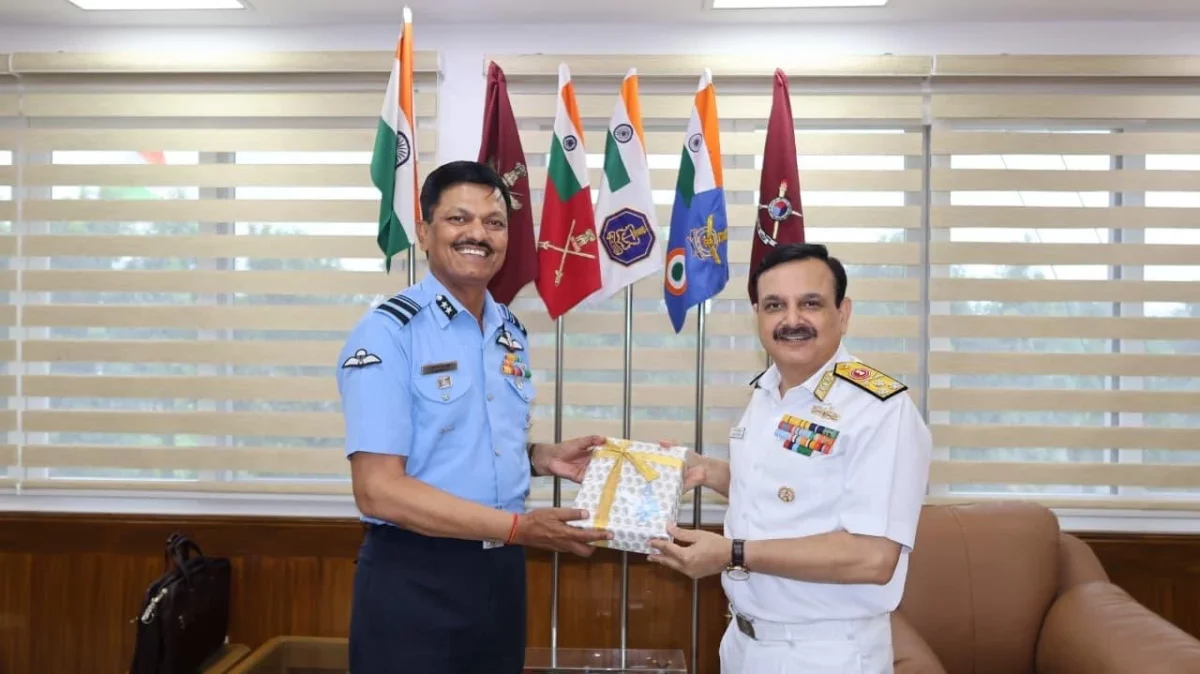
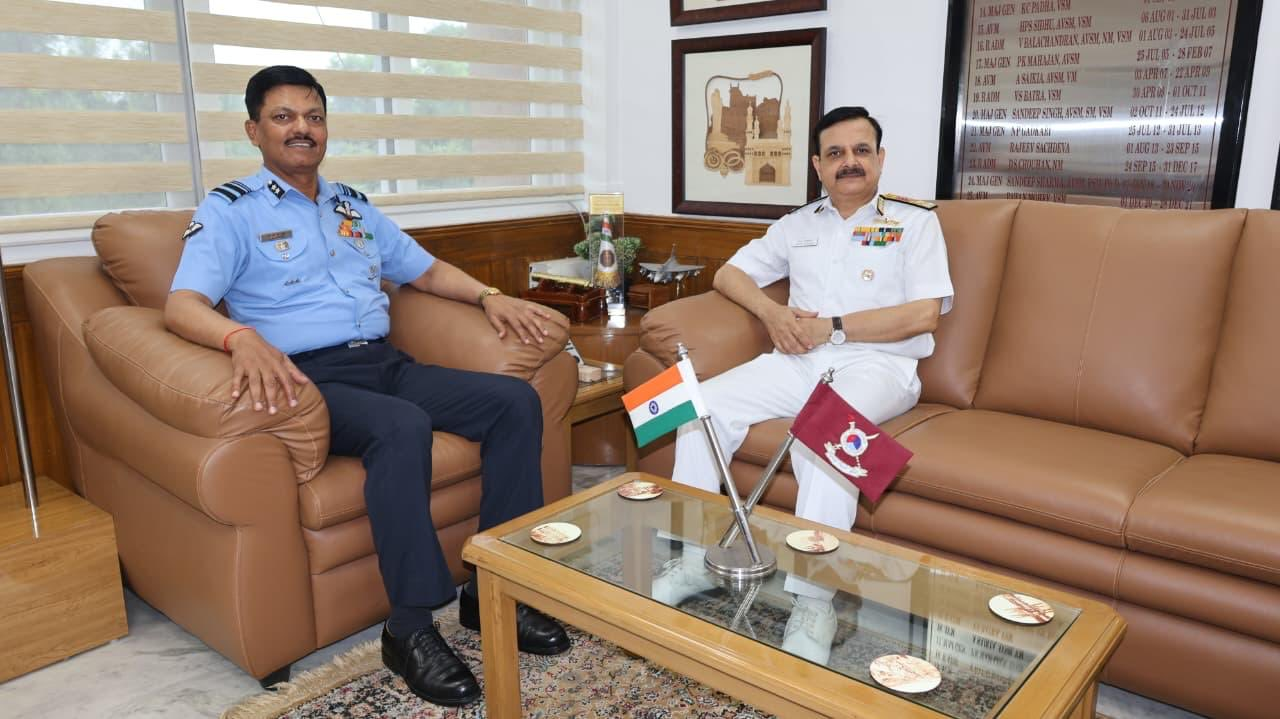
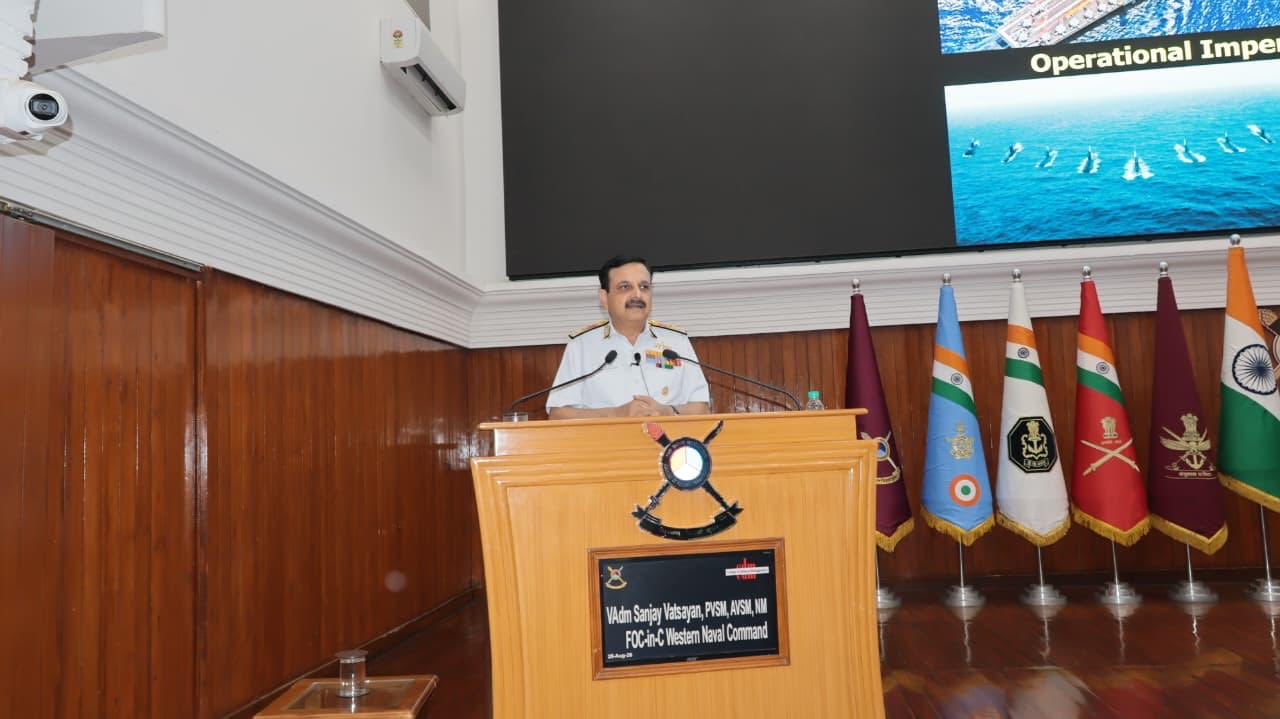
Secunderabad: Vice Admiral Sanjay Vatsayan, Flag Officer Commanding-in-Chief (FOC-in-C), Western Naval Command, delivered a focused talk on “Operational Imperatives for the Indian Navy” to participants of the 22nd Higher Defence Management Course (HDMC-22) at the College of Defence Management (CDM).


During his address, Vice Admiral Vatsayan highlighted the strategic importance of the Indian Ocean and outlined key priorities required to safeguard India’s expanding maritime interests amid an increasingly complex regional and global security environment.
The FOC-in-C emphasised the Indian Ocean’s strategic primacy, reflecting its importance for India’s security, economic interests, trade and connectivity with major regions of the world.
A major focus of the address was the protection of India’s maritime interests and the need to safeguard vital Sea Lines of Communication (SLOCs). These maritime routes are critical for the movement of commercial shipping, commodities and energy supplies and therefore have a direct bearing on India’s economic and national security.
Vice Admiral Vatsayan particularly highlighted energy security as an important maritime consideration. India’s dependence on seaborne trade for a substantial portion of its energy requirements makes the security of shipping routes and maritime infrastructure an important operational responsibility.
The Indian Navy consequently has to remain prepared for a wide spectrum of contingencies, ranging from traditional military threats to challenges affecting commercial shipping and maritime security.
The Admiral also highlighted the growing importance of Multi-Domain Operations. Modern conflicts are increasingly fought across interconnected domains encompassing the sea, land, air, space, cyber and electromagnetic spectrum, requiring military forces to share information and coordinate capabilities at much greater speed.
For the Indian Navy, this transformation means that ships, submarines and aircraft can no longer be viewed as isolated platforms. Their effectiveness increasingly depends on their ability to operate as part of an integrated network involving surveillance assets, satellites, unmanned platforms, cyber capabilities and forces from the Army and Air Force.
Vice Admiral Vatsayan therefore stressed strengthened jointness as another important requirement for future operations. Greater integration among the Indian Army, Indian Navy and Indian Air Force is expected to improve the Armed Forces’ ability to plan and execute coordinated operations across multiple domains.
Interoperability was also highlighted during the address. The ability of different services, platforms and systems to communicate and operate effectively together becomes particularly important during complex military operations requiring rapid coordination and information sharing.
Technological integration formed another major theme of the interaction. Emerging technologies such as artificial intelligence, autonomous and unmanned systems, advanced sensors, secure networks and electronic warfare capabilities are increasingly influencing naval operations and the wider character of maritime warfare.
The Indian Navy has been progressively incorporating such technologies while modernising its fleet and strengthening surveillance and maritime domain awareness capabilities.
Vice Admiral Vatsayan also underscored Atmanirbharta, or self-reliance, as an important component of developing a credible and future-ready naval force.
Indigenisation has become central to the Indian Navy’s modernisation strategy, particularly in warship construction, sensors, weapons, communication systems and other critical technologies. Building capabilities domestically can strengthen long-term operational availability while reducing dependence on overseas suppliers for strategically important equipment.
The discussion at CDM was particularly significant because HDMC is aimed at preparing senior officers for higher command and staff responsibilities where military operations increasingly intersect with technology, strategy, resource management and national security policy.
The College of Defence Management, a tri-service institution under the Integrated Defence Staff, plays an important role in developing officers capable of handling higher defence management responsibilities. Interactions with senior operational commanders provide course participants with insights into contemporary challenges faced by the Armed Forces.
Vice Admiral Vatsayan’s address brought together several priorities shaping the future of India’s maritime strategy — securing the Indian Ocean, protecting maritime interests and SLOCs, ensuring energy security, embracing Multi-Domain Operations, strengthening jointness and interoperability, accelerating technological integration and pursuing greater indigenous capability.
These priorities assume increasing importance as India’s economic and strategic interests expand across the Indo-Pacific and the maritime environment becomes more contested and technologically complex.
The central message of the interaction was the requirement for a credible, adaptable and future-ready Indian Navy capable of responding effectively to emerging maritime challenges while protecting India’s national interests across the seas.