
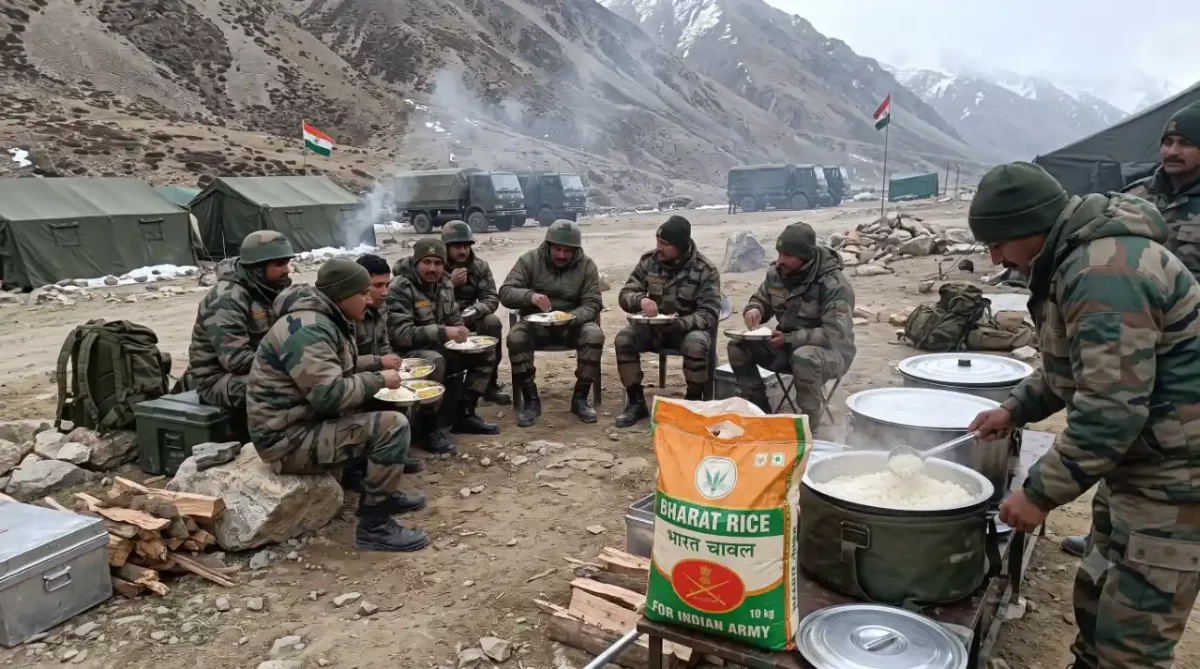
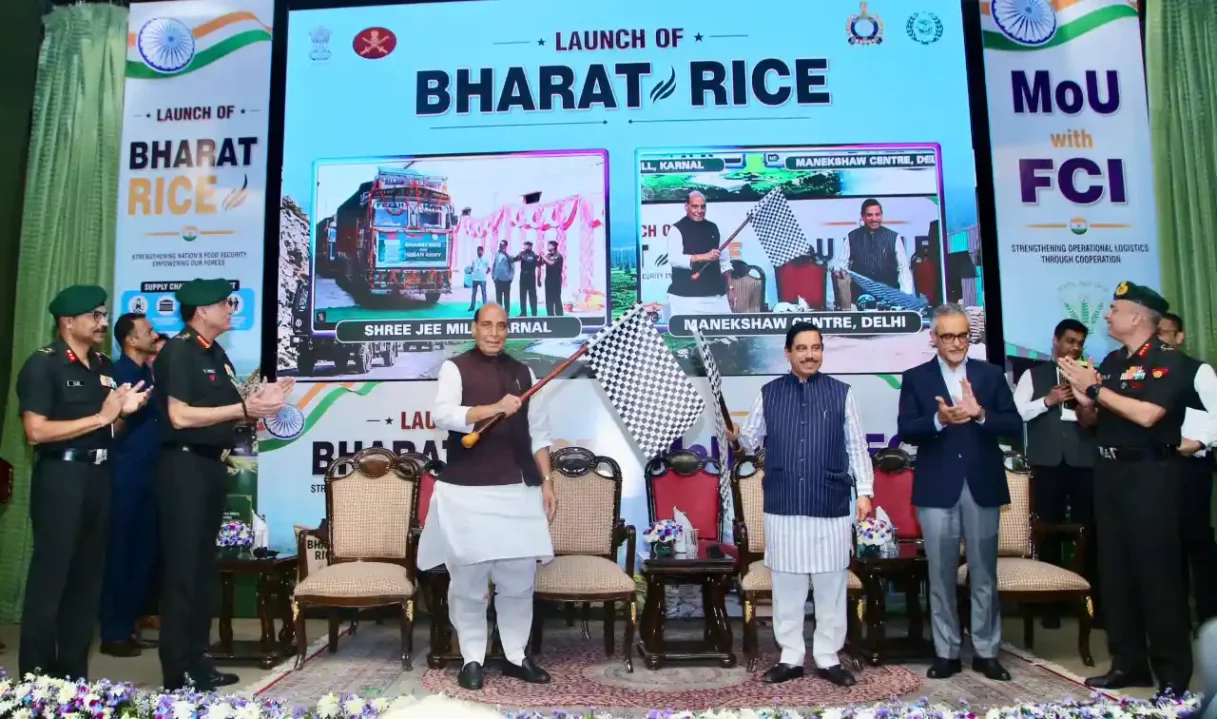
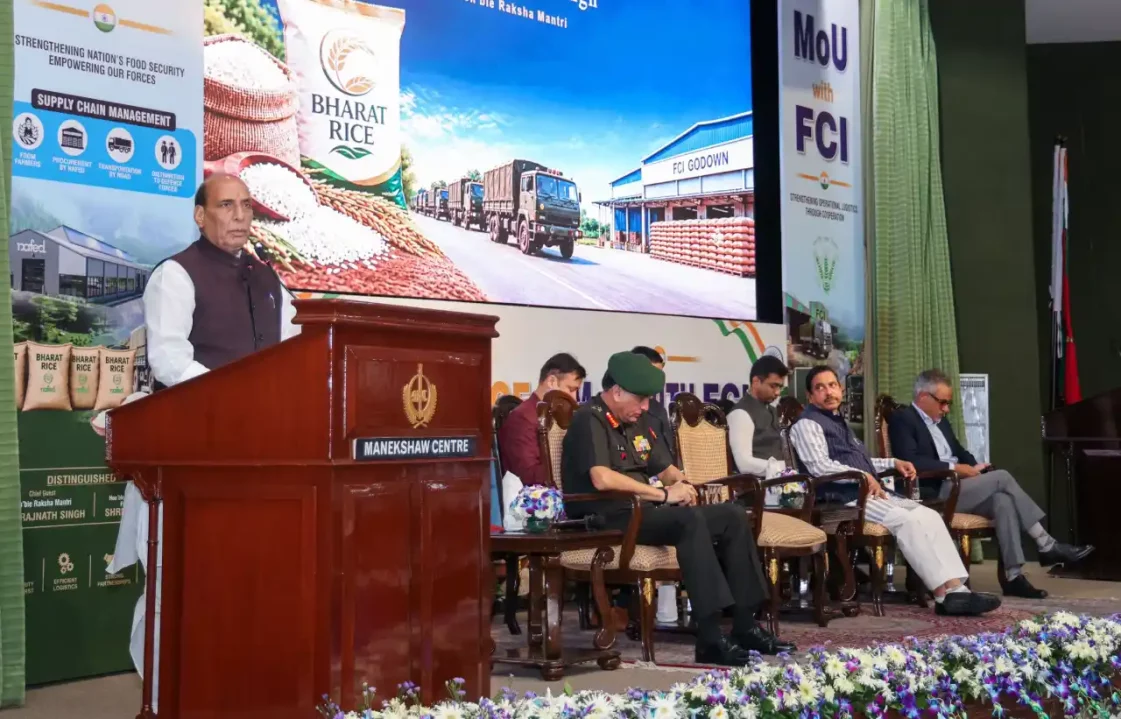
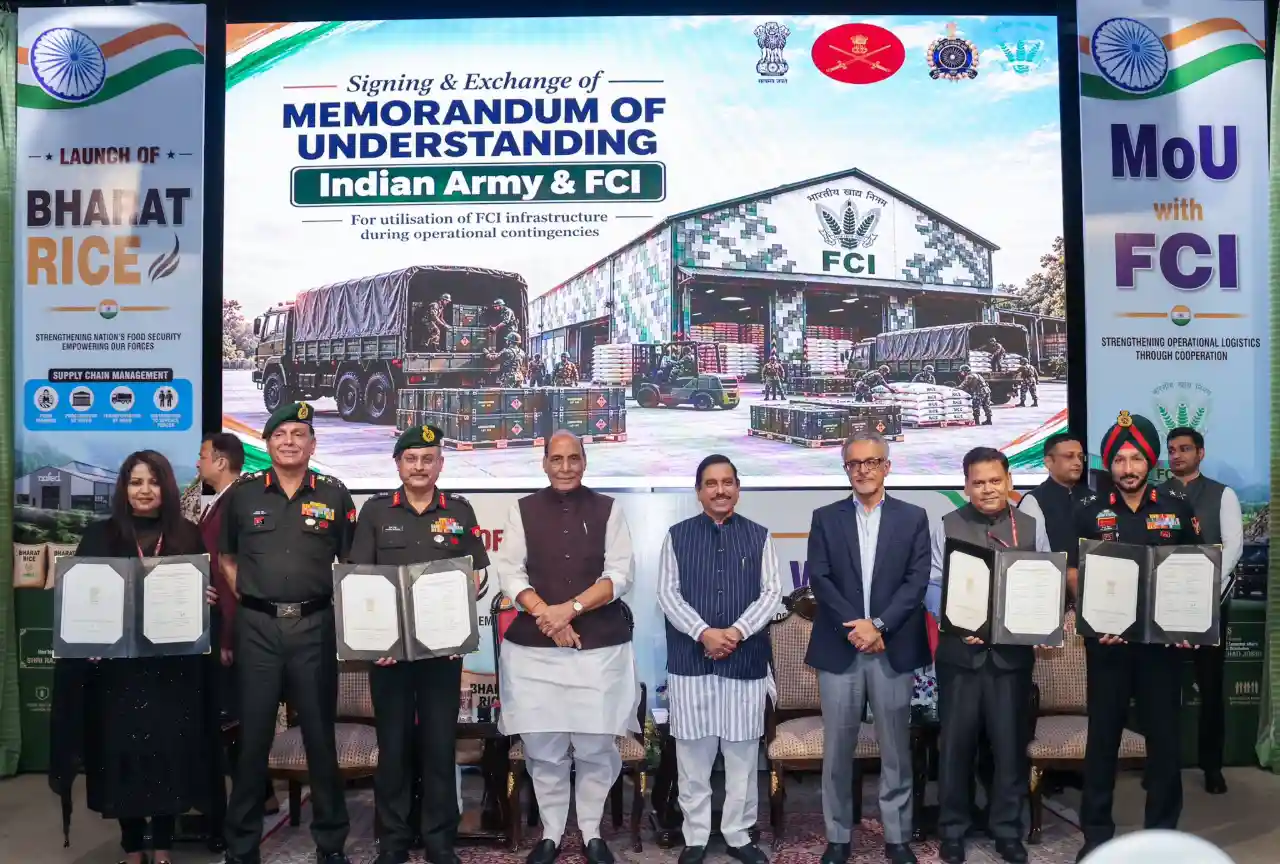
The Indian Army on October 12 launched ‘Bharat Rice’ for defence personnel in the presence of Defence Minister Rajnath Singh and Minister of Consumer Affairs, Food and Public Distribution Pralhad Joshi. The initiative aims to improve the quality of rations supplied to troops, while a Memorandum of Understanding (MoU) signed with the Food Corporation of India (FCI) will strengthen military logistics by enabling the Army to utilise identified FCI infrastructure during operational contingencies.



Under the initiative, superior-quality rice will be delivered directly to Army Supply Depots, including those in the remote and strategically significant regions of Ladakh and the Northeast. This arrangement will replace the existing process under which Army depots collect rice from local FCI facilities, providing greater convenience in ration distribution and reducing the logistical burden on personnel operating in difficult terrain.
Addressing the launch ceremony, Raksha Mantri Rajnath Singh described Bharat Rice as a bond of trust connecting farmers with soldiers. He said the initiative gave tangible expression to the spirit of ‘Jai Jawan, Jai Kisan’, reflecting how the hard work of farmers contributes to the strength and readiness of the Armed Forces.
“This superior-quality rice will be provided in accordance with standard specifications. Furthermore, we are ensuring ergonomic packaging. While this initiative might appear small, it offers immense operational relief to the soldiers responsible for transporting rations to remote and difficult terrains,” Rajnath Singh said.
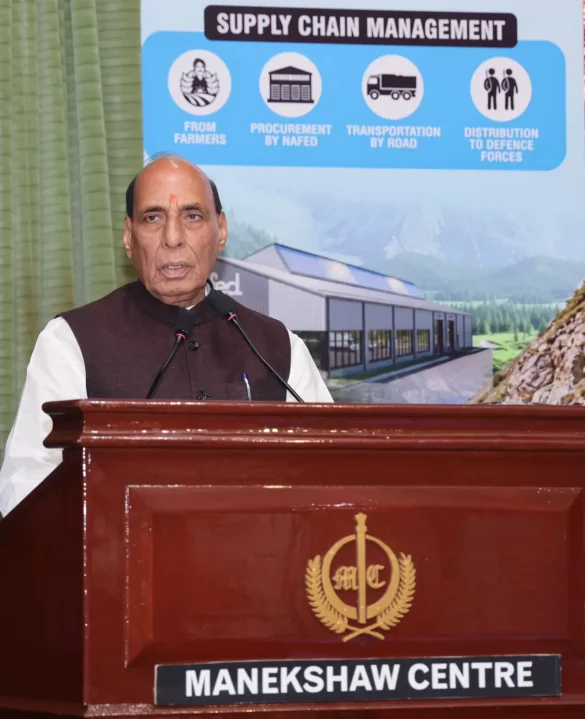
He emphasised that military readiness depends not only on weapons and equipment but also on the physical health, mental balance, morale and stamina of soldiers, particularly those deployed in harsh environments. He described the welfare of troops as an integral component of national security, noting that nutritious food, reliable equipment and comprehensive training contribute to their ability to meet operational challenges.
The Defence Minister also highlighted the growing importance of logistics in modern warfare, stating that military effectiveness depends on supply chains, storage capacity, transportation networks, warehousing infrastructure and the timely replenishment of essential supplies, alongside combat platforms and technology.
Referring to Operation Sindoor, Rajnath Singh said the operation had underlined the need for resilient logistics arrangements capable of sustaining military operations when contingencies arise at short notice and continue over extended periods.
“The strategic analysis of Operation Sindoor indicated that warning times could be extremely short in future conflicts. Scenarios involving zero-warning situations and the integration of technology into warfare could severely test our preparedness. Such conflicts could also put the endurance of our logistics chains and supply networks to the test. Therefore, we must build logistics resilience to sustain our operations. This MoU with FCI represents a significant step in that direction,” he said.
The agreement will allow the Indian Army to draw upon FCI’s warehousing infrastructure, storage facilities, modern silos, material-handling equipment and trained manpower across the country, including in operationally significant areas. The arrangement is intended to improve the availability and mobilisation of supplies during emergencies by integrating existing civilian infrastructure with military logistics planning.
Rajnath Singh described the agreement as an example of a dual-use approach, in which national infrastructure serves both civilian and defence requirements. Drawing a parallel with fighter aircraft using expressways and roads and bridges constructed by the Border Roads Organisation serving local communities, he said FCI warehouses would also become an integral part of the Army’s supply chain when required.
“This approach will optimise resources and strengthen national resilience. Integrating existing infrastructure with operational planning allows us to save time and utilise resources more effectively. This MoU is far more than a mere administrative arrangement. It acts as a force multiplier for operational preparedness and reflects our ‘Whole-of-Government’ and ‘Whole-of-Nation’ approach,” the Defence Minister said.
He further underlined the Government’s focus on improving soldiers’ welfare through self-reliance and modernisation across weaponry, technology, clothing, equipment and training. He said innovation and coordination were essential to ensuring quality supplies, strengthening logistics networks, improving deliveries to forward areas and making more effective use of civilian infrastructure for national security.
Rajnath Singh added that soldiers guarding the country’s borders should have the confidence that the entire nation stood behind them. He said the responsibility for supporting troops extended beyond the Government to farmers, the cooperative sector, civil administration and the wider country.
Speaking at the event, Pralhad Joshi welcomed the initiative and said providing quality food to personnel responsible for protecting the nation was a matter of pride and duty for his ministry. He emphasised that the needs of soldiers serving in challenging conditions must remain a priority.
Chief of the Army Staff General Dhiraj Seth, Secretary of the Department of Food and Public Distribution Sanjeev Chopra, and senior officials from the Ministry of Defence, the Ministry of Consumer Affairs, Food and Public Distribution, FCI, the National Agricultural Cooperative Marketing Federation of India Limited (NAFED) and the cooperative sector attended the ceremony.
Bharat Rice: Quality specifications and supply arrangements
Spearheaded by the Directorate General of Supplies and Transport, Bharat Rice has been developed in response to sustained feedback from troops and aims to improve the quality of rations provided to personnel. The rice will be milled according to prescribed defence specifications and supplied through NAFED during the 2026–27 financial year.
The product will undergo the required quality-control checks and will be free from foreign matter and admixtures, with minimal broken, damaged and discoloured grains. It will be procured in 10 kg and 30 kg bags to make handling and transportation easier, particularly at forward posts where moving supplies can be challenging.
The initiative follows nearly 18 months of coordination among the Indian Army, FCI, NAFED and the Department of Food and Public Distribution. Its objective is to ensure that troops receive standardised, quality rice through a more direct and efficient supply arrangement.
FCI agreement to strengthen operational preparedness
The MoU establishes a formal framework for the Army to use identified FCI warehouses, labour resources and material-handling equipment during operational contingencies. It draws on operational lessons, including those from Operation Sindoor, which highlighted the need for logistics systems capable of responding to sudden requirements and supporting prolonged military operations.
Coordination will take place at the formation level between the Army’s Supply and Transport elements and FCI’s regional and divisional offices. The arrangement will also be integrated into operational logistics plans. The MoU will remain valid for five years and may be extended by mutual consent.
The agreement is expected to facilitate additional storage, rapid mobilisation, dispersion and forward positioning of rations, stores and equipment closer to operational areas. By drawing on existing national infrastructure, the arrangement aims to improve the responsiveness and resilience of military supply chains while making more efficient use of available resources.
The initiative is aligned with the vision of PM Gati Shakti and reflects a whole-of-government approach to strengthening national preparedness.
The Army has also undertaken several measures in recent years to improve ration quality and scales, including providing additional rations to Agniveer recruits and promoting greater commonality in ration scales across the three Services. The introduction of organic rations is also proposed.
Together, Bharat Rice and the agreement with FCI represent complementary efforts to improve troop welfare and strengthen the logistics network supporting the Indian Army. While the rice initiative focuses on the quality and delivery of food supplies, the MoU provides a framework for leveraging civilian storage and handling capabilities to support military requirements during contingencies.