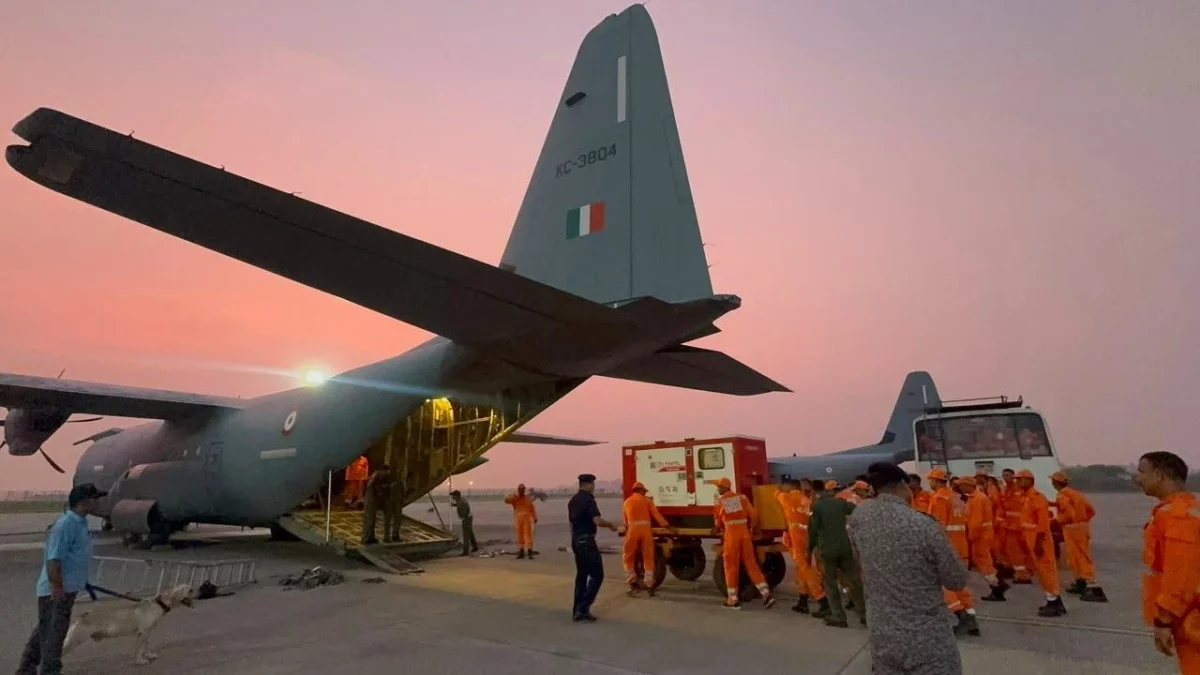
India on August 28 dispatched a third tranche of humanitarian assistance to Nepal as the neighbouring country continues to grapple with the devastating impact of flash floods. The latest consignment comprised 10 tonnes of relief supplies and was accompanied by an 11-member team of doctors and paramedics as well as a reconnaissance team to assess requirements for tunnel rescue operations.





External Affairs Minister S Jaishankar said the third flight carrying the humanitarian assistance had departed for Kathmandu. The consignment includes portable generator sets, dignity kits, food packets and water purification tablets, aimed at supporting ongoing relief and rescue operations in flood-affected areas.
The medical contingent accompanying the consignment comprises doctors and paramedics who will support Nepal’s emergency response and provide assistance to people affected by the floods. A reconnaissance team for tunnel rescue operations has also been deployed to assess the situation and assist with specialised rescue requirements.
The latest assistance follows two earlier consignments dispatched by India during the week. On August 26, New Delhi sent 10 tonnes of Humanitarian Assistance and Disaster Relief (HADR) material, followed by another consignment of 37.5 tonnes on August 27.
The earlier relief supplies included essential emergency items such as temporary shelters, blankets, hygiene kits, solar lamps and medicines. The successive consignments reflect India’s effort to provide immediate and sustained support as Nepal responds to the scale of the disaster.
The assistance comes after Prime Minister Narendra Modi spoke with Nepalese Prime Minister Balendra Shah on August 26 and assured him of India’s support. Modi expressed solidarity with the people of Nepal and conveyed India’s readiness to provide all possible humanitarian assistance.
Nepal has been severely affected by flash floods along its border with the Tibet region, with the disaster reportedly claiming at least 547 lives and causing extensive destruction. The difficult terrain and scale of the flooding have added to the challenges facing rescue and relief agencies.
India’s response combines the supply of essential relief material with specialised human resources, including medical personnel and technical teams. The deployment of the reconnaissance team is intended to support assessment and planning for tunnel rescue operations where specialised intervention may be required.
The coordinated assistance also reflects the close humanitarian and people-to-people ties between India and Nepal. Indian agencies are coordinating with their Nepalese counterparts to support ongoing rescue and relief efforts.
With another consignment expected in the coming days, India is preparing to maintain support for Nepal as relief operations continue. The latest deployment underscores New Delhi’s commitment to providing timely humanitarian assistance and specialised capabilities to its neighbour during the ongoing crisis.