

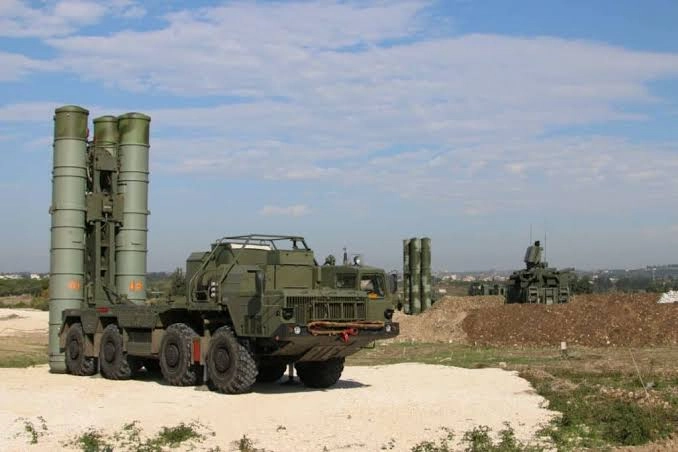
Russia has submitted its detailed response to India’s tender for the acquisition of five additional squadrons of the S-400 long-range air defence system, marking a significant development in the proposed expansion of the Indian Air Force’s air defence network.





According to defence sources cited by ANI, the Russian response to the tender has been received and is currently being processed. The proposed acquisition is estimated to cost more than ₹50,000 crore, making it one of the major air defence procurement programmes currently under consideration by India.
India had cleared the proposal to procure five additional S-400 squadrons in March 2026, shortly after Operation Sindoor. The proposed acquisition is intended to further strengthen the country’s layered air defence architecture and enhance its ability to counter a range of aerial threats.
The additional S-400 systems are expected to provide greater coverage along India’s western and eastern fronts, strengthening the country’s ability to detect and engage hostile aircraft, missiles and other airborne threats at extended ranges.
India currently operates four S-400 squadrons acquired under an agreement signed with Russia in 2018. The original contract covered five squadrons, with four having been delivered so far. The fifth and final squadron is expected to be delivered by November 2026, according to defence sources.
If the proposed follow-on contract is concluded, deliveries of the five additional squadrons are expected to begin approximately three years after the agreement is signed. The acquisition would significantly expand India’s existing long-range air defence capability.
The S-400 received renewed attention following Operation Sindoor, during which the system formed part of India’s integrated air defence network amid Pakistani aerial activity. Indian officials and defence sources have subsequently highlighted the role of the system during the operation.
Western Air Command chief Air Marshal Jeetendra Mishra had claimed that an S-400 system carried out a surface-to-air missile engagement against a Pakistani surveillance aircraft at a range of around 314 kilometres. He also claimed that the system engaged several Pakistani fighter aircraft, including Chinese-origin J-10 aircraft operated by the Pakistan Air Force.
The claims regarding individual engagements have been made by Indian defence officials and should be viewed in that context, as operational details of specific engagements are not independently verifiable from the information available.
India is also seeking to expand its existing S-400 missile inventory. The country is reportedly pursuing the acquisition of more than 280 additional missiles for the system, aimed at ensuring adequate stocks for sustained operational deployment and readiness.
The proposed S-400 expansion comes alongside India’s long-term effort to develop indigenous long-range air defence capabilities. Under Project Kusha, India is developing a domestically produced long-range surface-to-air missile system intended to progressively reduce dependence on foreign air defence platforms.
Project Kusha has reportedly achieved an early development milestone, including an engagement of a simulated target at a range of approximately 140 kilometres. The indigenous programme is expected to evolve into an important component of India’s future multi-layered air defence architecture.
The parallel pursuit of additional S-400 systems and Project Kusha reflects a two-track approach: strengthening immediate and near-term air defence capability through proven systems while developing indigenous technologies for long-term strategic autonomy.
The proposed five-squadron acquisition would therefore add significant depth to India’s existing air defence network while providing additional time and operational experience for indigenous systems to mature.
With the Russian proposal now under examination, the procurement process will move through the necessary evaluation and contractual stages before a final decision is taken. The outcome will determine the next phase of India’s efforts to expand its long-range air defence coverage and reinforce protection against evolving aerial threats.