

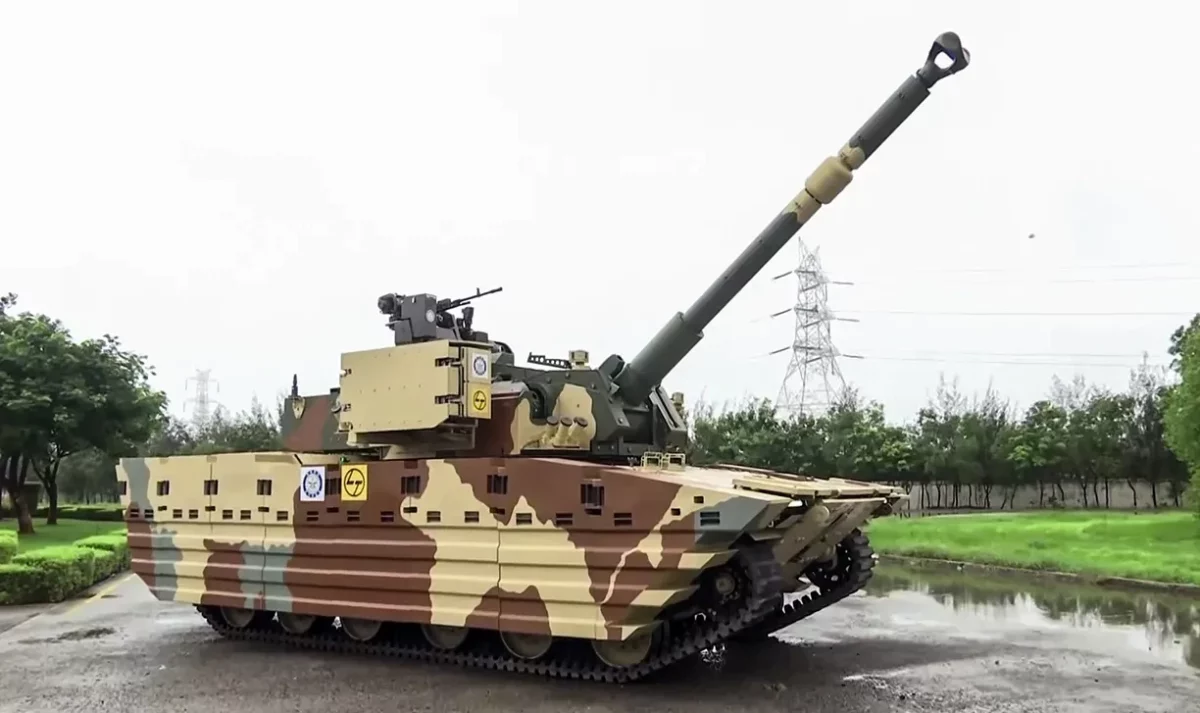
New Delhi, 10 September 2026 — Tata Advanced Systems Ltd (TASL) has emerged as the lowest bidder (L1) in the Ministry of Defence contest to develop a next-generation 25-tonne class light tank for the Indian Army under Project Zorawar. The programme, valued at approximately ₹20,000 crore, is being executed under the Make-I category and is intended to meet the Army’s requirement for a highly mobile armoured platform in high-altitude and difficult terrain.





The selection follows a three-year evaluation of technical and commercial bids submitted by five corporate entities. Mahindra Defence Systems finished as the second-lowest bidder (L2) and will also be invited to develop a prototype. TASL has been tasked with developing and demonstrating two operational prototypes within 130 weeks.
Project Zorawar and the AFV-ILT Requirement
Project Zorawar is linked to the Armoured Fighting Vehicle–Indian Light Tank (AFV-ILT) programme. The Indian Army requires a light tank optimised for high-altitude sectors such as Ladakh, where heavier main battle tanks, including the T-72 and T-90, face constraints of mobility, logistics, and oxygen-thin environments.
The overall requirement is commonly cited at 354 light tanks. An initial batch of 59 units has already been assigned to the Defence Research and Development Organisation (DRDO) in partnership with Larsen & Toubro. The remaining approximately 295 tanks fall under the competitive Make-I process in which TASL and Mahindra have now been selected to build prototypes. Once the prototypes are evaluated, production orders are expected to be divided between the two firms.
The tank is named after General Zorawar Singh Kahlon (also known as Zorawar Singh Kahluria), a 19th-century Dogra commander who led campaigns in Ladakh, Baltistan, and western Tibet. The choice of name underscores the platform’s intended role in Himalayan operations.
Procurement under the Make-I Category
The programme is being implemented under the Ministry of Defence’s Make-I category. This framework provides government funding of up to 70 per cent of the design and development cost of prototypes, with the objective of encouraging indigenous design, private-sector participation, and reduced import dependence.
The issuance of the production order was delayed after objections were raised by a competing bidder. Following review by the Indian Army and the Ministry of Defence, the objections were not sustained, and the process has now advanced. The arrangement is notable because it will, for the first time, see a private-sector company fully design and build a battle tank for the Indian armed forces.
Platform Characteristics
The 25-tonne class light tank is designed for rapid deployment, including air transport. Two vehicles can be carried in an Indian Air Force C-17 Globemaster III. Reported features of the existing DRDO–L&T Zorawar design, which informs the broader programme, include a 105 mm high-pressure rifled gun with autoloader, a remote weapon station, provision for Nag Mk-II anti-tank guided missiles or loitering munitions, modular armour meeting STANAG 4569 Level 4 frontal protection, an active protection system, amphibious capability, and a high power-to-weight ratio for mountain mobility.
The platform is intended to operate not only in high-altitude areas but also in deserts, marshlands, and riverine terrain, thereby offering the Army a lighter alternative to conventional main battle tanks across multiple operational theatres.
Significance for Indigenous Defence Manufacturing
The outcome of the bid strengthens the role of Indian private industry in complex armoured vehicle programmes. TASL’s L1 position and Mahindra’s parallel prototype mandate are intended to preserve competition, create redundancy in the supply chain, and give the Army more than one design to evaluate before large-scale production. The 130-week prototype timeline will be a critical test of both companies’ ability to meet technical and schedule requirements under the Make-I framework.
The project forms part of a wider effort to expand domestic design and production of major land systems and to field a purpose-built light tank for the high-altitude environment along India’s northern borders.