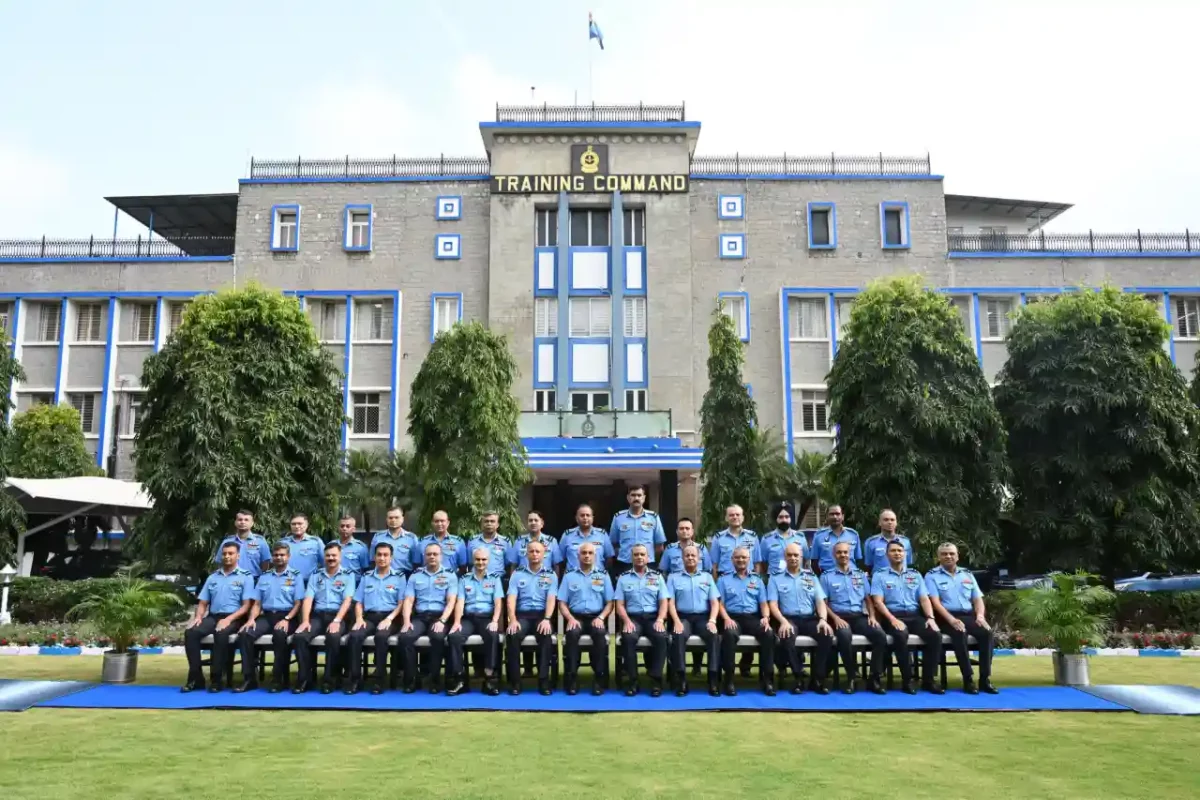
The Indian Air Force’s Training Command Commanders’ Conference 2026 was held at Headquarters Training Command in Bengaluru from September 10 to 12, bringing together senior commanders to review training priorities and their alignment with the IAF’s strategic objectives.





Air Marshal S Shrinivas, Air Officer Commanding-in-Chief (AOC-in-C), Training Command, presided over the three-day conference, which focused on strengthening training standards and enhancing the operational capabilities of the Indian Air Force.
Senior branch heads from Headquarters Training Command presented comprehensive reviews of their respective domains during the conference. The presentations outlined ongoing and proposed initiatives aimed at strengthening training objectives and preparing personnel for evolving operational requirements.
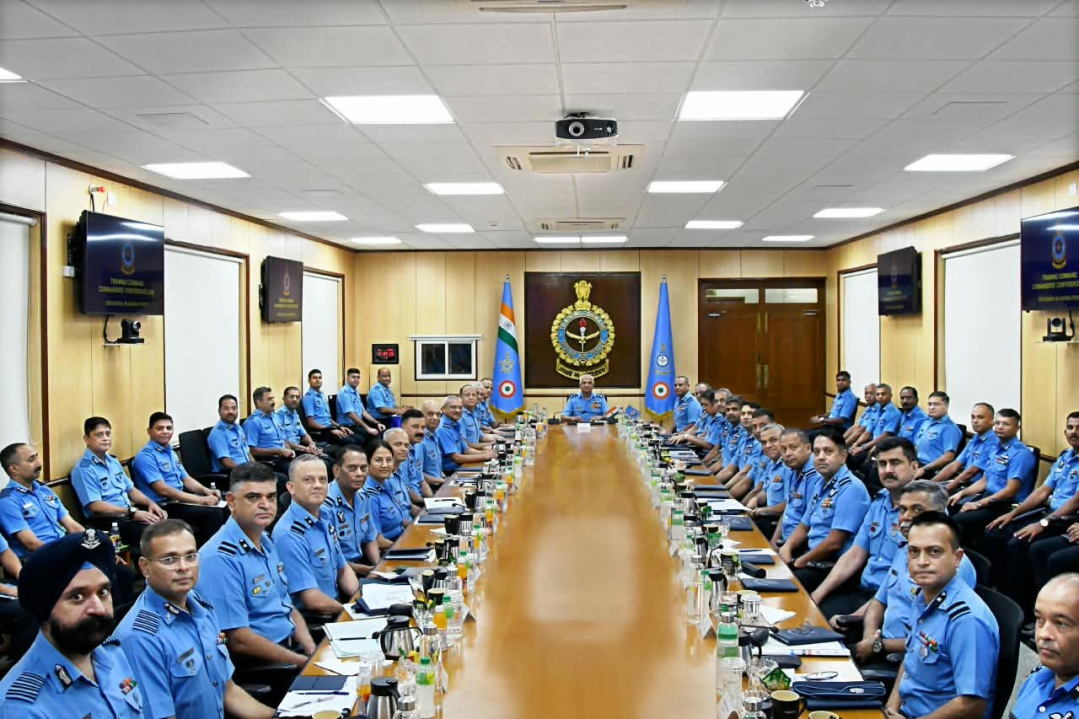
The conference also featured guest lectures covering important issues related to the future of the Indian Air Force. These included discussions on the IAF’s future acquisition plans as well as critical policy updates concerning the re-induction of Agniveervayus.
Addressing the commanders, Air Marshal S Shrinivas emphasised the importance of transformative training in strengthening the combat readiness of the Indian Air Force. The discussions reflected the growing requirement to continuously adapt training methodologies to technological advancements and changing operational environments.
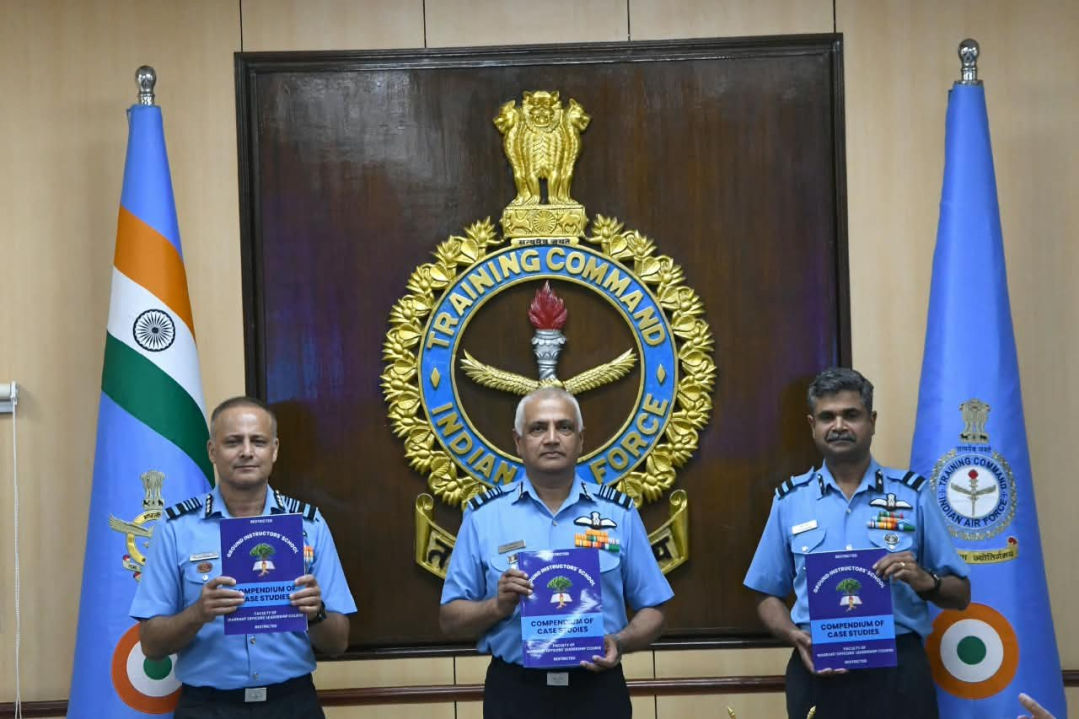
The conference provided a platform for commanders and senior officers to assess existing training mechanisms, exchange perspectives and identify measures for developing a more capable and future-ready force.
The event concluded with the presentation of trophies to Air Force stations that demonstrated excellence in Operations, Maintenance and Administration.
Air Force Station Yelahanka received the prestigious “Pride of Training Command” trophy, recognising its overall performance and contribution to the objectives of Training Command.
The Commanders’ Conference highlighted the IAF’s continued emphasis on modernising its training ecosystem and ensuring that its personnel remain prepared to meet future operational challenges.