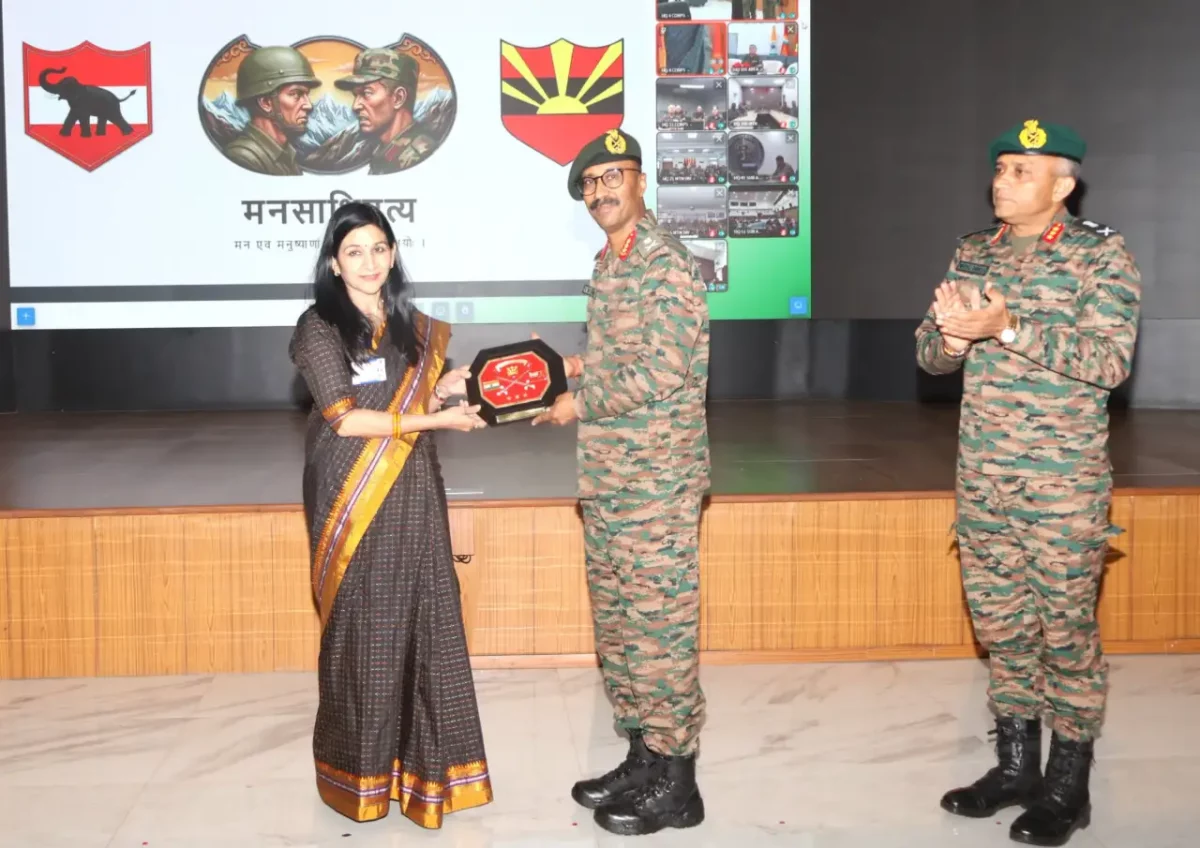
The Indian Army’s Gajraj Corps has commenced a four-day Psychological Resilience and Adaptability Seminar at Tezpur in Assam, focusing on strengthening mental resilience, managing operational stress and enhancing the effectiveness of personnel operating in demanding environments.





Conducted under the aegis of Eastern Command, the seminar brings together representatives of the Indian Army and Central Armed Police Forces (CAPFs), providing a common platform to address the psychological and behavioural dimensions of military and security operations.
Eastern Command Army Commander Lt Gen VMB Krishnan addressed the seminar, underscoring the importance of psychological resilience and adaptability as integral components of operational preparedness.
The seminar is being conducted under the stewardship of Mrs Nishi Misra, Director of the Defence Institute of Psychological Research (DIPR), along with a team of senior scientists from the DRDO’s DIPR.
The participation of senior scientific personnel from DIPR reflects the Army’s increasing emphasis on applying behavioural science and psychological research to address challenges faced by soldiers and security personnel during prolonged and demanding operational deployments.
Mental resilience has emerged as an important component of military preparedness, particularly as personnel may be required to operate for extended periods under conditions involving uncertainty, physical fatigue, isolation and sustained operational pressure. The ability to remain focused, adapt to changing circumstances and make sound decisions under stress can directly influence individual and collective effectiveness.
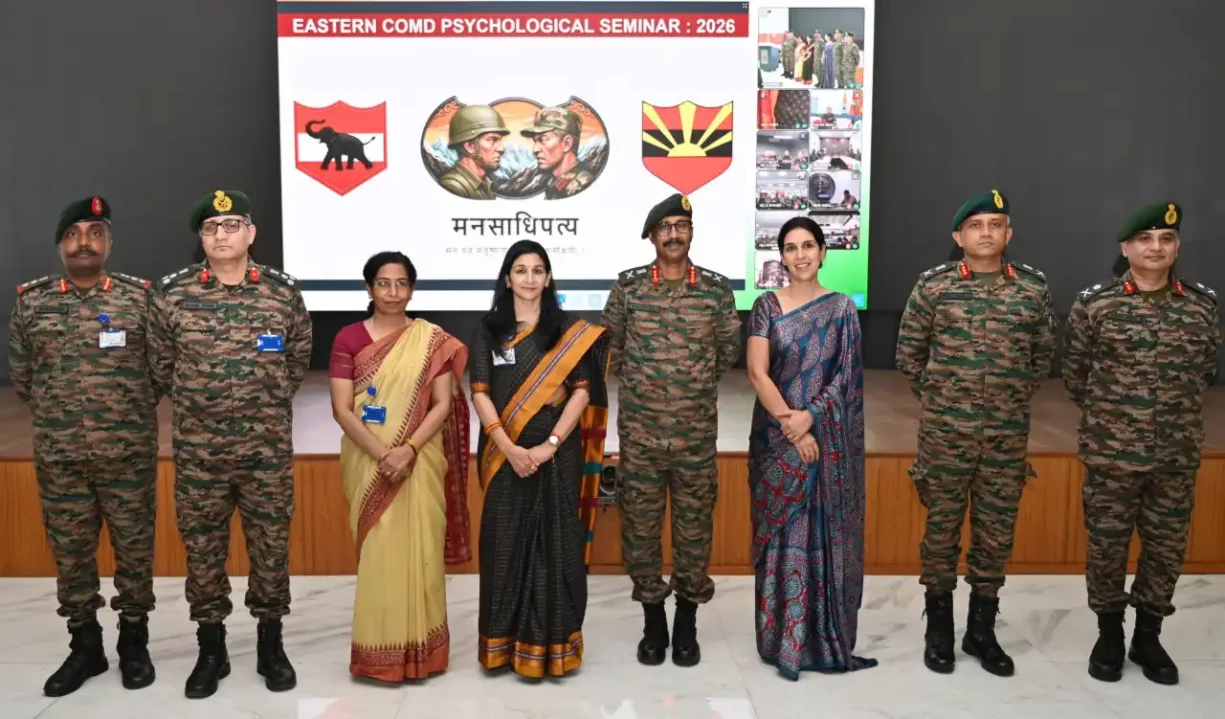
The four-day programme is therefore aimed at addressing psychological preparedness alongside conventional military training. Its focus on stress management is intended to help personnel better understand and manage the pressures associated with operational responsibilities while maintaining professional performance.
The participation of CAPF representatives also adds an inter-agency dimension to the initiative. Army and CAPF personnel frequently operate in challenging security environments, where effective coordination, individual resilience and the ability to function under pressure are important to mission outcomes.
The seminar’s emphasis on adaptability is particularly relevant to the evolving nature of contemporary security operations. Personnel are increasingly required to respond to rapidly changing situations while maintaining situational awareness and operational effectiveness. Psychological preparedness can complement physical conditioning, tactical proficiency and technological capabilities in preparing forces for such circumstances.
For the Indian Army, resilience-building is also closely linked to the broader concept of human performance. Modern military operations place significant demands on personnel, making it necessary to prepare soldiers not only for physical and tactical challenges but also for the psychological pressures associated with operational duties.
The involvement of DIPR scientists provides a specialised scientific dimension to these efforts. As a DRDO establishment concerned with psychological research and applications relevant to the armed forces, DIPR’s participation enables operational personnel to engage with research-based approaches to resilience, adaptability and stress management.
The seminar at Tezpur comes in the wider context of the Army’s efforts to maintain a future-ready force capable of operating effectively across diverse and demanding environments. While technology, intelligence and modern weapon systems remain central to military capability, the human element continues to be critical to translating these capabilities into operational outcomes.
Gajraj Corps, which operates under Eastern Command, has a significant role within the Army’s eastern theatre. The region presents a demanding operational environment, making preparedness, adaptability and sustained professional performance important aspects of military effectiveness.
By bringing together Army and CAPF personnel, the seminar also reinforces the importance of shared learning and institutional cooperation among organisations responsible for national security. Common exposure to resilience-building and stress-management practices can contribute to a better understanding of the challenges faced by personnel across different operational environments.
The four-day programme is expected to focus on strengthening participants’ ability to deal with psychological stress, adapt to demanding situations and sustain effectiveness during operational tasks. The broader objective is to build personnel who can maintain composure and professional judgement even when confronted with prolonged or unpredictable pressures.
The initiative also highlights a gradual broadening of the concept of combat readiness. Operational preparedness is no longer confined to weapons proficiency, physical endurance and tactical training. It increasingly encompasses psychological preparedness, cognitive adaptability, leadership under pressure and the ability to sustain performance in complex environments.
The Army’s emphasis on these aspects is particularly significant as contemporary operations become increasingly multidimensional. Personnel may simultaneously face physical demands, information pressures, rapidly changing situations and prolonged periods of heightened alertness. Developing psychological resilience can help ensure that these pressures do not undermine operational performance.
The presence of Lt Gen VMB Krishnan at the seminar underlines the importance being attached to the initiative at the command level. The participation of the Army’s senior leadership, along with specialists from DIPR, provides an interface between operational experience and scientific expertise.
The Tezpur seminar thus represents an effort to strengthen one of the most important elements of military capability—the ability of personnel to remain resilient, adaptable and effective under pressure. By combining military participation with scientific expertise and extending the programme to CAPF representatives, Eastern Command and Gajraj Corps are placing psychological preparedness within the broader framework of operational readiness.
As security challenges continue to evolve, the ability of personnel to adapt without losing focus or effectiveness will remain a critical component of force preparedness. The four-day seminar at Tezpur seeks to strengthen precisely that capability, reinforcing the principle that a stronger mind contributes to a stronger force.