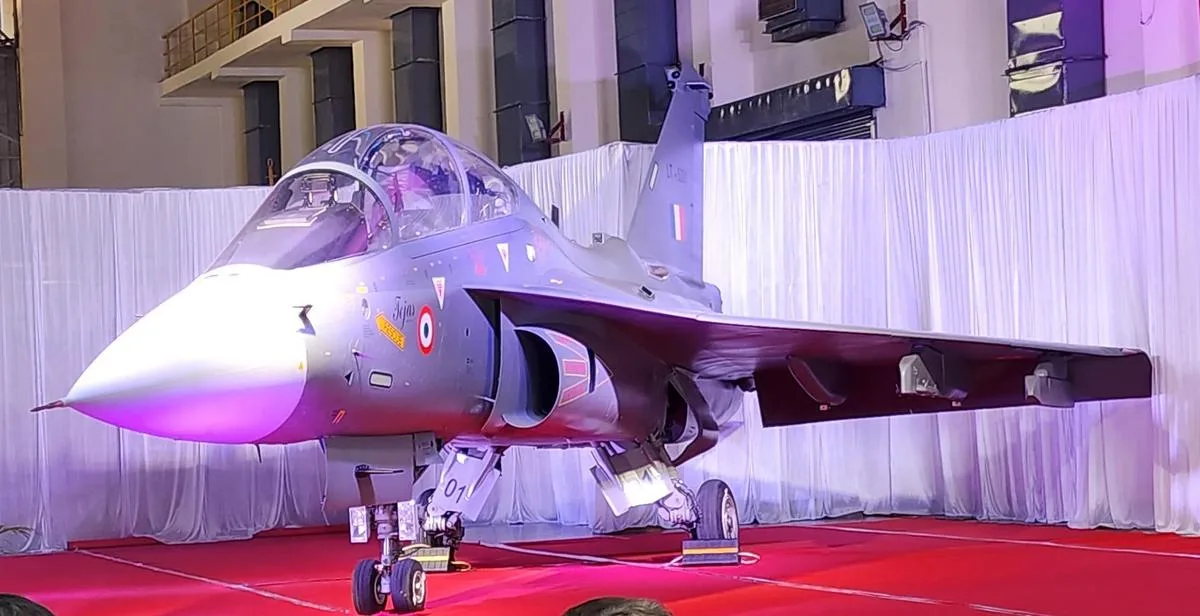
Hindustan Aeronautics Limited (HAL) is set to hand over LCA Tejas Final Operational Clearance (FOC) twin-seater trainer aircraft and HTT-40 basic trainer aircraft to the Indian Air Force, along with Dhruv Next Generation (NG) helicopters to Pawan Hans Limited, in a ceremony scheduled to be held in Bengaluru on September 18.





The handover ceremony will bring together senior leaders from the defence and civil aviation sectors, highlighting the expanding role of India’s indigenous aerospace industry in meeting requirements across both military and civil domains. Defence Minister Rajnath Singh and Civil Aviation Minister K Rammohan Naidu are scheduled to attend the event.
Chief of the Air Staff Air Chief Marshal AP Singh, Defence Production Secretary Sanjeev Kumar, Civil Aviation Secretary Samir Kumar Sinha and HAL Chairman and Managing Director Ravi K are also expected to be present. Senior officials from the Ministry of Defence, Ministry of Civil Aviation, the Indian Air Force, Pawan Hans, regulatory agencies and the aerospace and defence industry are expected to participate.
The delivery of the Tejas trainer aircraft represents an important component of the Indian Air Force’s efforts to strengthen indigenous capabilities in combat aircraft training. The twin-seater configuration provides a platform for training and conversion activities associated with the Tejas fighter programme while supporting the broader ecosystem built around India’s indigenous light combat aircraft.
Alongside the Tejas trainers, HAL will hand over HTT-40 basic trainer aircraft to the Indian Air Force. The platform is intended for the basic training stage of military flying, making it an important element of the IAF’s pilot training infrastructure. Its induction is part of the wider effort to expand the role of domestically designed and manufactured aircraft in India’s military aviation ecosystem.
The HTT-40 has also emerged as a significant programme within India’s indigenous aerospace manufacturing push, as basic trainer aircraft form the foundation of military pilot training. A dependable domestic platform can contribute to greater control over training requirements while strengthening the industrial capabilities needed to design, manufacture and support aircraft within the country.
The third platform involved in the ceremony is the Dhruv Next Generation helicopter, which will be handed over to Pawan Hans Limited. The helicopter forms part of India’s indigenous rotary-wing aviation ecosystem and its delivery to a civil aviation operator demonstrates the potential application of domestically developed aerospace platforms beyond military operations.
The combined handover of fighter trainers, basic trainer aircraft and helicopters highlights the breadth of India’s aerospace manufacturing ambitions. Rather than being confined to a single category of aircraft, domestic aerospace production is increasingly being positioned to address requirements ranging from military pilot training to civil helicopter operations.
The Ministry of Defence has described the event as a milestone in India’s push for self-reliance in aerospace and defence manufacturing. According to the ministry, the platforms demonstrate the growing ability of HAL and its industry partners to design, develop and manufacture aircraft and helicopters for both military and civil applications.
The government has also linked the induction of these platforms to efforts to strengthen domestic aerospace capabilities and reduce dependence on foreign sources. Building an indigenous aviation ecosystem involves not only manufacturing aircraft but also developing expertise in design, systems integration, production, maintenance and long-term support.
For the Indian Air Force, greater availability of indigenous training platforms can contribute to the development of a more integrated domestic aviation ecosystem. Training aircraft occupy a critical position in the military aviation pipeline, as pilots progress through different stages of flying instruction before moving on to more advanced operational platforms.
For India’s civil aviation sector, the Dhruv NG handover to Pawan Hans carries significance in demonstrating the use of domestically manufactured helicopters for civil applications. Pawan Hans operates in areas where helicopter services can provide connectivity and specialised aviation support, making the availability of indigenous platforms relevant to the broader development of India’s rotary-wing sector.
The presence of senior officials from both defence and civil aviation ministries also reflects the increasingly interconnected nature of India’s aerospace manufacturing base. Technologies, industrial capabilities and supply chains developed through aerospace programmes can have applications across military and civilian aviation.
The September 18 ceremony in Bengaluru is therefore expected to serve not merely as a formal handover but also as a showcase of India’s expanding aerospace production capabilities. The delivery of the Tejas FOC twin-seater trainer, HTT-40 and Dhruv NG helicopters places indigenous aircraft at the centre of both military and civil aviation requirements.
The event underscores the government’s continuing emphasis on self-reliance in aerospace and defence manufacturing, with HAL and its industry partners playing a central role in translating indigenous design and development efforts into operational and civil platforms. As India’s aerospace industry expands, the ability to manufacture, support and upgrade such platforms domestically will remain an important element of efforts to reduce dependence on foreign sources and build long-term national aerospace capability.