
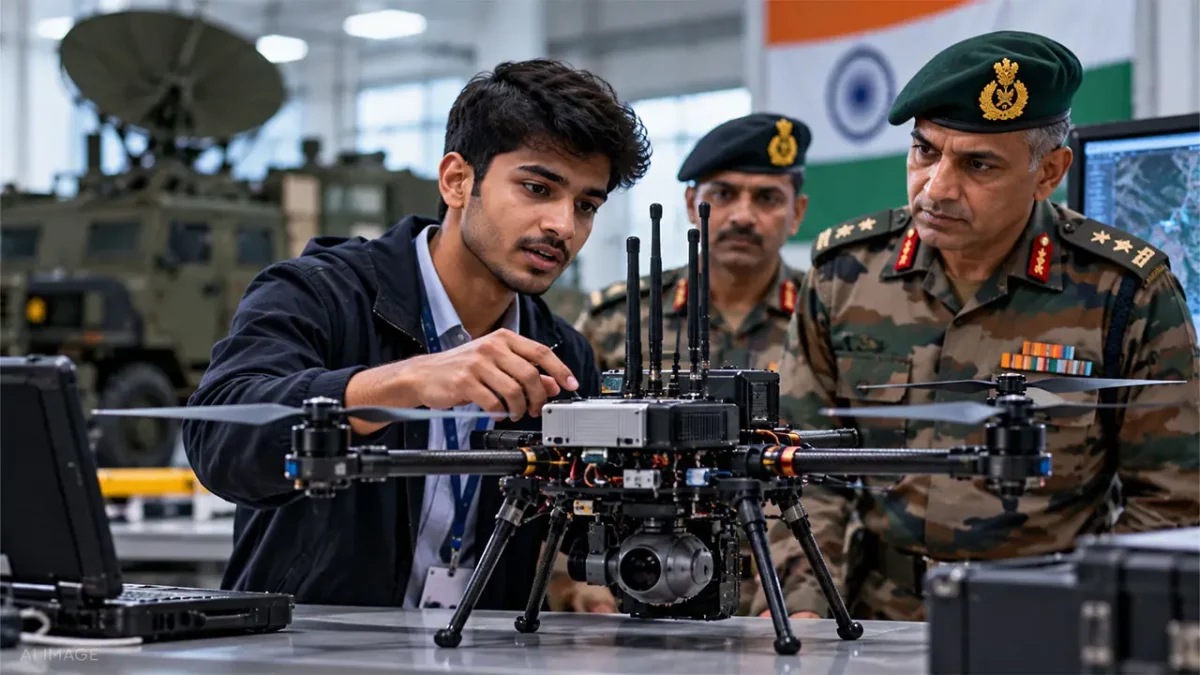
Hamirpur, Himachal Pradesh — A fifth-semester Computer Science student at Government Polytechnic College, Hamirpur (Baru), has been awarded a ₹3.5 crore grant by the Ministry of Defence to develop an indigenous surveillance drone intended for potential use by the Indian Army along high-altitude borders.





Sarvesh Sharma, a resident of Bahanvi village in Hamirpur district, will lead development of the Rudra Edge T-1 (Spectra) under the Defence Innovation Organisation (DIO) and Innovations for Defence Excellence (iDEX) programmes. The project is designed for border surveillance and is proposed to reduce the likelihood of detection by enemy radar and to withstand electronic jamming. These features remain development objectives and will be confirmed only after the system is built and tested.
Sharma comes from a modest household. His father, Sanjeev Sharma (also reported as Sanjeev Kumar), works as a daily-wage labourer, and his mother is a homemaker. He completed his schooling at Government Senior Secondary School, Bahanvi, before joining the polytechnic.
The project’s origin lies in a national-level Open Cardboard Drone Competition organised by IIT Jodhpur and the Konark Corps. Approximately 50 teams from institutions across the country participated. Sharma’s team placed fourth and received a cash prize of ₹10 lakh. Discussions at the event on the Army’s difficulties in high-altitude border surveillance prompted him to pursue a specialised prototype. He subsequently built that prototype at a cost of about ₹87,000 and submitted a proposal under the Ministry’s individual innovation framework. The proposal was approved in late September 2026.
Development will take place at an incubation facility linked to IIT Roorkee, where Sharma will have access to laboratories and professional mentorship. The Ministry has allowed 20 days for completion of project formalities. The stated target for development is 20 months.
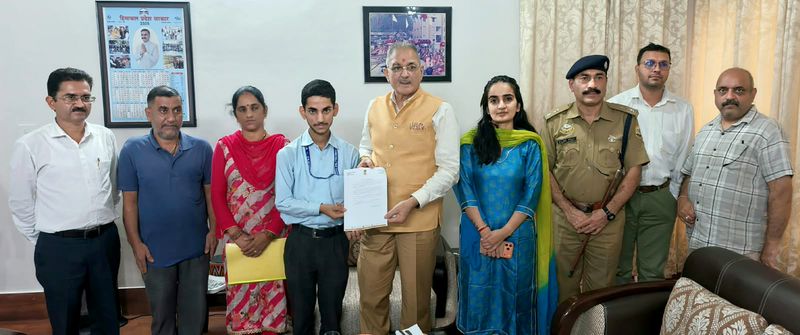
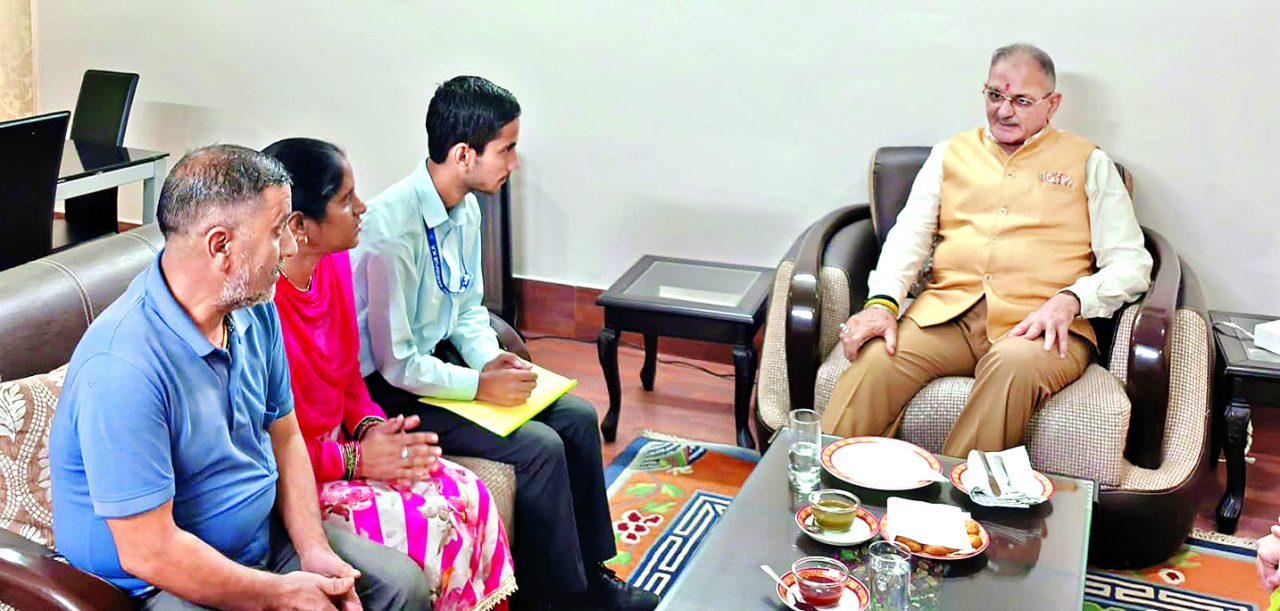
Himachal Pradesh Governor Kavinder Gupta felicitated Sharma on 23 September 2026. The Governor described the achievement as evidence of the talent and technological potential of the State’s youth and linked it to the broader objective of indigenous defence capability under Aatmanirbhar Bharat. During the meeting, he discussed the drone’s intended features, the challenges of development, and Sharma’s plans for advancing indigenous unmanned systems.
The grant converts a low-cost student prototype into a structured defence innovation programme. Officials have framed the work as support for Army border surveillance rather than as a finished operational platform. Final performance, including radar evasion and anti-jamming behaviour, will depend on laboratory development, trials, and subsequent evaluation by the user service.