
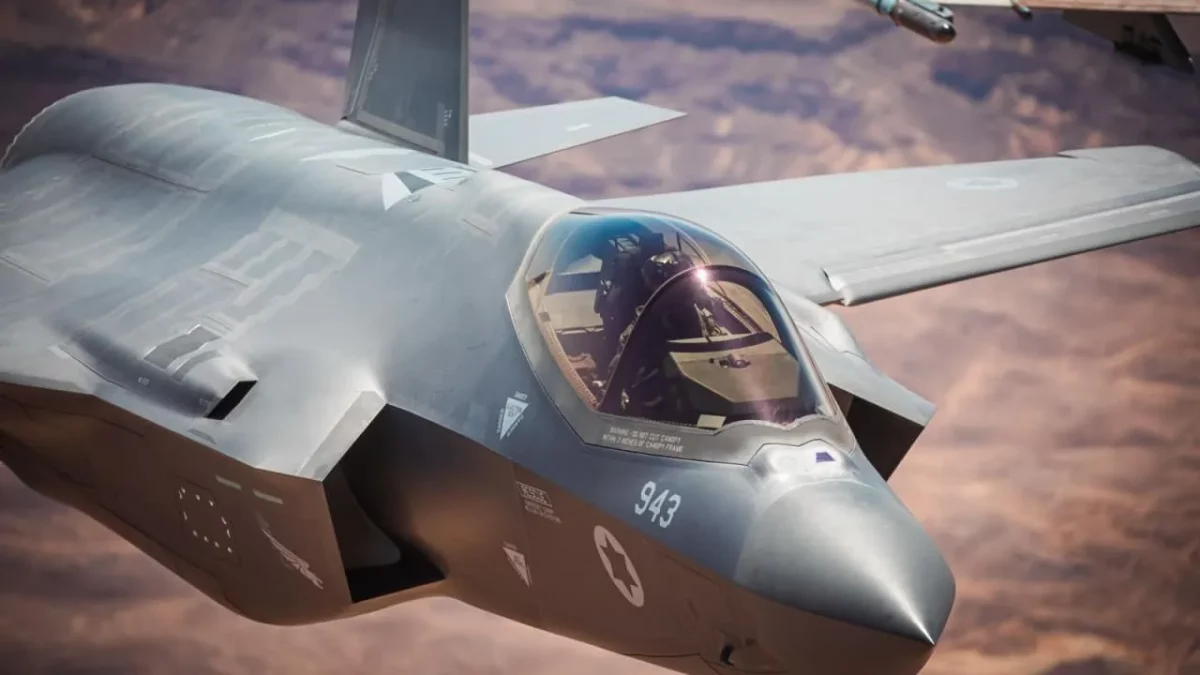
Jodhpur: United States Air Force F-35A Lightning II stealth fighters have begun operational flying at Exercise Tarang Shakti 2026, marking the first time the fifth-generation combat aircraft has trained with the Indian Air Force on Indian soil.




Six F-35 Lightning II aircraft and more than 200 American airmen arrived at Air Force Station Jodhpur for the second edition of the multinational exercise, which opened on 26 September and will continue until 12 October. The operational flying phase commenced after the inaugural ceremony, placing the American jets in a live training environment alongside Indian and partner-nation aircraft rather than in an air-show display.
The F-35 had earlier appeared in India at Aero India. Indian crews had also flown with the type overseas, including during Exercise Pitch Black in Australia. Tarang Shakti is the first occasion on which the aircraft is undertaking tactical missions from an Indian base.
US Ambassador to India Sergio Gor announced the arrival on 26 September, writing: “American airpower has arrived in Jodhpur! Six F-35 Lightning IIs and 200+ Airmen are now in India for their first-ever participation in Exercise Tarang Shakti. Excited to see America’s premier fifth-generation fighters make its Tarang Shakti debut, flying alongside the IAF and partners.”
Power in Partnership at Jodhpur
The Indian Air Force is hosting the exercise under the theme “Power in Partnership.” Seven friendly foreign countries are participating with air assets: the United States, France, Germany, Australia, the United Arab Emirates, Bangladesh and Sri Lanka. About 32 additional countries are attending as observers, bringing overall participation to around 40 nations. Invitations had been extended to 65 countries.
Foreign aircraft at Jodhpur include the US F-35 Lightning II and KC-135 tankers; French Rafale fighters, A400M transports and Multi Role Tanker Transport aircraft; UAE F-16s and a Global 6000; German A400Ms; an Australian C-130 or KC-30A; a Bangladeshi C-130J; and a Sri Lankan King Air 350. The IAF is fielding Rafale, Su-30MKI, Tejas, Mirage-2000, Jaguar and MiG-29 aircraft, supported by airborne early warning and control platforms, transports and air-to-air refuelling tankers. Reports place the combined fleet at more than 80 aircraft and about 1,500 personnel.
Vice Chief of the Air Staff Air Marshal Ashutosh Dixit confirmed the F-35’s participation before the exercise opened. “For the first time, we are going to exercise with the F-35,” he said, adding that operational details of the aircraft’s employment may remain limited for security reasons. He also linked the drill to recent operational experience, stating that Operation Sindoor had provided lessons and that partner air forces bring their own combat experience. Combining those lessons in a realistic environment, he said, would allow crews to test assumptions, challenge procedures and improve interoperability.
What the exercise is designed to test
Planned missions include counter-air operations, air defence, reconnaissance, airlift and air-to-air refuelling, with unmanned systems and space-enabled capabilities also part of the broader training canvas. Flying is expected over ranges in western Rajasthan, including areas around Jaisalmer, Barmer and Phalodi.
The Ministry of Defence said the exercise would emphasise interoperability, mutual learning, aerospace safety and a clearer understanding of partner operating procedures. Beyond flying, the programme includes a professional seminar, an industrial tour for foreign contingents, the Sekhon Marathon, heritage visits and yoga sessions. The IAF has described the event as an opportunity to demonstrate operational standards and India’s indigenous aerospace and defence ecosystem.
The 2024 inaugural edition of Tarang Shakti was split between Sulur and Jodhpur. The 2026 edition is being conducted in a single phase at Jodhpur.
For Indian crews, the presence of the F-35 is significant because it places a low-observable, sensor-fused fifth-generation fighter in the same training airspace as the IAF’s mixed fourth-generation and indigenous fleet. For the United States, the deployment is a visible demonstration of expanding air-power cooperation with India. Officials on both sides have framed the exercise as professional military-to-military engagement rather than a signal of any procurement decision.
The flying programme continues through 12 October.