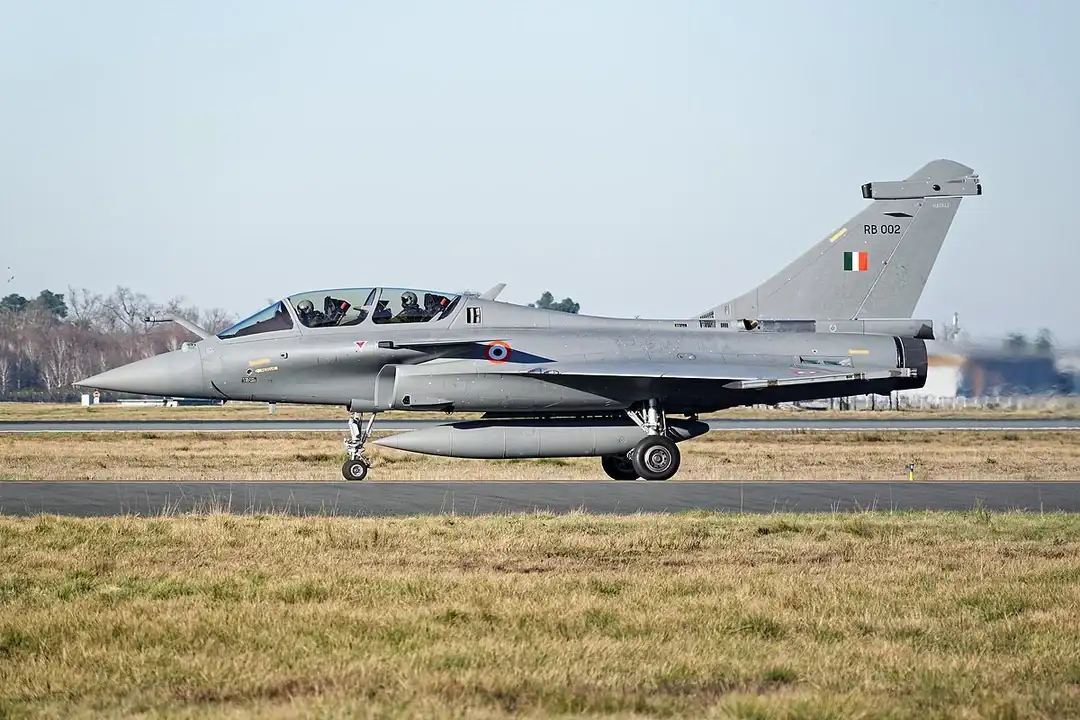
New Delhi, October 2, 2026: India expects to conclude the proposed procurement of 114 Rafale fighter aircraft for the Indian Air Force by the end of the current financial year, with the bulk of the jets to be assembled in India and indigenous weapons integrated on the platform, Defence Secretary Rajesh Kumar Singh has said.





Speaking to ANI on October 1, Singh, who is also Chairman of the Defence Research and Development Organisation, said bids submitted by the French side were under evaluation and that the Ministry of Defence should be able to reach a conclusion in the procurement cycle before the end of this year. The Times of India reported the government’s intention as being to close the contract by the end of the financial year.
“They had agreed to integrate Indian weapons even in the already-contracted Rafale Marines that we had bought. In this case, of course, we are going one step ahead, in the sense that it is a buy-and-make programme, with the bulk of the aircraft to be assembled in India, with significant levels of indigenisation and integration of Indian systems and weapons,” Singh said.
Dassault Aviation has submitted its commercial bid for manufacture of the bulk of the aircraft in India. The aircraft maker has agreed to integrate Indian weapons both on the proposed 114 jets and on the naval Rafales already contracted, the Defence Secretary said.
The buy-and-make structure is central to New Delhi’s position. Under the approach being discussed, only a limited number of aircraft would be delivered in fly-away condition from France, while the larger share would be assembled in India. At the NDTV Defence Summit on September 28, Singh said the French side had accepted India’s mandate of production in India with significant indigenisation, and that the programme would create a second fighter production line in the country alongside the indigenous Light Combat Aircraft programme.
The proposed order would sit on top of two existing Rafale contracts. The Indian Air Force already operates 36 Rafale aircraft acquired under a 2016 inter-governmental agreement. Separately, India contracted 26 Rafale Marine fighters for the Indian Navy in April 2025 at a cost of Rs 63,000 crore, comprising 22 single-seat and four twin-seat aircraft. The Ministry of Defence has stated that the naval agreement includes transfer of technology for integration of indigenous weapons in India, along with a fuselage production facility and maintenance, repair and overhaul support for engines, sensors and weapons.
Weapon integration has been a persistent point in the talks. India is seeking the ability to fit indigenous munitions and systems without remaining dependent on French weapons alone. France has indicated flexibility on this demand. On September 30, French Air and Space Force Vice Chief Lieutenant General Dominique Tardif said Paris understood the Indian Air Force’s requirements and was confident a way could be found to give India greater autonomy. Indian sources have indicated that access to interface control documentation, which defines how the aircraft’s systems communicate with an external weapon, could allow integration without transfer of the Rafale’s full mission-system source code. The Defence Secretary did not name the specific Indian weapons under discussion.
The programme is widely reported to be valued at about Rs 3.25 lakh crore, which would make it among the largest fighter acquisitions India has pursued. That figure remains an estimate while commercial bids are still under assessment. Earlier reporting has also referred to a possible split of 18 aircraft from France and 96 built in India, though the final industrial arrangement is still being negotiated.
The acquisition is being advanced against a depleted fighter inventory. The Indian Air Force’s combat squadron strength is currently assessed at 29, well below the sanctioned level, after the retirement of legacy types including the MiG-21. Singh has described the Rafale as a proven aircraft already in Indian service, and has said it performed well during Operation Sindoor.
He has also been explicit that the Rafale line will not displace indigenous programmes. The LCA Tejas Mk1A effort continues, with Hindustan Aeronautics Limited expected to induct at least one squadron by the end of this year. HAL has 27 airframes ready; 11 GE engines have been received, and the remaining airframes have been flown with canopy engines. Weapon integration on the Mk1A is described as nearly complete, while radar performance issues are still being addressed. The first flight of the Tejas Mk2 is scheduled for the middle of next year.
On a fifth-generation stop-gap, Singh said no decision had been taken to acquire a foreign fifth-generation fighter. “Our programme is AMCA, and we are putting all our eggs in this basket as of now,” he said. Requests for proposals have been invited from shortlisted vendors for the Advanced Medium Combat Aircraft, with additional time being allowed because of the complexity of the bids.