
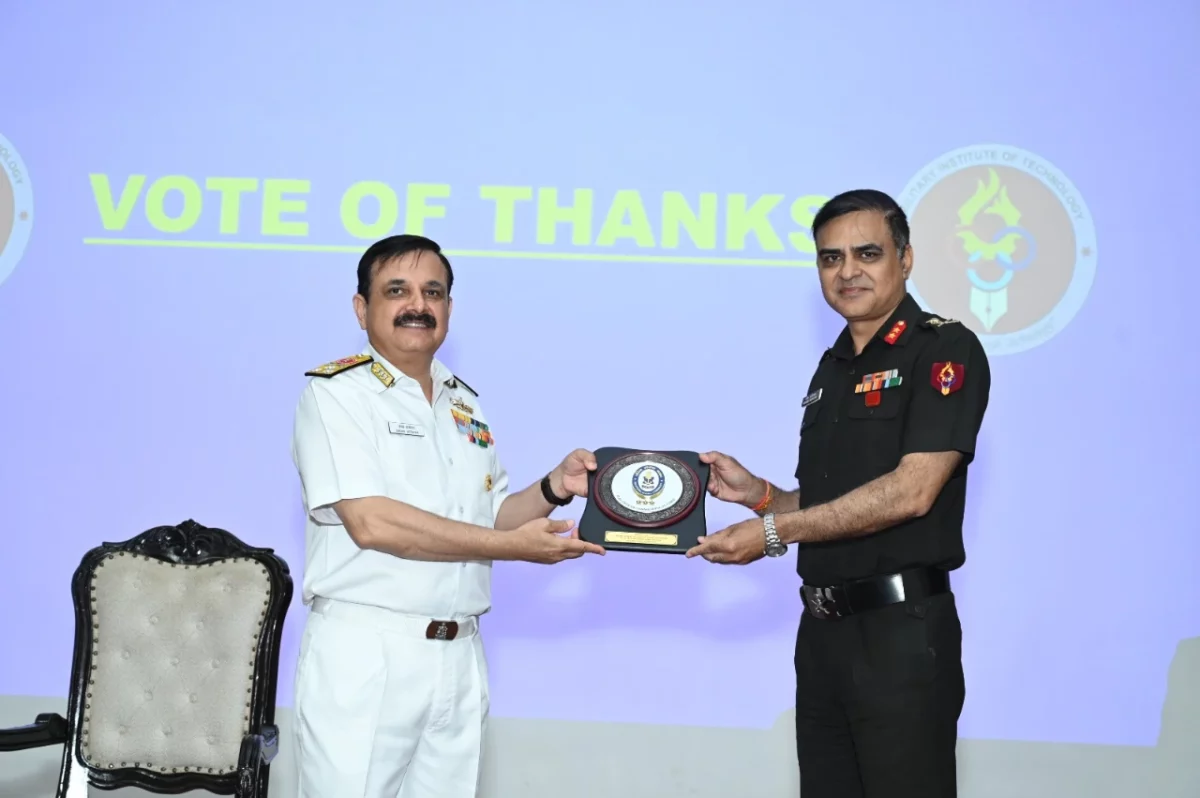
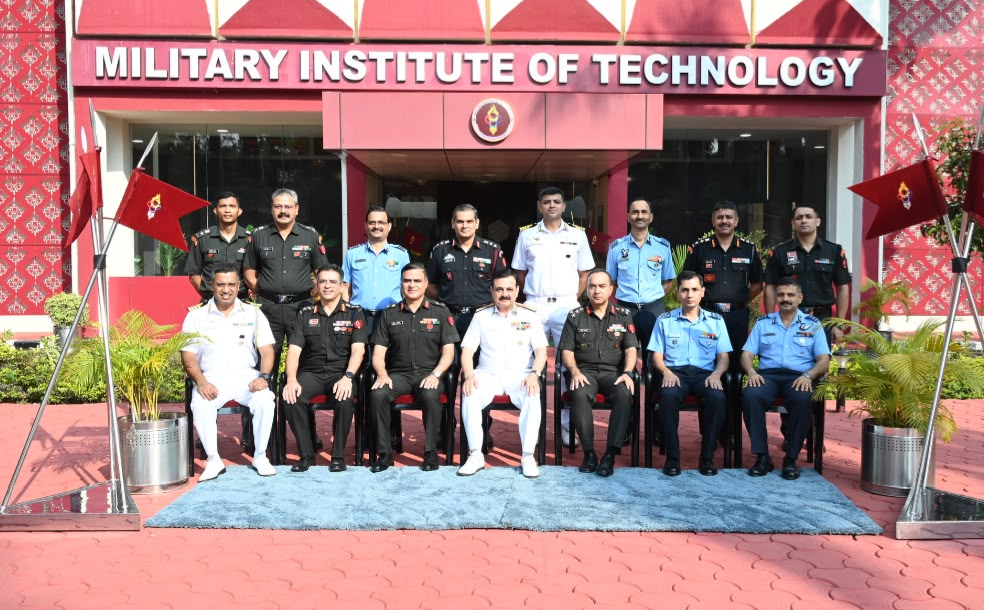
Pune, October 9, 2026: Vice Admiral Sanjay Vatsayan, Flag Officer Commanding-in-Chief (FOC-in-C), Western Naval Command, interacted with student officers undergoing professional military training at the Military Institute of Technology (MILIT), sharing operational perspectives on the evolving maritime security environment and the future of naval warfare.
Addressing student officers of the 9th Defence Services Technical Staff Course (DSTSC-09) and other ongoing courses at MILIT, the senior Indian Navy officer delivered a talk titled “The Evolving Maritime Battlespace: Operational Perspectives from the Western Seaboard.”
During the interaction, Vice Admiral Vatsayan highlighted the strategic importance of the Indian Ocean Region (IOR), the growing relevance of Multi-Domain Operations, lessons from Operation Sindoor and the need for continued capability development to meet emerging challenges in modern warfare.
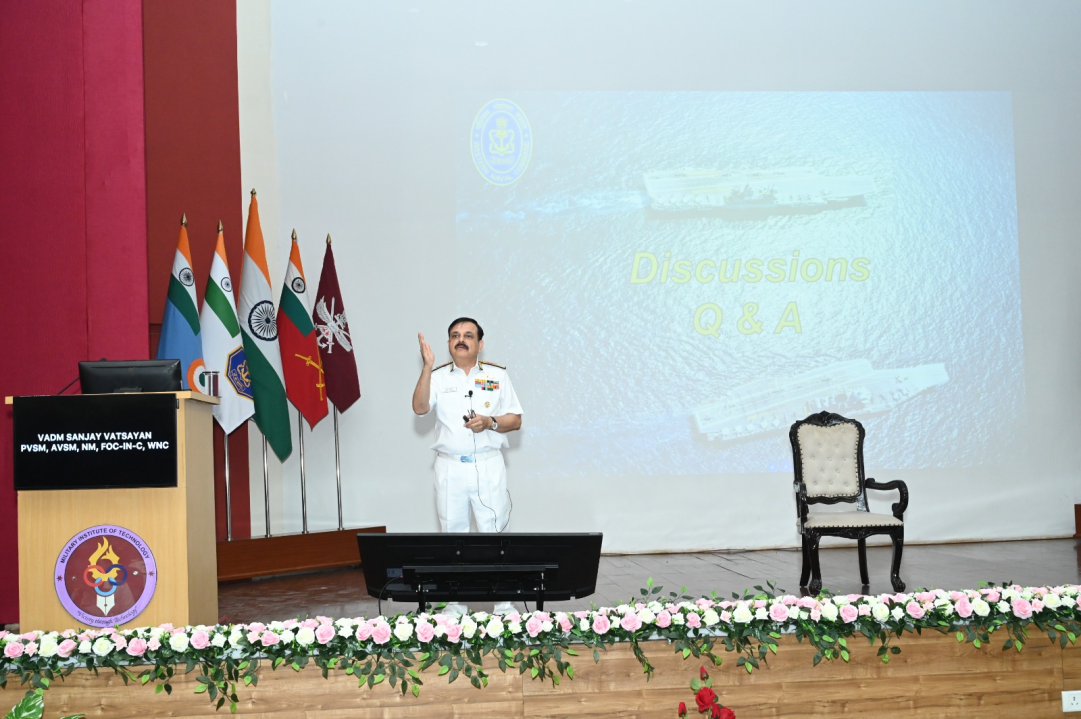
The Western Naval Commander discussed the strategic relevance of the Indian Ocean Region, which remains central to India’s maritime security interests and international trade. The region encompasses some of the world’s most important maritime trade routes and strategic chokepoints, making maritime security, surveillance and operational preparedness essential components of India’s national security framework.
His address provided student officers with an operational perspective on the challenges and responsibilities associated with safeguarding India’s western seaboard and maintaining maritime security across the wider region.
A significant aspect of the interaction was the discussion on lessons from Operation Sindoor and their relevance to future military operations. Vice Admiral Vatsayan shared insights into the operational lessons of the mission, placing them in the broader context of evolving warfare and the importance of coordinated military capabilities.
The discussion also highlighted the increasing significance of Multi-Domain Operations, where naval, land, air, cyber and space capabilities must operate in a coordinated manner to achieve military objectives. Such integration is becoming increasingly important as modern conflicts demand faster decision-making, effective information sharing and close coordination among the three services.
The Admiral also addressed capability development and the need for the Armed Forces to remain prepared for emerging operational challenges. With technological advancements transforming the nature of warfare, modern military operations increasingly depend on advanced surveillance systems, networked platforms, electronic warfare capabilities and integrated command-and-control structures.
The interaction offered student officers an opportunity to understand how operational experience, technological development and joint military planning contribute to future combat readiness.
During his visit, Vice Admiral Vatsayan also extended greetings on the occasion of Indian Air Force Day, observed annually on October 8. He emphasised the importance of jointness and integrated operations among the Armed Forces, underlining the need for closer coordination between the Indian Army, Indian Navy and Indian Air Force.
The interaction at MILIT reflected the importance of exposing officers undergoing advanced professional military education to operational perspectives from senior commanders. As the Indian Armed Forces continue to focus on integrated military capabilities and preparedness for future conflicts, such engagements provide valuable insights into the changing character of warfare and the strategic challenges facing India’s maritime security establishment.