
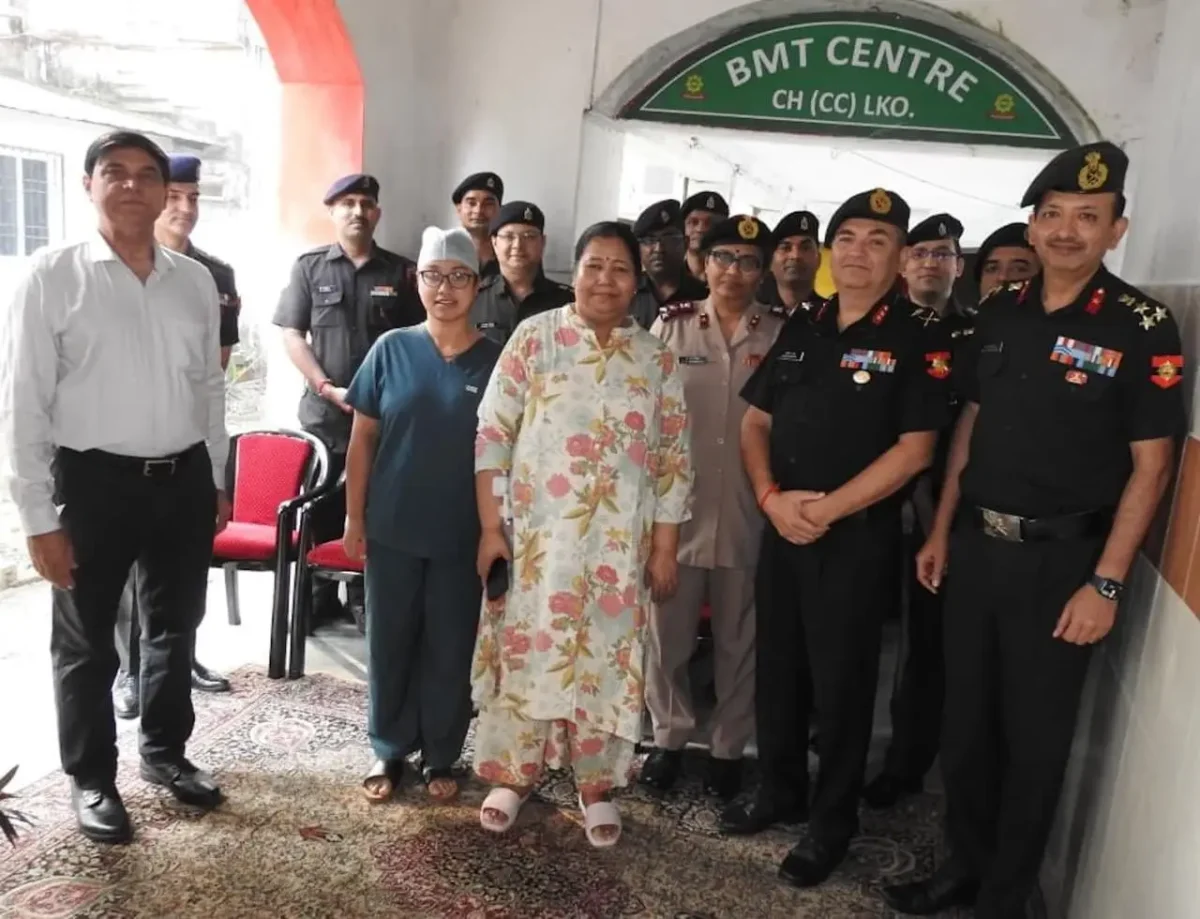
Lucknow, November 6, 2026: In a significant milestone for military healthcare, Command Hospital (Central Command), Lucknow, has successfully administered Chimeric Antigen Receptor (CAR) T-cell therapy to a 57-year-old woman suffering from Non-Hodgkin Lymphoma, marking a major advancement in specialised cancer treatment within the Armed Forces Medical Services (AFMS).




The patient, who underwent the advanced immunotherapy procedure at the hospital, is reportedly stable and ready for discharge following treatment. The achievement marks the first successful CAR T-cell therapy case under the Indian Army’s Central Command.
With this accomplishment, Command Hospital, Lucknow, has also become the second government hospital in Uttar Pradesh, after Sanjay Gandhi Postgraduate Institute of Medical Sciences (SGPGI), to successfully administer CAR T-cell therapy.
CAR T-cell therapy is an advanced form of cancer immunotherapy that involves collecting a patient’s T-cells, genetically modifying them in a laboratory to recognise specific proteins on cancer cells, and infusing them back into the patient’s body to target and destroy malignant cells.
The treatment represents a significant development in the management of certain blood cancers, particularly specific types of leukaemia and lymphoma. It offers an additional treatment option for eligible patients, including some whose cancers have not responded adequately to conventional therapies.
Non-Hodgkin Lymphoma is a group of cancers that affect the lymphatic system, an essential component of the body’s immune system. Depending on the specific type and stage of the disease, treatment may involve chemotherapy, immunotherapy, targeted medicines, radiation therapy or advanced cellular therapies such as CAR T-cell treatment.
The successful administration of this specialised therapy highlights the growing capabilities of Command Hospital, Central Command, in delivering advanced cancer care and complex medical procedures. It also reflects the clinical expertise, dedication and coordinated efforts of the AFMS medical team involved in the treatment.
The milestone further strengthens the role of Armed Forces medical institutions in adopting modern healthcare technologies and expanding access to specialised treatment facilities.
The achievement stands as an important step forward in military medical services, demonstrating the AFMS’s commitment to clinical excellence, medical innovation and high-quality patient care.