
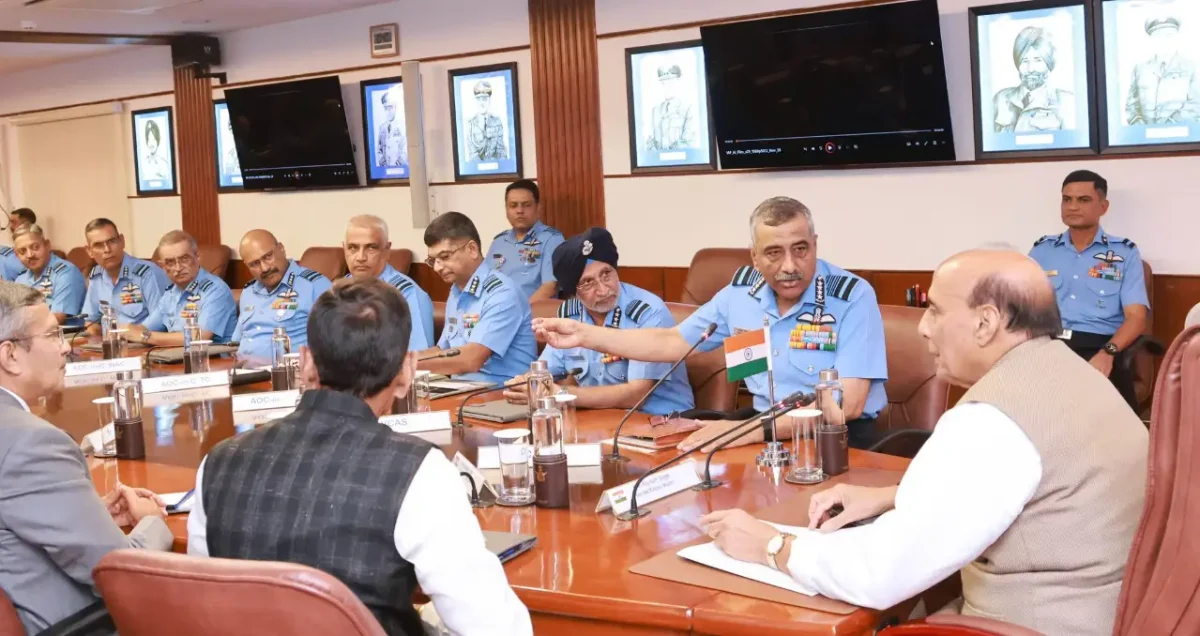
Defence Minister Rajnath Singh attended the Indian Air Force (IAF) Commanders’ Conference in New Delhi, where he emphasised the need to strengthen offensive and defensive capabilities, enhance intelligence and surveillance systems, and maintain operational readiness against conventional and emerging security threats.





Addressing senior commanders of the Indian Air Force, Rajnath Singh urged the Armed Forces to strengthen and sustain both offensive and defensive dimensions of the “element of surprise” to maintain an operational advantage in an increasingly complex security environment. He highlighted the importance of adapting military strategies to rapid technological advancements and the evolving nature of modern warfare.
The Defence Minister stressed that maintaining the element of surprise remains essential for military effectiveness, particularly as modern conflicts increasingly involve advanced technologies, electronic warfare, cyber capabilities, unmanned systems and sophisticated intelligence networks. He called for continuous improvements in preparedness to ensure that the Armed Forces remain capable of responding effectively to emerging challenges.
During his address, Rajnath Singh emphasised the importance of further strengthening intelligence and surveillance capabilities to identify potential threats before they materialise. He highlighted the need for proactive threat assessment, improved situational awareness and effective utilisation of technological resources to enhance national security.
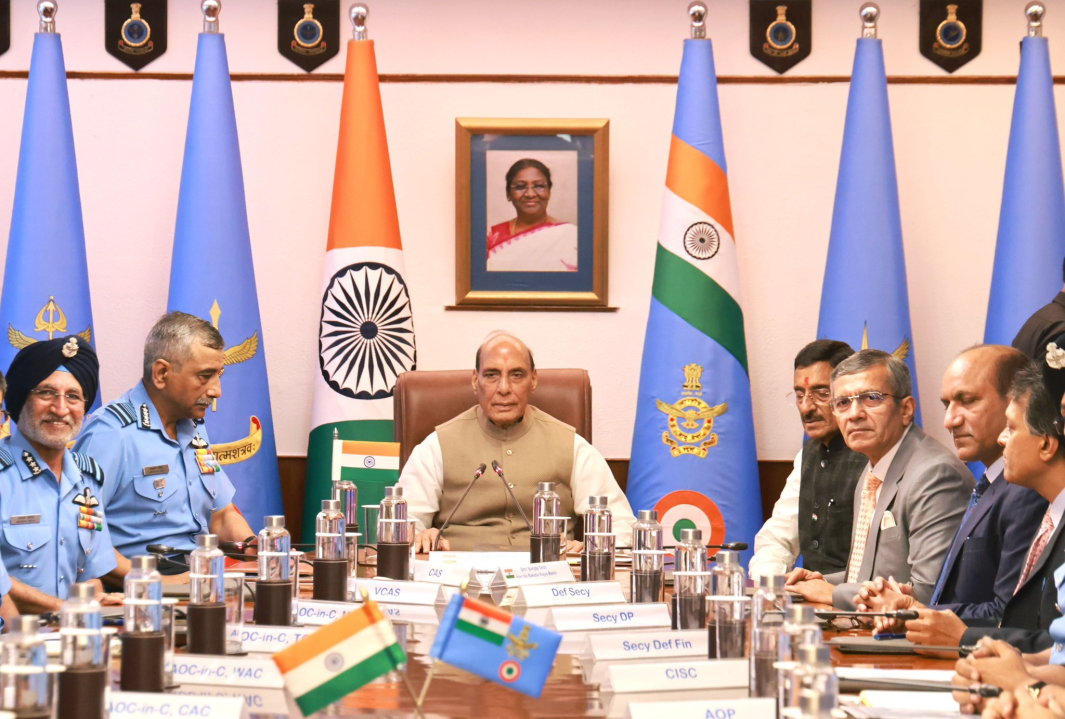
He also called for greater integration among military systems to improve operational coordination and decision-making. The Defence Minister underlined that effective integration of surveillance platforms, intelligence networks and operational systems is essential for responding to increasingly complex security challenges.
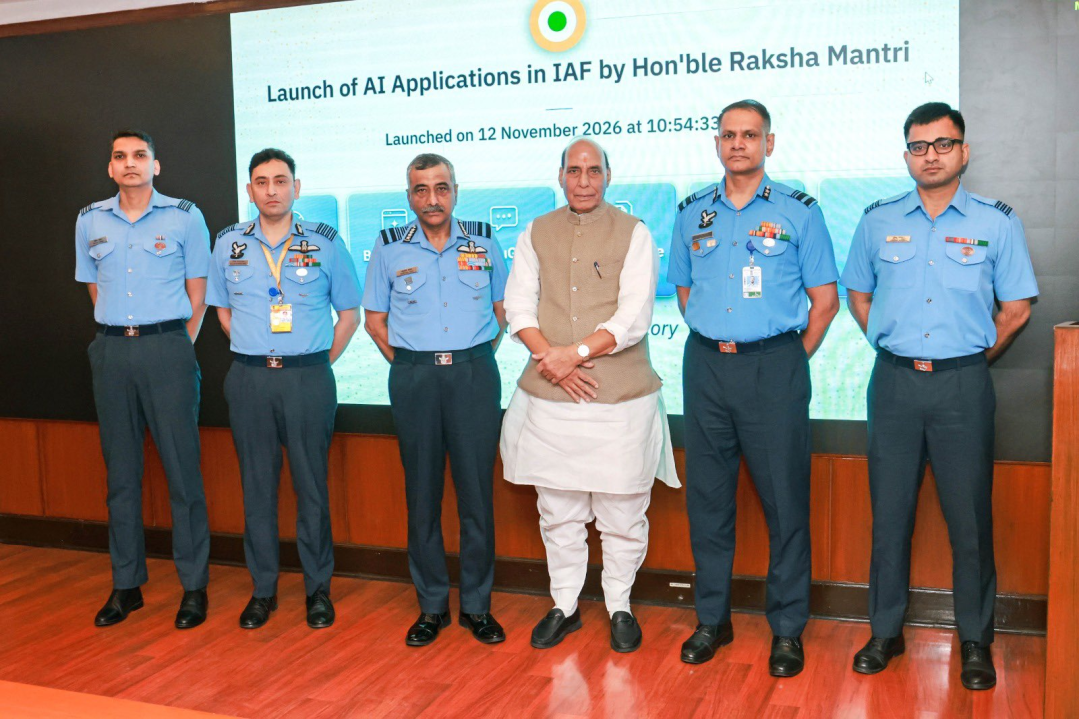
A significant highlight of the conference was the launch of in-house artificial intelligence applications developed by UDAAN for operations, administration and aerospace safety. The applications reflect the Indian Air Force’s growing focus on incorporating advanced technologies into its operational and organisational processes.
The AI applications are intended to support different aspects of Air Force functioning, including operational activities, administrative efficiency and aviation safety. Their introduction represents another step towards exploring indigenous technological solutions to improve effectiveness across various areas of military operations.
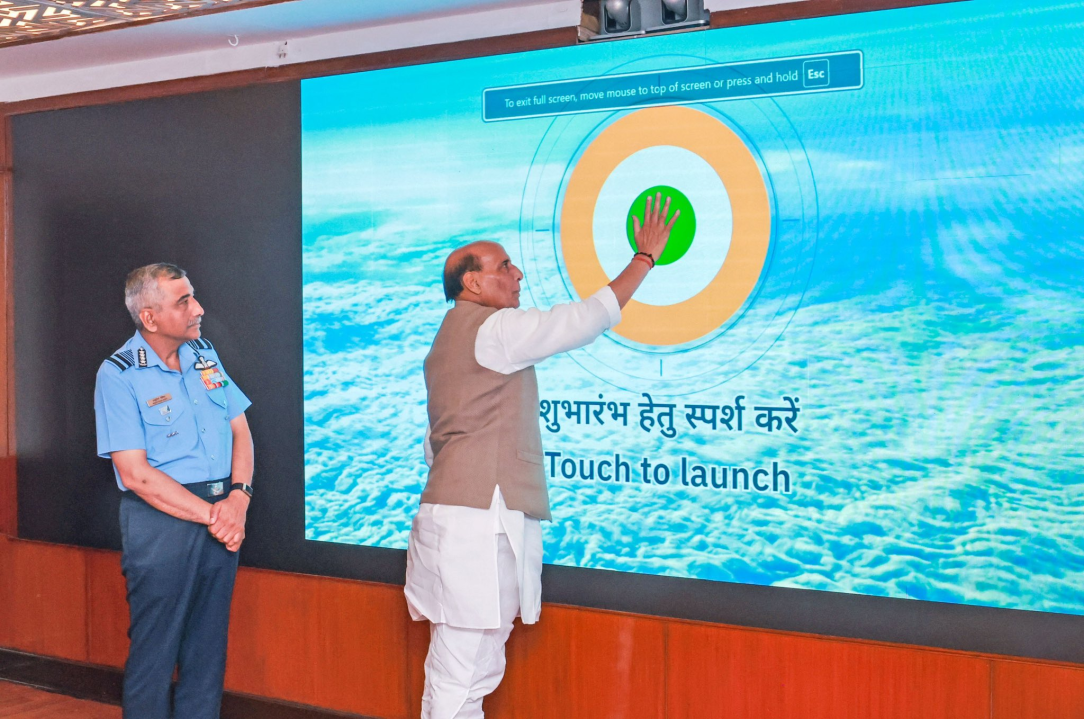
Artificial intelligence is increasingly becoming an important component of modern military systems, offering potential applications in data analysis, predictive assessment, information processing and decision support. Its integration into defence organisations can help improve efficiency, strengthen situational awareness and support faster decision-making in complex operational environments.
The launch of the UDAAN-developed applications also highlights the importance of indigenous innovation and technological self-reliance in India’s defence modernisation efforts. Developing in-house solutions allows military organisations to address specific operational requirements while building institutional expertise in emerging technologies.
The IAF Commanders’ Conference provides an important platform for senior Air Force leadership to review operational preparedness, assess emerging security challenges and discuss strategies for strengthening the service’s capabilities. Such interactions also help align technological development, training priorities and operational planning with evolving national security requirements.
Rajnath Singh’s address highlighted the changing character of warfare, where technological superiority, intelligence capabilities and the ability to anticipate threats are becoming increasingly important. His emphasis on offensive and defensive preparedness reflects the need for the Indian Air Force to maintain flexibility and readiness across a broad spectrum of potential operational scenarios.
The Defence Minister’s call for enhanced intelligence gathering, improved surveillance capabilities and greater integration among systems also underlines the importance of coordinated and technology-driven military operations. These capabilities are essential for maintaining situational awareness and ensuring effective responses to rapidly developing threats.
The conference reaffirmed the Indian Air Force’s focus on operational excellence, technological innovation and continuous modernisation. With the introduction of indigenous AI applications and renewed emphasis on intelligence-led preparedness, the service continues its efforts to strengthen its capabilities and adapt to the demands of future warfare.
Rajnath Singh’s participation in the conference reinforced the government’s emphasis on maintaining a technologically advanced, operationally prepared and future-ready Indian Air Force capable of addressing conventional and emerging security challenges while safeguarding India’s national interests.