
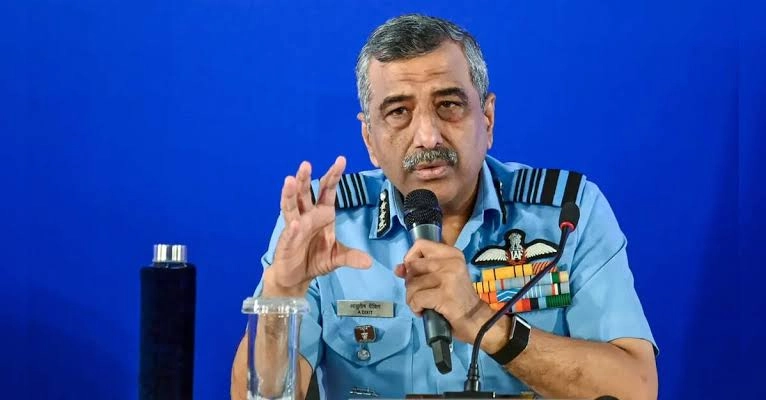
The Indian Air Force (IAF) is set to induct a full squadron of the indigenous Light Combat Aircraft (LCA) Tejas Mark 1A within the current financial year, Chief of the Air Staff Air Chief Marshal Ashutosh Dixit announced on November 16, 2026. The upgraded 4.5-generation fighter aircraft represents a significant step in the continued development of India’s indigenous combat aviation capabilities.





Speaking at the ANI National Security Summit 3.0 in New Delhi, the Air Chief said the first squadron of LCA Mark 1A would join the IAF shortly. He also outlined the development timelines for other indigenous fighter aircraft programmes, stating that the upgraded LCA Mark 2 is expected to roll out next year, while work on the fifth-generation Advanced Medium Combat Aircraft (AMCA) is progressing.
Air Chief Marshal Dixit explained that the LCA Mark 1A programme underwent modifications after initial evaluations of the baseline Tejas aircraft identified certain technical shortcomings. The IAF identified four areas requiring improvement and worked in coordination with Hindustan Aeronautics Limited (HAL) to address them. As part of this effort, the Air Force provided an aircraft from its existing inventory to serve as a testbed for developing the Mark 1A configuration.
According to the Air Chief, work on the four identified modification areas is now almost complete. He said the development process also involved integrating new indigenous weapons developed by the Defence Research and Development Organisation (DRDO), followed by extensive flight trials to evaluate the aircraft and its upgraded systems.
He noted that the programme’s timeline had extended as testing revealed additional areas requiring refinement. The process of developing and evaluating a combat aircraft involves continuous improvements, with modifications and further trials undertaken to meet operational and technical requirements.
Highlighting the complexity of indigenous fighter aircraft development, Air Chief Marshal Dixit described the Tejas programme as a nationwide effort involving hundreds of institutions and specialised facilities. He said the development process brought together approximately 600 to 700 work centres and laboratories across India, including Indian Institutes of Technology (IITs), Council of Scientific and Industrial Research (CSIR) laboratories and railway laboratories.
He emphasised that designing, developing, testing and producing a fighter aircraft requires expertise across several scientific disciplines, including physics, chemistry and life sciences. According to him, only a handful of countries have successfully developed the capability to undertake the complete process independently.
The Air Chief also highlighted the wider technological significance of the LCA Mark 1A programme. The advances achieved through its development are expected to contribute to future platforms and capabilities, including manned-unmanned teaming (MUM-T) systems, advanced sensors and next-generation stealth aircraft.
With the planned induction of the LCA Mark 1A, the expected rollout of the LCA Mark 2 next year and continued development of the AMCA, the IAF is pursuing multiple indigenous fighter aircraft programmes aimed at strengthening the country’s long-term combat aviation capabilities.