
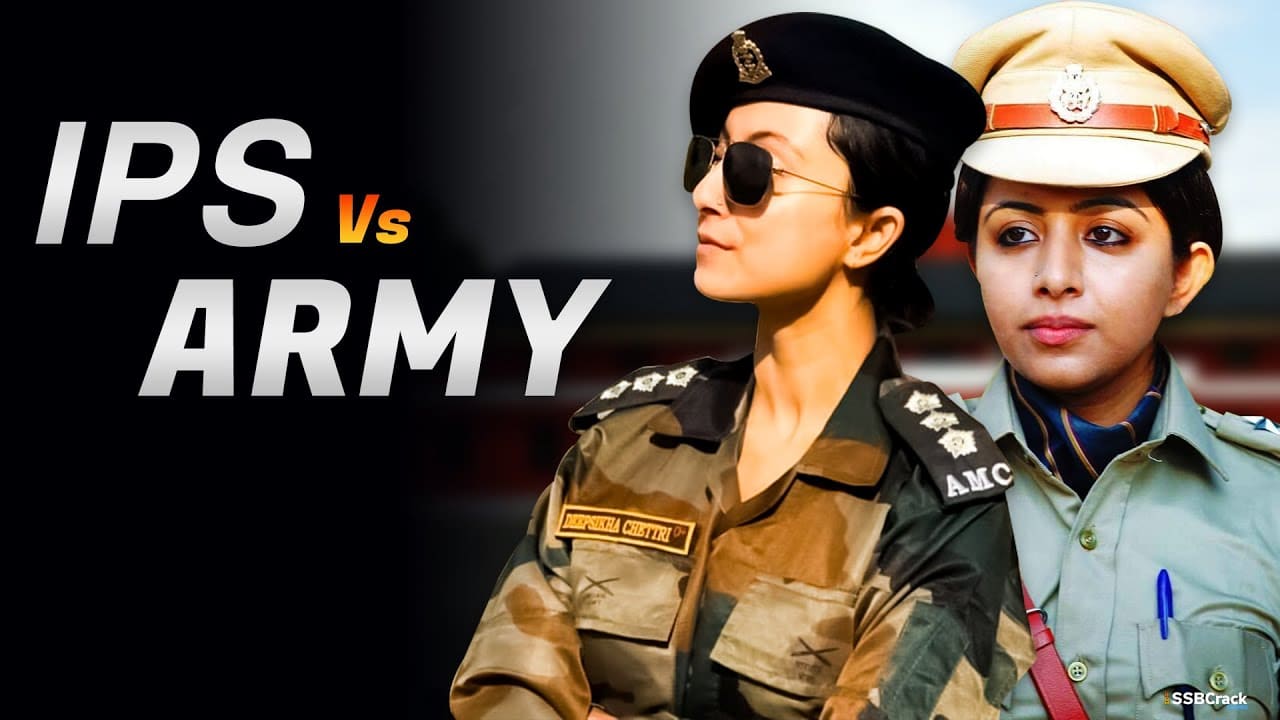
Choosing a career path can be a daunting decision, especially when considering roles as prestigious and demanding as an Army Officer or an IPS Officer. Both positions hold significant responsibilities and offer distinct career trajectories. In this article, I’ll guide you through various aspects of both professions to help you make an informed decision about which path might be best for you.





Understanding the Roles: Army Officer vs IPS Officer
An Army Officer is a leader in the armed forces, responsible for the defense and security of the nation. Their primary role involves strategic planning, leadership on the battlefield, and ensuring the well-being of their troops. They are the backbone of military operations, with duties that range from tactical decision-making to personnel management.
In contrast, an IPS Officer (Indian Police Service) plays a crucial role in maintaining law and order within the country. IPS Officers work under the Ministry of Home Affairs and are responsible for crime prevention, investigation, and upholding public safety. They also play an integral part in policy formulation and implementation concerning national security and internal safety.
Both roles demand a high level of dedication, leadership, and a commitment to serving the nation. While an Army Officer focuses on external threats and defense strategies, an IPS Officer deals with internal security and civil administration. Understanding these core differences is essential in evaluating which role aligns better with your personal goals and values.
Educational Requirements for Army Officers and IPS Officers
To become an Army Officer, one typically needs to clear the National Defence Academy (NDA) or the Combined Defence Services (CDS) examinations. These exams are gateways to a career in the armed forces and are conducted by the Union Public Service Commission (UPSC). Candidates usually require a bachelor’s degree and must meet specific physical and medical standards to qualify.
For an IPS Officer, the journey begins with clearing the Civil Services Examination (CSE), also conducted by the UPSC. This highly competitive exam assesses candidates on various subjects, including general knowledge, current affairs, and aptitude. A bachelor’s degree is mandatory, and candidates must also meet physical criteria similar to those required for the army.
Both roles require rigorous preparation and commitment to excel in the respective entrance exams. While the path to becoming an Army Officer emphasizes physical fitness and strategic thinking, aspiring IPS Officers need to focus on intellectual aptitude and administrative skills. Preparing for these exams demands dedication and a clear understanding of one’s strengths and career aspirations.

Career Paths: Opportunities and Promotions
As an Army Officer, the career path is structured and hierarchical. Starting as a Lieutenant, one can progress to higher ranks such as Captain, Major, Colonel, and beyond. Each promotion comes with increased responsibilities and requires passing various training programs and evaluations. The army offers numerous opportunities for specialization in fields like engineering, medical, and logistics, allowing officers to tailor their careers to their interests.
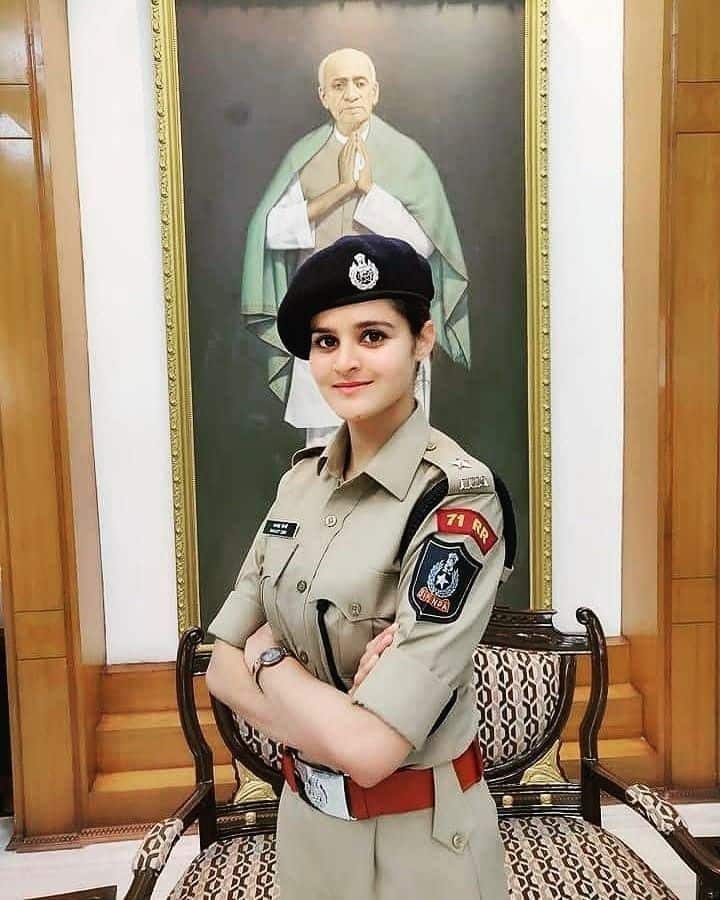
On the other hand, an IPS Officer starts as an Assistant Superintendent of Police (ASP) and can ascend to positions such as Superintendent of Police (SP), Deputy Inspector General (DIG), Inspector General (IG), and Director General of Police (DGP). The promotions in the IPS are contingent on performance, experience, and sometimes on additional training and education. Opportunities for IPS Officers include roles in intelligence agencies, anti-corruption bureaus, and international assignments.
While both career paths offer opportunities for advancement, the nature of promotions and specialization varies. Army Officers often move within the military’s structured environment, whereas IPS Officers have more diverse avenues within different departments of civil administration. Understanding these pathways can help you determine which career aligns with your long-term professional goals.
Training and Preparation: What to Expect
Training for an Army Officer is rigorous and multifaceted. Upon selection, candidates undergo a comprehensive training program at institutions like the Indian Military Academy (IMA) or the Officers Training Academy (OTA). These programs focus on physical fitness, leadership development, tactical warfare, and ethical conduct. The training is designed to prepare officers for the challenges of military life, instilling discipline and resilience.
In contrast, training for an IPS Officer begins with the Foundation Course at the Lal Bahadur Shastri National Academy of Administration (LBSNAA), followed by specialized training at the Sardar Vallabhbhai Patel National Police Academy (SVPNPA). The curriculum covers a wide range of subjects, including law, criminology, and public administration, combined with physical training and leadership exercises.
Both training programs are intensive and form the bedrock of a successful career in their respective fields. While army training is more physically demanding and focuses on combat readiness, IPS training emphasizes intellectual development and administrative skills. Aspiring candidates should be prepared for the demands of these training regimens and align their preparation accordingly.
Job Responsibilities of Army Officers
The responsibilities of an Army Officer are diverse and challenging. They involve leading troops in various operations, ensuring their safety and effectiveness. Officers are tasked with formulating strategies, making split-second decisions in high-pressure situations, and managing resources efficiently. They must also focus on the welfare and morale of their team, serving as role models and mentors.
Beyond the battlefield, Army Officers engage in peacetime activities such as training exercises, community outreach, and disaster relief operations. Their role extends to diplomatic missions and international collaborations, representing the nation on global platforms. Such responsibilities require adaptability, strategic foresight, and an unwavering commitment to duty.
Being an Army Officer is not just a job; it is a way of life that requires a deep sense of duty and patriotism. The role demands physical endurance, mental agility, and the ability to inspire and lead under challenging circumstances. Those aspiring to join the army must be prepared for a career that is as rewarding as it is demanding.
Job Responsibilities of IPS Officers
An IPS Officer plays a pivotal role in maintaining law and order and ensuring public safety. Their responsibilities include crime prevention, investigation, and the enforcement of laws. Officers must work closely with other law enforcement agencies, coordinate efforts to combat crime, and ensure the efficient functioning of the police force.
In addition to these duties, IPS Officers are involved in policy formulation, advising on matters of national security, and implementing government initiatives aimed at improving public safety. They are often at the forefront of managing civil unrest, disaster management, and other emergency situations. This requires strong leadership, quick decision-making, and excellent communication skills.
The role of an IPS Officer is diverse and impactful, with the potential to bring about significant societal change. Officers must exhibit integrity, courage, and a strong sense of justice to succeed in their roles. For those passionate about upholding the law and serving the community, a career in the IPS offers a fulfilling and dynamic professional journey.
Work Environment: Life as an Army Officer vs IPS Officer
The work environment for an Army Officer is dynamic and often involves living in various locations, including remote and conflict-prone areas. Officers must adapt to different climates, cultures, and challenges while maintaining a focus on their mission. The army lifestyle is regimented, with a strong emphasis on discipline and camaraderie among soldiers.
Conversely, an IPS Officer typically works within urban and rural settings, dealing with a broad spectrum of societal issues. Their work environment is varied, from high-pressure emergency situations to routine administrative duties. IPS Officers must navigate complex political landscapes and work closely with government officials, community leaders, and citizens.
Both careers offer unique experiences and challenges. While Army Officers operate within a more structured military framework, IPS Officers engage with the civilian population and navigate diverse bureaucratic environments. Understanding these differences is crucial for those deciding which career path best suits their preferences and lifestyle aspirations.
Salary and Benefits Comparison
The compensation and benefits for an Army Officer are competitive, with salaries varying based on rank and experience. Officers receive numerous allowances, including housing, transport, and medical benefits. Additional perks include subsidized education for children, pension plans, and opportunities for international assignments.
Similarly, an IPS Officer enjoys a respectable salary package, augmented by various allowances such as house rent, dearness, and travel allowances. IPS Officers also benefit from government-provided accommodations, healthcare, and retirement benefits. Moreover, the prestige and authority associated with the IPS role often translate into further career opportunities post-retirement.
While both careers offer financial stability and comprehensive benefits, the specific packages can differ based on rank, location, and years of service. It’s essential to consider these factors alongside personal career goals and lifestyle preferences when evaluating the financial aspects of each role.
Skills and Qualities Needed for Success
Success as an Army Officer requires a combination of leadership, resilience, and strategic thinking. Officers must possess excellent communication skills, teamwork abilities, and a high degree of adaptability. The ability to remain calm under pressure and make informed decisions is crucial, as is a commitment to continuous learning and self-improvement.
For an IPS Officer, strong analytical skills, integrity, and a keen sense of justice are paramount. Officers must demonstrate exceptional problem-solving abilities, negotiation skills, and empathy when dealing with the public. A deep understanding of laws and policies, coupled with effective leadership, is essential for success in this role.
Both career paths demand dedication and a unique set of skills tailored to their respective challenges. Aspiring candidates should assess their strengths and areas for development, ensuring they are well-prepared for the demands of their chosen profession.
Making the Right Choice: Factors to Consider
Choosing between a career as an Army Officer or an IPS Officer requires careful consideration of multiple factors. Reflect on your personal values, interests, and long-term goals. Consider the lifestyle associated with each role, including the potential for travel, family commitments, and work-life balance.
Evaluate the impact you wish to have through your career. If you are drawn to serving on the front lines of national defense and have a passion for military life, the army may be your calling. Conversely, if you are committed to law enforcement and wish to contribute to societal change and justice, the IPS presents a compelling option.
Ultimately, the decision should align with your aspirations and the kind of professional life you envision for yourself. Both careers offer unique opportunities for growth, service, and personal fulfillment.
Conclusion: Which Career Path Is Best for You?
Deciding between becoming an Army Officer or an IPS Officer is a significant choice that will shape your professional journey and personal life. Both roles offer the chance to serve the nation in meaningful ways, carrying responsibilities that extend beyond the individual to the broader society.
Reflect on the insights shared in this article, considering your strengths, ambitions, and the kind of impact you wish to make. Whether you choose the path of an Army Officer, with its focus on defense and strategic leadership, or an IPS Officer, dedicated to law enforcement and societal well-being, your contribution is invaluable.
Join the ranks of those who serve with honor and distinction. Explore these career paths further, seek guidance from professionals in the field, and prepare to embark on a journey that will challenge and inspire you. Your dedication and passion can make a difference. Choose wisely, and step forward with confidence.