
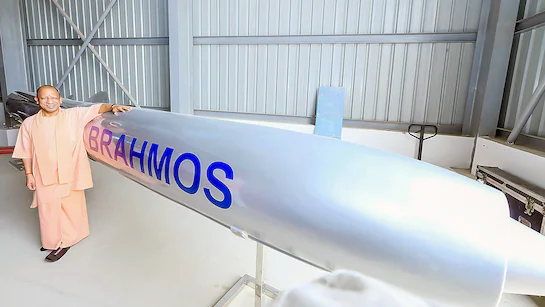
India is set to mark a significant milestone in indigenous defence production as the first batch of BrahMos supersonic cruise missiles manufactured at the new Lucknow facility will be flagged off on October 18, 2025. The Defence Minister, Rajnath Singh, and the Uttar Pradesh Chief Minister, Yogi Adityanath, are scheduled to lead the ceremony.





The Lucknow unit, located at Bhatgaon within the Uttar Pradesh Defence Industrial Corridor, was inaugurated on May 11, 2025, by the Defence Minister. Spanning 80 hectares and constructed at a cost of approximately ₹300 crore, the facility features modern production lines and stringent quality control systems to enable large-scale missile manufacturing.
Production Targets and Capabilities
Initially, the plant aims to produce 80–100 missiles annually, with plans to scale up to around 150 missiles per year as operations stabilise. The facility is designed to meet the Indian Armed Forces’ requirements, strengthen the domestic defence manufacturing ecosystem, and support potential exports.
The BrahMos missile, developed jointly by India’s DRDO and Russia’s NPO Mashinostroyeniya, travels at nearly Mach 3 and has a strike range of 290–400 km, depending on the variant. Capable of being launched from land, air, and sea platforms, the missile operates on a fire-and-forget principle and is designed to evade radar while striking precise targets.
Strategic Significance
Experts note that the Lucknow facility is a major step toward self-reliance in strategic defence systems, bolstering India’s operational preparedness and enhancing strategic autonomy. The project is also expected to generate employment, foster ancillary industries, and strengthen India’s capacity to meet regional demand, including potential exports.
Flag-Off Ceremony
The upcoming flag-off will mark the first official delivery of BrahMos missiles from the Lucknow line, showcasing both operational readiness and the government’s push for Make in India initiatives in high-technology defence sectors. Local authorities have highlighted the potential of the facility to boost the state’s industrial profile and create employment opportunities.
With the first batch ready for deployment, focus will now shift to sustaining production, strengthening supply chains, and ramping up output to meet the higher annual targets set for the facility, further cementing India’s status as a self-reliant defence powerhouse.