
Major Mohit Sharma’s life stands as a testament to unwavering patriotism, blending personal talents with extraordinary military valor in service to India. Born on January 13, 1978, in the bustling town of Rohtak, Haryana, he entered the world as the second child of Rajendra Prasad Sharma, a dedicated father, and Sushila Sharma, a nurturing mother who instilled values of discipline and empathy. From an early age, young Mohit—fondly nicknamed “Chintu” by his family—displayed a multifaceted personality. He was not just academically inclined but also a prodigy in music, mastering instruments such as the guitar, mouth organ, and synthesizer with remarkable ease. A devoted fan of Michael Jackson, he challenged himself to learn any new instrument he encountered, often performing live and captivating audiences with his renditions of Hemant Kumar’s timeless songs. This artistic side coexisted harmoniously with his athletic prowess, setting the stage for a life of excellence.

His educational journey began at Manav Sthali School in South Extension, Delhi, followed by a brief stint at Holy Angels’ School in Sahibabad, before he settled at Delhi Public School (DPS) Ghaziabad in 1988, from where he graduated in 1995 with commendable grades. Encouraged by his parents, he initially enrolled in Shri Sant Gajanan Maharaj College of Engineering in Shegaon, Maharashtra, but his true calling lay elsewhere. Driven by a passion for the armed forces, he abandoned engineering to join the prestigious National Defence Academy (NDA) in 1995, becoming part of the India Squadron. At the NDA, Sharma emerged as a standout cadet, earning accolades as a champion horse rider under the guidance of Colonel Bhawani Singh, riding his favorite horse “Indira.” He also dominated in boxing as a featherweight champion and excelled in swimming, embodying the all-rounder spirit valued in military training.
Transitioning to the Indian Military Academy (IMA), Sharma’s leadership qualities shone through when he was appointed Battalion Cadet Adjutant (BCA), a role that afforded him the honor of meeting then-President K.R. Narayanan at Rashtrapati Bhavan. Commissioned on December 11, 1999, into the 5 Madras Regiment, his first posting in Hyderabad marked the beginning of a distinguished career. Soon after, he was deployed with the 38 Rashtriya Rifles in Kashmir for counter-insurgency operations, where his gallantry earned him the Chief of Army Staff Commendation Medal (COASM) in 2002. However, Sharma’s ambition was to serve in the elite Para Special Forces. In June 2003, he realized this dream by joining the 1 Para (SF), one of the Indian Army’s most formidable units known for its rigorous training and high-stakes missions.
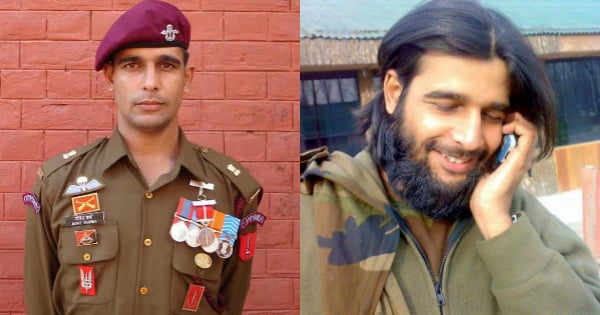
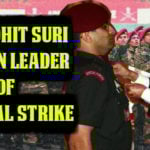
One of the most remarkable chapters in Sharma’s career was his undercover operation in 2004, during which he infiltrated the Hizbul Mujahideen terrorist group under the alias Iftikhar Bhatt (though some accounts refer to it as Iqbal Hussain, highlighting minor variations in reported details). Growing a beard and long hair to blend in, he learned fluent Kashmiri and posed as a militant seeking revenge for his brother’s fictional death in a stone-pelting incident. Gaining the trust of high-value targets Abu Torara and Abu Sabzar, he was assigned a sabotage task but sensed suspicion. In a bold move, he challenged them to kill him if they doubted him, then swiftly neutralized both with his concealed pistol. This daring feat not only disrupted terrorist networks but also earned him the Sena Medal for gallantry, underscoring his tactical brilliance and willingness to risk everything for national security.
From January 2005 to December 2006, Sharma served as an instructor at the Commando Wing in Belgaum, imparting his expertise to aspiring special forces operatives. His personal life intertwined with his professional one when he married Major Rishima Sarin (now Lieutenant Colonel Rishima Sharma), an officer in the Army Service Corps, commissioned in 2001. Their union reflected shared values of duty and resilience. In October 2008, Sharma returned to Kashmir, stationed at Nahan before deployment, setting the stage for his final act of heroism.
On March 21, 2009, in the dense Haphruda Forest of Kupwara district, North Kashmir, intelligence indicated the presence of infiltrating terrorists. Leading the Bravo Assault Team, Sharma and his commandos tracked the militants. Upon spotting suspicious movement, they came under heavy fire from three directions, wounding four soldiers, including Havildar Sanjay Singh, Havildar Anil Kumar, Paratrooper Shabir Ahmad Malik, and Paratrooper Nater Singh, who also perished in the encounter. Disregarding personal safety, Sharma crawled forward to rescue two wounded comrades, pulling them to cover amid relentless gunfire. He then hurled grenades, eliminating two terrorists, before engaging in close-quarter combat despite a bullet wound to his chest. In his final moments, he neutralized two more militants, ensuring the mission’s success at the cost of his life. For this display of “most conspicuous gallantry, inspiring leadership, and indomitable courage,” he was posthumously awarded the Ashok Chakra, India’s highest peacetime gallantry award.
Sharma’s legacy extends far beyond his medals. His story has inspired tributes across social media, with users sharing videos and anecdotes that portray him as the “silent storm” who lived in shadows to protect the nation. In recent years, discussions have linked his life to the Bollywood film Dhurandhar (2025), where Ranveer Singh’s character is said to draw inspiration from Sharma’s undercover exploits and sacrifice. However, the film’s director has denied direct connections, leading to legal challenges from Sharma’s family, who argue it appropriates his story without credit—particularly noting the timeline (2005–2009) and absence of figures like Ajit Doval in the real events. Debates on platforms like X (formerly Twitter) clarify that Sharma operated under Military Intelligence in Jammu and Kashmir, not RAW, emphasizing the need for accurate portrayals of martyrs.
His influence persists through his family: Lt Col Rishima Sharma has publicly shared poignant reflections on his life in YouTube shorts and interviews, while stories of comrades’ families, like the son of Havildar Sanjay Bhakre joining the army, highlight the ripple effect of his courage. Tributes describe him as a “legend of 1 Para SF,” whose actions remind us that true heroes become the “heartbeat of a nation.” In a world of fleeting fame, Major Mohit Sharma’s enduring narrative of sacrifice, skill, and selflessness continues to motivate, proving that valor is not just in battle but in the quiet resolve to serve.
Timeline of Major Mohit Sharma’s Life and Career
| Date/Period | Event | Details |
|---|---|---|
| January 13, 1978 | Birth | Born in Rohtak, Haryana, to Rajendra Prasad and Sushila Sharma. |
| 1988–1995 | Schooling | Attended DPS Ghaziabad after earlier schools in Delhi and Sahibabad. |
| 1995 | Joins NDA | Part of India Squadron; excels in horse riding, boxing, and swimming. |
| December 11, 1999 | Commissioned | Into 5 Madras Regiment; first posting in Hyderabad. |
| 2002 | COAS Commendation | For operations with 38 Rashtriya Rifles in Kashmir. |
| June 2003 | Joins 1 Para (SF) | Begins service in elite special forces unit. |
| 2004 | Sena Medal | Awarded for undercover operation neutralizing Hizbul Mujahideen terrorists. |
| January 2005–December 2006 | Instructor Role | At Commando Wing, Belgaum. |
| October 2008 | Returns to Kashmir | Final deployment leading to martyrdom. |
| March 21, 2009 | Martyrdom | Killed in action in Kupwara; posthumous Ashok Chakra. |
| 2025 | Cultural Impact | Debates over inspiration for film Dhurandhar and ongoing tributes. |
Awards and Honors Table
| Award | Year | Reason |
|---|---|---|
| Chief of Army Staff Commendation Medal | 2002 | Gallantry in counter-insurgency operations in Kashmir. |
| Sena Medal (Gallantry) | 2004 | Undercover infiltration and neutralization of terrorists. |
| Ashok Chakra (Posthumous) | 2009 | Supreme sacrifice in Kupwara, eliminating four terrorists while rescuing comrades. |