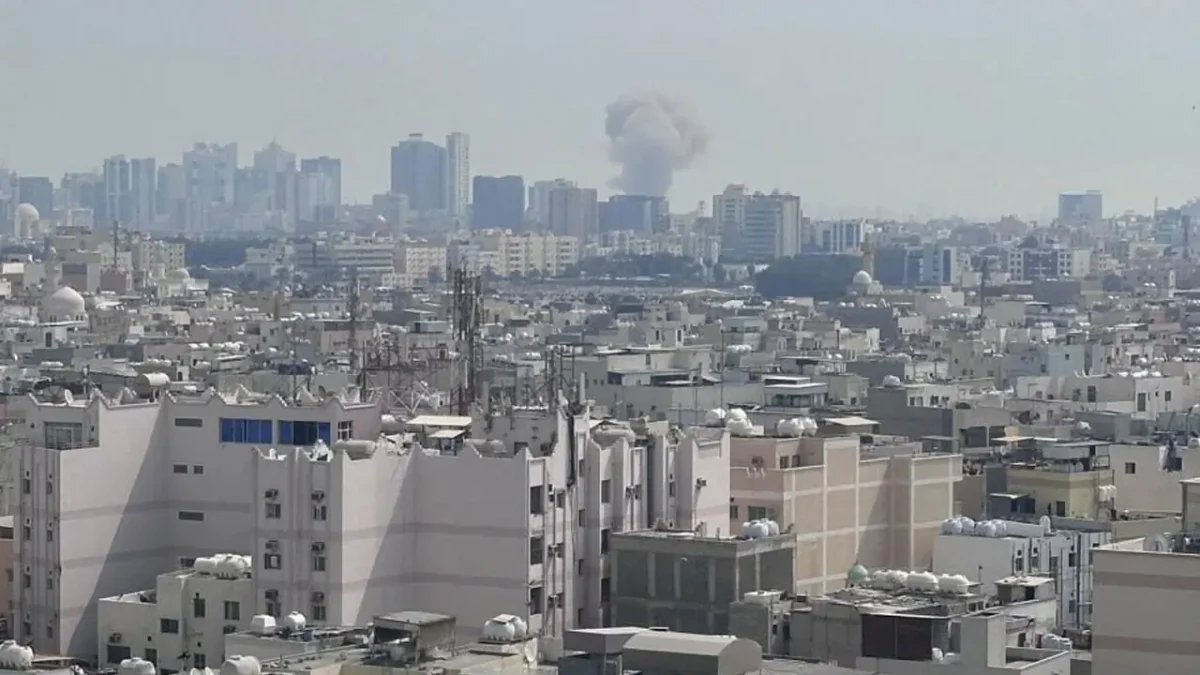
On February 28, 2026, Iran launched a ballistic missile attack on the United States Navy’s Fifth Fleet headquarters located in Bahrain, marking a direct assault on American military assets in the Persian Gulf region. This strike occurred in retaliation to coordinated US and Israeli military operations against Iran, codenamed “Operation Epic Fury,” which targeted Iranian nuclear facilities and military installations earlier that day. Bahrain’s state news agency confirmed the incident, reporting that the naval base in the Juffair district of Manama was subjected to missile fire, with witnesses describing loud explosions and visible smoke plumes rising from the site.





The Islamic Revolutionary Guard Corps (IRGC) claimed responsibility for the attack, describing it as part of a broader retaliatory campaign against US forces in the Middle East. Iranian semi-official media outlets, such as Fars News Agency, reported that the strikes were intended to target American military presence in response to the ongoing assault on Iranian territory. Air-raid sirens were activated across Bahrain, prompting shelter-in-place orders for civilians and military personnel. Initial assessments indicate no immediate reports of casualties, though the full extent of damage to the naval facility remains under evaluation.
This incident is part of a wider pattern of Iranian countermeasures, with reports of similar missile strikes on US-affiliated bases in Kuwait, the United Arab Emirates (including Al Dhafra in Abu Dhabi), and Qatar. Explosions were documented in these locations, accompanied by emergency alerts and airspace closures. The US had preemptively reduced staffing at the Bahrain base to mission-critical levels and withdrawn naval vessels in anticipation of potential Iranian reprisals, drawing from lessons learned during previous escalations, such as the 2025 strikes on Al Udeid Air Base in Qatar.
The attack on Bahrain represents a significant escalation, as it directly involves a key US ally and the headquarters of the Fifth Fleet, which oversees naval operations in the Persian Gulf, Red Sea, and Arabian Sea. Iranian officials have vowed a “crushing” response without red lines, utilizing all available military capacities. In the broader context, this follows Iran’s launch of missiles and drones toward Israel, triggering widespread air-raid alerts in the region. The US Embassy in Bahrain issued urgent safety advisories, and regional allies have expressed support for affected nations while condemning the strikes as violations of international law.
Global reactions on social media platforms, including X, reflect heightened concern, with users sharing real-time footage of explosions and discussing the potential for further conflict. The situation continues to evolve rapidly, with stakeholders urging monitoring through diverse sources to account for potential biases in reporting.