In a tense escalation of regional unrest, United States Marines stationed at the US Consulate General in Karachi reportedly engaged and neutralized several militants attempting to storm the facility, resulting in multiple casualties. The incident unfolded amid widespread protests in Pakistan triggered by the recent killing of Iran’s Supreme Leader, Ayatollah Ali Khamenei, in coordinated strikes by the United States and Israel.





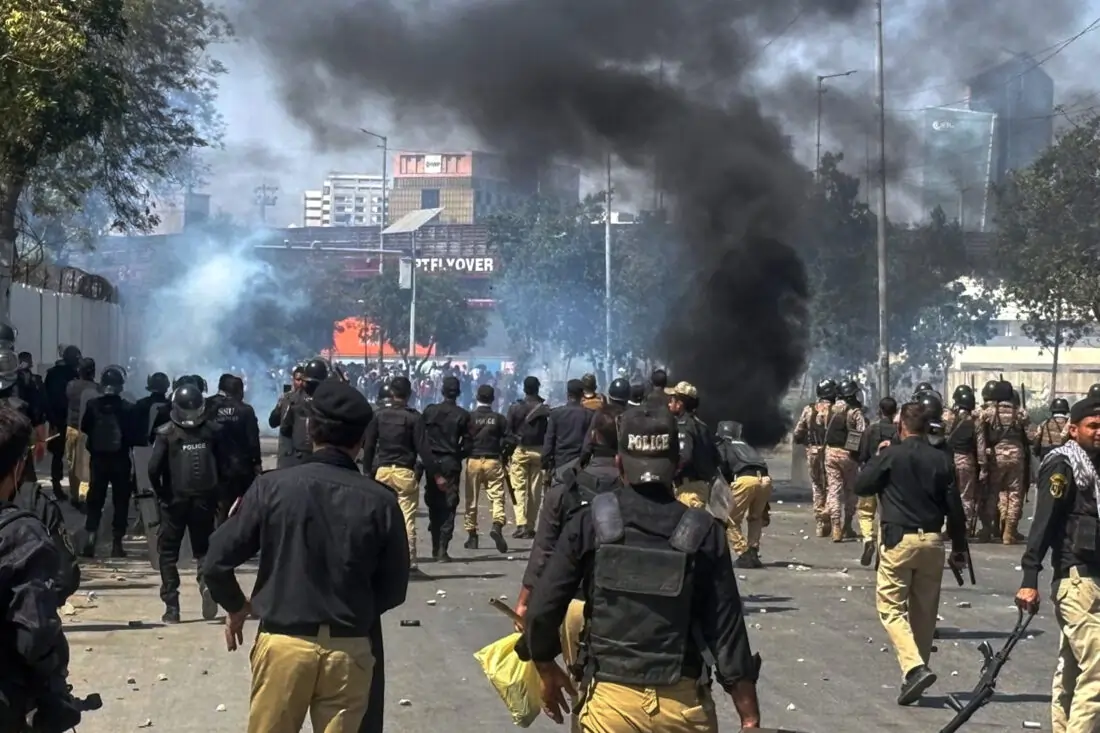
The protests began as peaceful demonstrations but rapidly devolved into violence in several cities, with Karachi witnessing some of the most intense confrontations. According to accounts from local authorities and eyewitnesses, hundreds of demonstrators, many chanting anti-US and anti-Israel slogans, gathered outside the consulate in the port city. The crowd, described in some reports as including armed militants, smashed windows, torched a nearby police post, and hurled stones and other projectiles at security personnel. Reports indicate that the assailants used boards, metal tools, and possibly more lethal implements in their attempt to breach the compound’s perimeter.
US security forces, including Marines responsible for embassy and consulate protection, responded to the breach with defensive fire. Sources, including posts on social media platform X and statements referenced in media outlets, confirm that the Marines opened fire on the intruders, killing at least six individuals identified as militants or rioters. Other estimates suggest the death toll among the attackers may have reached nine, with additional injuries reported. Pakistani police and paramilitary forces also participated in dispersing the crowd, deploying tear gas and batons, which contributed to the overall casualties.
Hospital officials in Karachi reported receiving at least six bodies and numerous wounded individuals, with some in critical condition. The total fatalities in the city were estimated at 10, with approximately 50 injuries, though figures vary across sources due to the chaotic nature of the events. Broader clashes across Pakistan, including in the northern Gilgit-Baltistan region where protesters targeted United Nations offices, raised the nationwide death toll to at least 22, with over 120 injured.
The assault on the Karachi consulate appears to have been organized by Shia groups sympathetic to Iran, fueled by outrage over Khamenei’s death and Iran’s subsequent retaliatory actions, which included missile strikes resulting in the deaths of three US service members. Footage circulating on social media depicts crowds approaching the consulate under a clear sky, with individuals running amid apparent disorder near the facility’s barriers, marked by the American flag. The videos show protesters in close proximity to the compound, some appearing to engage in confrontational actions, though no direct gunfire is visible in the available frames.
Pakistani President Asif Ali Zardari issued a statement expressing sorrow over Khamenei’s death and extending condolences to the Iranian people, emphasizing Pakistan’s solidarity with Iran while urging restraint. Interior Minister Mohsin Naqvi appealed for calm, acknowledging the shared grief but stressing the importance of peaceful expression and warning against further violence. Provincial authorities in Sindh, where Karachi is located, echoed these calls and deployed additional troops to restore order.
The US Embassy in Islamabad released an advisory monitoring the demonstrations at its facilities nationwide, including consulates in Karachi, Lahore, and Peshawar, as well as the embassy itself. US citizens were advised to avoid large gatherings and stay informed through local media. No injuries to US personnel were reported in the Karachi incident, and the consulate was secured following the clashes.
This event underscores the volatile geopolitical tensions in the region, exacerbated by ongoing conflicts involving Iran, Israel, and the United States. Pakistan, which maintains diplomatic ties with all parties, has historically navigated such crises carefully, but the protests highlight domestic pressures from religious and political factions. Authorities have indicated that security measures at diplomatic sites will remain heightened in the coming days to prevent recurrence.
Investigations into the identities of the militants and the organization behind the assault are ongoing, with potential links to broader insurgent networks under scrutiny. The international community continues to monitor the situation closely, as further protests are anticipated in response to the escalating Middle East crisis.