

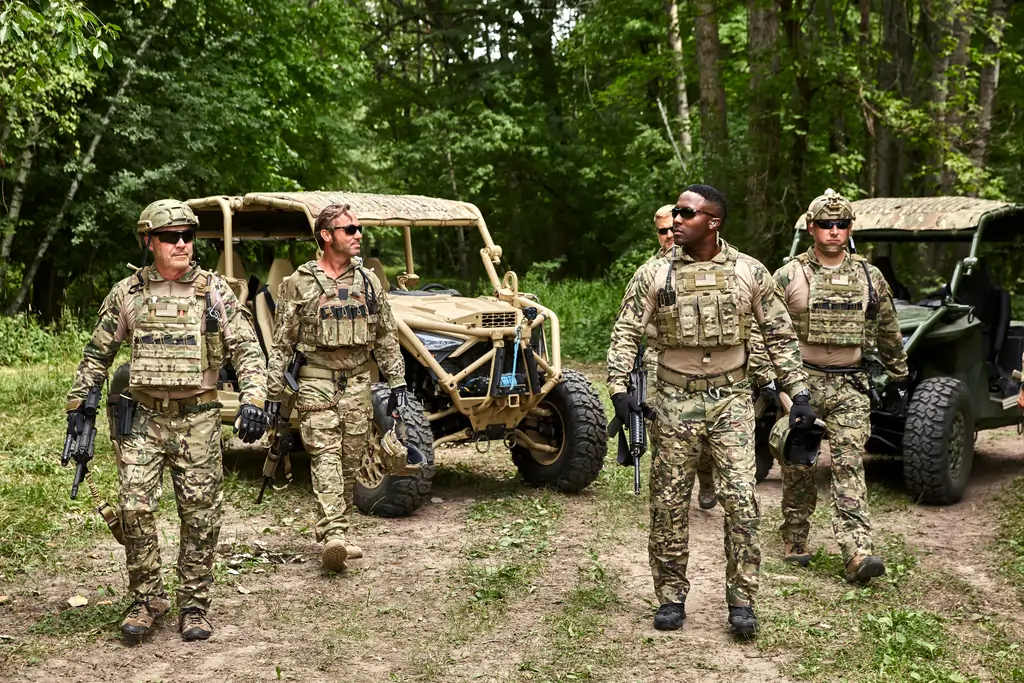
The United States Marine Corps has awarded Polaris Government and Defense a new sole-source contract to continue production and delivery of the MRZR Alpha Ultra-Light Tactical Vehicle, strengthening the service’s fleet of highly mobile platforms built for expeditionary operations.



The indefinite delivery, indefinite quantity contract has been awarded through Program Acquisition Executive Marine Corps and is valued at up to $98 million, with an order period of up to five years. The contract will support continued delivery of the MRZR Alpha, Polaris’ advanced light tactical vehicle designed for enhanced payload capacity, tactical air transport and off-road mobility.
The MRZR Alpha has emerged as a key mobility platform for U.S. Marines operating in demanding terrain and distributed environments. Built for rapid deployment, the vehicle enables small units to move quickly across difficult ground while reducing logistical strain through improved durability and mission adaptability.
A major addition under the new contract is the inclusion of the MRZR Alpha 5kW exportable power variant. This version provides 5kW of exportable power at 24 volts, both while stationary and on the move. The capability is intended to support power-intensive systems such as tactical edge computing equipment, air defence systems, communications packages and forward operating tactical grids.
According to Polaris, the exportable power capability has been integrated without compromising the vehicle’s core battlefield utility. The platform continues to retain the ability to carry two litters and other mission-critical supplies, while reducing dependence on separate generators and freeing valuable cargo space for Marines operating in forward areas.
The contract also includes continued support from Polaris engineering and logistics teams, ensuring that the Marine Corps can sustain and adapt the platform as mission requirements evolve. The award aligns with the USMC’s Force Design modernization efforts, which focus on lighter, more mobile and more distributed formations capable of operating in contested littoral environments.
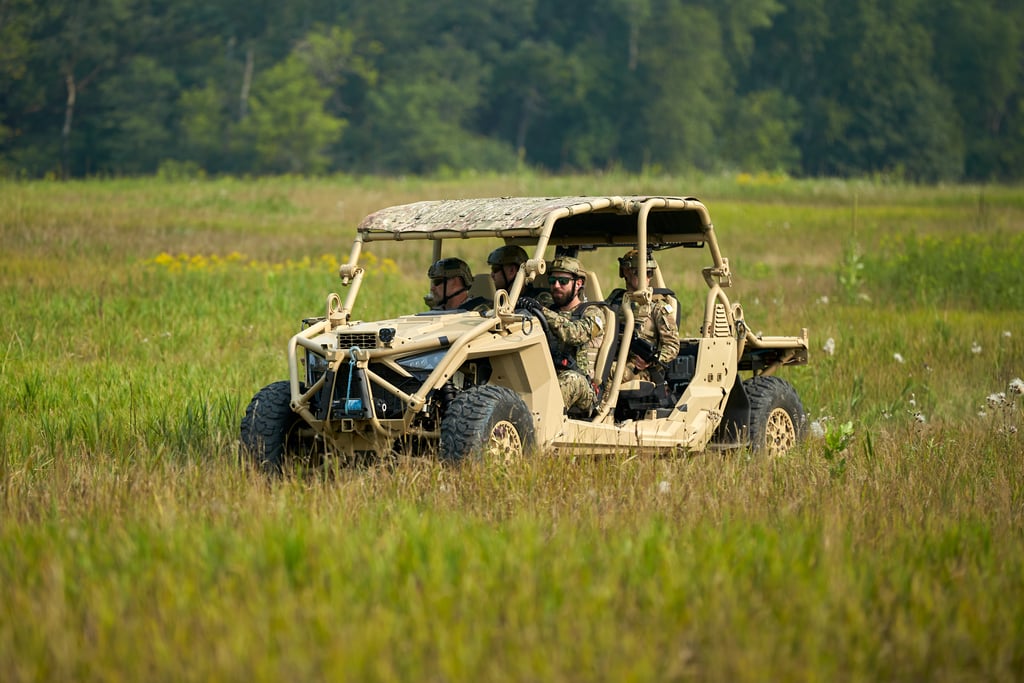
To date, U.S. Marines operate more than 500 MRZR Alpha vehicles. The platform has been used and tested in multiple roles, including logistics support, infantry maneuver, medical evacuation, counter-drone operations, communications command and control, and ground refueling support for aircraft.
Jennifer Moore, program manager at Program Acquisition Executive Marine Corps, said the ULTV has become a highly capable and configurable platform that improves readiness across Marine Corps formations. She noted that the Marine Corps has worked closely with Polaris engineers to expand the vehicle’s capabilities, particularly through the introduction of the high-power variant for communications and systems integration.
The MRZR Alpha ULTV is designed as an internally transportable vehicle and can be carried inside MV-22 Osprey and CH-53 helicopters. This “fly-and-drive” capability allows Marine Expeditionary Units to quickly deploy vehicles by air and then immediately use them for ground mobility in anti-access and area-denial environments.
Erin Telander, Defense program manager at Polaris Government and Defense, said the new contract will allow Polaris to continue meeting the Marine Corps’ changing operational needs, including requirements for increased exportable power, towing capacity and payload. She added that Polaris has worked with military customers worldwide for decades, with many advancements developed in partnership with the U.S. Marine Corps over the past 10 years.
The Marine Corps originally procured MRZR Alpha light tactical vehicles through a General Services Administration contract awarded from USSOCOM’s Program Manager for Family of Special Operations Vehicles. That contract ceiling was later raised from $109 million to $130 million, with additional contract extensions exercised in July 2025.
The latest award reinforces the growing importance of commercial-derived, modular tactical vehicles in modern military operations. Platforms such as the MRZR Alpha allow forces to rapidly field mobility solutions without the long development timelines associated with traditional military vehicle programs.
For Marines operating across islands, coastal zones and remote forward positions, the MRZR Alpha offers a compact, air-transportable and mission-flexible solution. Its ability to shift between cargo movement, casualty evacuation, communications support and combat service roles makes it a valuable force multiplier for distributed operations.
Polaris said its global parts availability and dealer-distributor network also support greater self-sufficiency for deployed forces. This logistics advantage is particularly important for Marine units expected to operate independently in austere and contested environments.