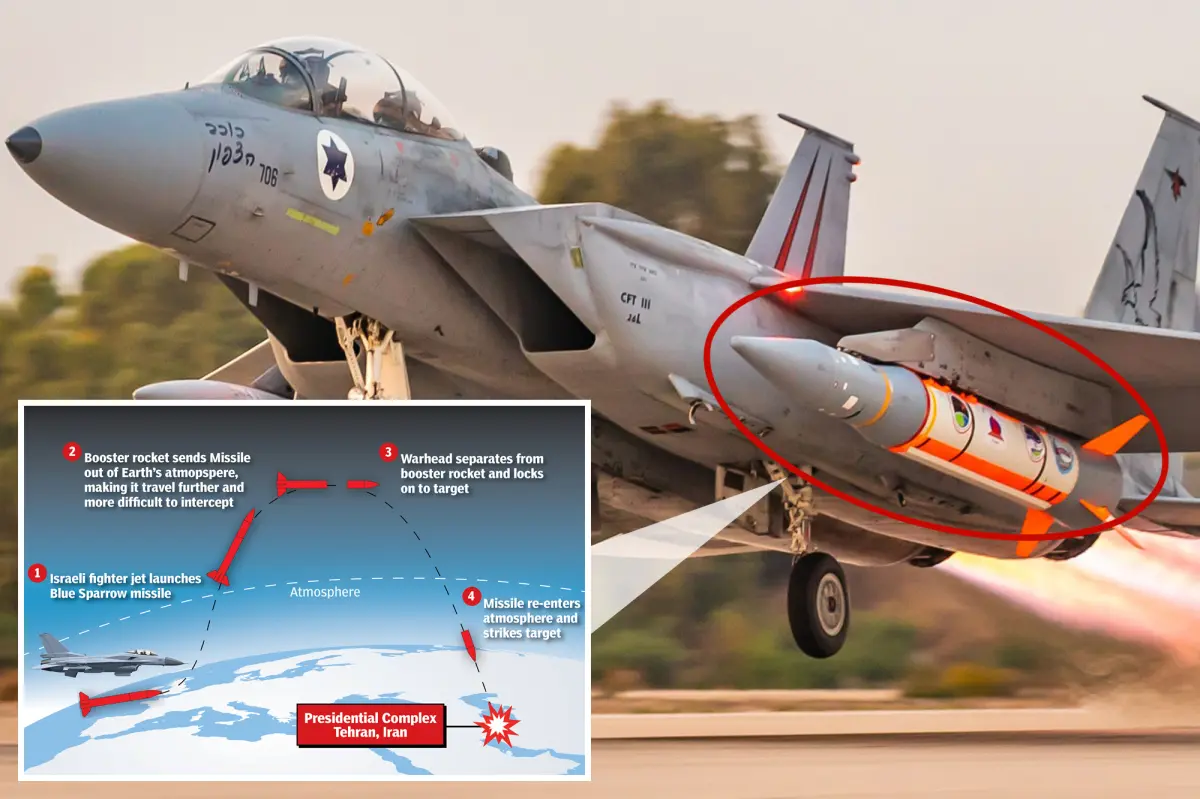
The Blue Sparrow missile, an Israeli-developed air-launched ballistic missile, gained international prominence following its reported use in the targeted strike that resulted in the death of Iran’s Supreme Leader, Ayatollah Ali Khamenei, on February 28, 2026. This event, part of a coordinated operation involving Israeli and United States forces, marked a significant escalation in regional tensions. Often described as a “missile from space” due to its quasi-ballistic trajectory that briefly exits Earth’s atmosphere, the Blue Sparrow exemplifies advanced standoff weaponry designed to penetrate heavily defended targets with precision and speed. This article provides a comprehensive overview of the missile’s origins, technical specifications, operational mechanics, and its role in the aforementioned strike.





History and Development
The Blue Sparrow missile originated as part of the Sparrow family of target missiles, developed by Rafael Advanced Defense Systems in collaboration with partners including the U.S. Missile Defense Agency and the Israel Missile Defense Organization. Initially conceived in the early 2000s, the Sparrow series—including Black Sparrow, Blue Sparrow, and Silver Sparrow—was intended to simulate ballistic missile threats for testing Israel’s Arrow anti-ballistic missile defense system. The Blue Sparrow variant, in particular, was designed to replicate medium-range ballistic missiles such as Iran’s Shahab series, allowing for realistic evaluation of defensive capabilities.
Over time, the missile’s modular design facilitated its evolution from a testing tool to an operational strike weapon. By 2024, air-to-surface adaptations of the Blue Sparrow were reportedly employed in limited strikes against Iranian targets, demonstrating its dual-purpose potential. This repurposing underscores Israel’s strategic emphasis on versatile, long-range munitions capable of evading advanced air defenses. The missile’s development reflects ongoing collaboration between Israeli defense industries and international allies, ensuring adaptability to emerging threats in the Middle East.
Technical Specifications
The Blue Sparrow is a sophisticated medium-range air-launched ballistic missile with the following key specifications:
- Length: 6.51 meters (21.4 feet)
- Weight: Approximately 1,900 kilograms (4,200 pounds)
- Range: Up to 2,000 kilometers (1,240 miles) on a high ballistic trajectory
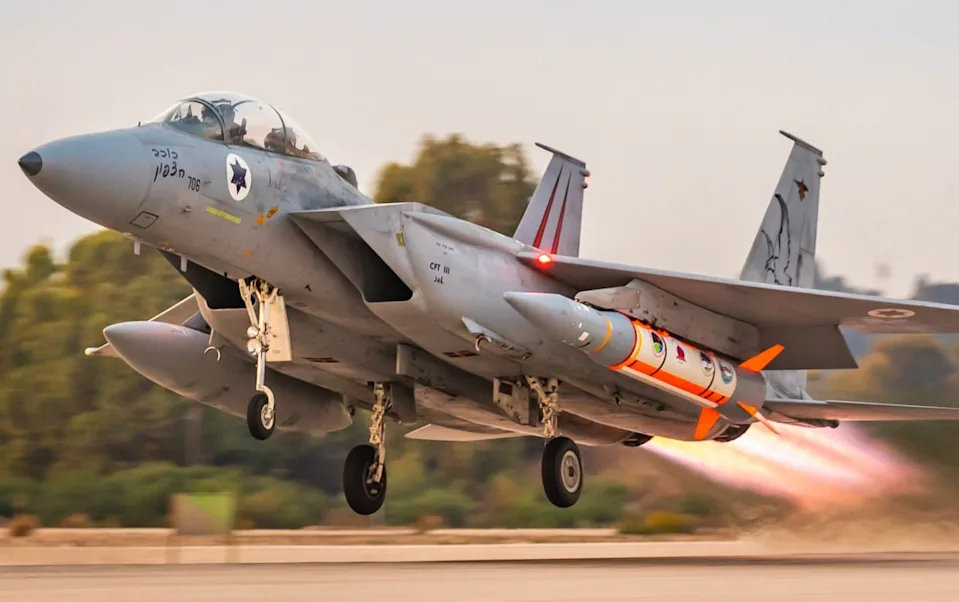
- Launch Platform: Compatible with fighter aircraft such as the Israeli Air Force’s F-15 jets
- Warhead: Modular, capable of carrying high-explosive or other payloads; adaptable for conventional or specialized missions
- Propulsion: Solid-fuel rocket booster enabling rapid ascent and descent
These attributes allow the missile to be launched from standoff distances, minimizing risk to aircraft while maximizing strike efficacy. The design incorporates features for simulating various re-entry maneuvers and signatures, originally for testing but now leveraged for offensive operations.
The image above depicts an Israeli F-15 fighter jet equipped with a Blue Sparrow missile during takeoff, illustrating the integration of this weapon with existing air platforms.
Operational Mechanics: The “Missile from Space”
The Blue Sparrow’s defining characteristic is its quasi-ballistic flight path, which distinguishes it from conventional cruise missiles. Upon launch from an aircraft, the missile’s booster propels it on a steep upward trajectory, ascending to the edge of space—beyond Earth’s atmosphere—before separating the warhead. This exo-atmospheric phase allows the missile to travel farther and faster, complicating interception by ground-based defenses.
As the warhead re-enters the atmosphere, it descends at hypersonic speeds toward the target, guided by advanced inertial and possibly satellite-assisted navigation systems. This “from space” descent profile, often reaching velocities that render traditional anti-aircraft systems ineffective, enhances its penetration capabilities against fortified sites. The trajectory not only evades radar detection during ascent but also delivers a kinetic impact amplified by speed, making it suitable for decapitation strikes on high-value targets.
The infographic above outlines the Blue Sparrow’s flight sequence, from launch to atmospheric re-entry and target impact.
Role in the Strike on Ayatollah Ali Khamenei
On February 28, 2026, during Operation Epic Fury—a joint Israeli-U.S. military campaign—the Blue Sparrow missile was reportedly deployed in the initial waves of strikes targeting Iranian leadership. Israeli F-15 jets launched approximately 30 munitions, including Blue Sparrows, at around 9:40 a.m. local time in Tehran, directly striking Khamenei’s presidential compound. The 86-year-old Supreme Leader, along with dozens of senior officials, was killed in the attack, which Iranian authorities later reported resulted in over 200 casualties overall.
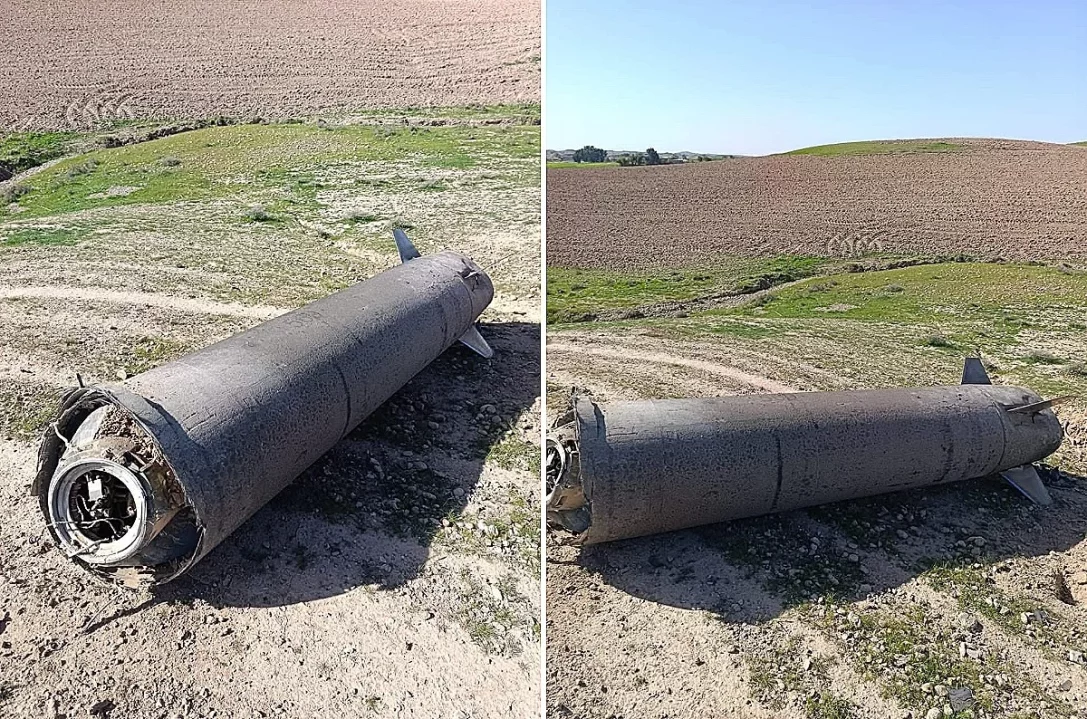
Debris from Blue Sparrow boosters was discovered in western Iraq, aligning with the missile’s flight path from Israel toward Iran, confirming its involvement. The weapon’s ability to bypass Iran’s air defenses, facilitated by its space-bound trajectory, was critical to the operation’s success. This strike not only eliminated key figures but also disrupted Iran’s command structure, escalating the 2026 Iran War.
The photographs above show recovered debris from a Blue Sparrow missile booster in Iraq, evidence of its use in the 2026 strikes.
Broader Implications
The deployment of the Blue Sparrow in this context highlights the evolving nature of modern warfare, where dual-use technologies bridge defensive and offensive roles. Its success against a heavily guarded target like Khamenei’s compound demonstrates the strategic advantages of air-launched ballistic missiles in asymmetric conflicts. Furthermore, India’s reported utilization of similar Sparrow-derived technologies underscores the global proliferation of such systems.
In summary, the Blue Sparrow missile represents a pinnacle of Israeli defense innovation, blending precision, range, and evasion tactics. Its pivotal role in the events of February 2026 serves as a stark reminder of the geopolitical ramifications of advanced weaponry in regional power dynamics.