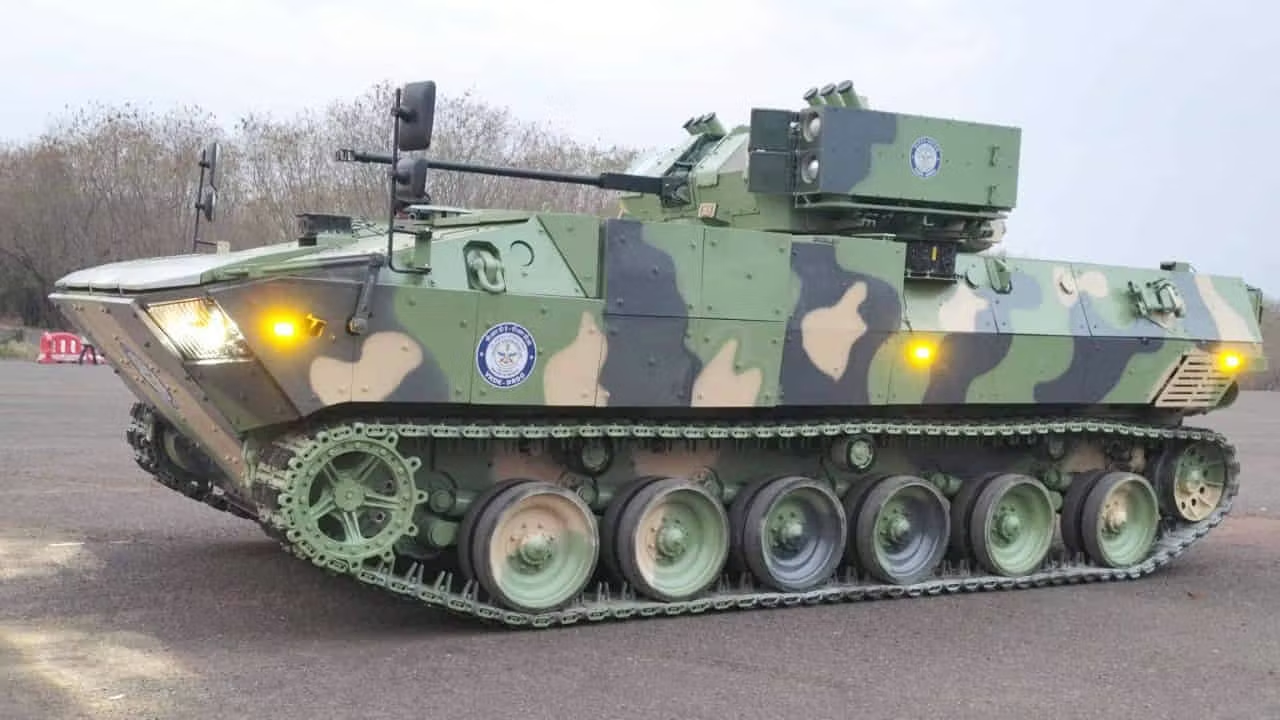
The Defence Research and Development Organisation has unveiled two next-generation infantry combat vehicle (ICV) platforms—tracked and wheeled variants—under the ‘Vikram VT-21’ programme, marking a major push towards modernising the Indian Army’s mechanised infantry.





A Major Step in Modernisation
The programme aims to replace the ageing BMP-2 fleet, which has been the backbone of the Army’s mechanised forces for decades but is now considered outdated for modern battlefield requirements.
Advanced Features and Capabilities
Developed by DRDO’s Vehicle Research and Development Establishment (VRDE) in collaboration with private industry partners, the Vikram VT-21 incorporates over 30 advanced systems, including:
- AI-enabled target tracking and weapon selection
- Advanced terrain-mapping systems
- Enhanced mobility, survivability and firepower
- Capability to fire Nag Mark 2 ‘fire-and-forget’ anti-tank guided missiles
- Specialised 30mm ammunition developed domestically
- Amphibious capability for operations across water obstacles
Designed for Modern Warfare
The vehicle has been designed after studying global platforms such as:
- Russia’s Kurganets-25
- Germany’s Puma IFV
- South Korea’s K21
It can carry up to 11 personnel, including crew and infantry soldiers, with improved ergonomics and onboard systems.
Trials and Induction Timeline
According to DRDO Chairman Samir V Kamat:
- The platforms will undergo extensive in-house and user trials
- Testing will cover diverse terrains and weather conditions
- Induction into the Indian Army is targeted by 2029
Boost to Indigenous Defence Manufacturing
The project reflects:
- Strong public-private partnership in defence production
- Push towards Aatmanirbhar Bharat in defence
- Transfer of core technologies to Indian industry for manufacturing
Enhancing Mechanised Warfare Capability
The Vikram VT-21 is expected to significantly enhance the Indian Army’s:
- Mechanised infantry capability
- Battlefield survivability and lethality
- Readiness for future, technology-driven warfare