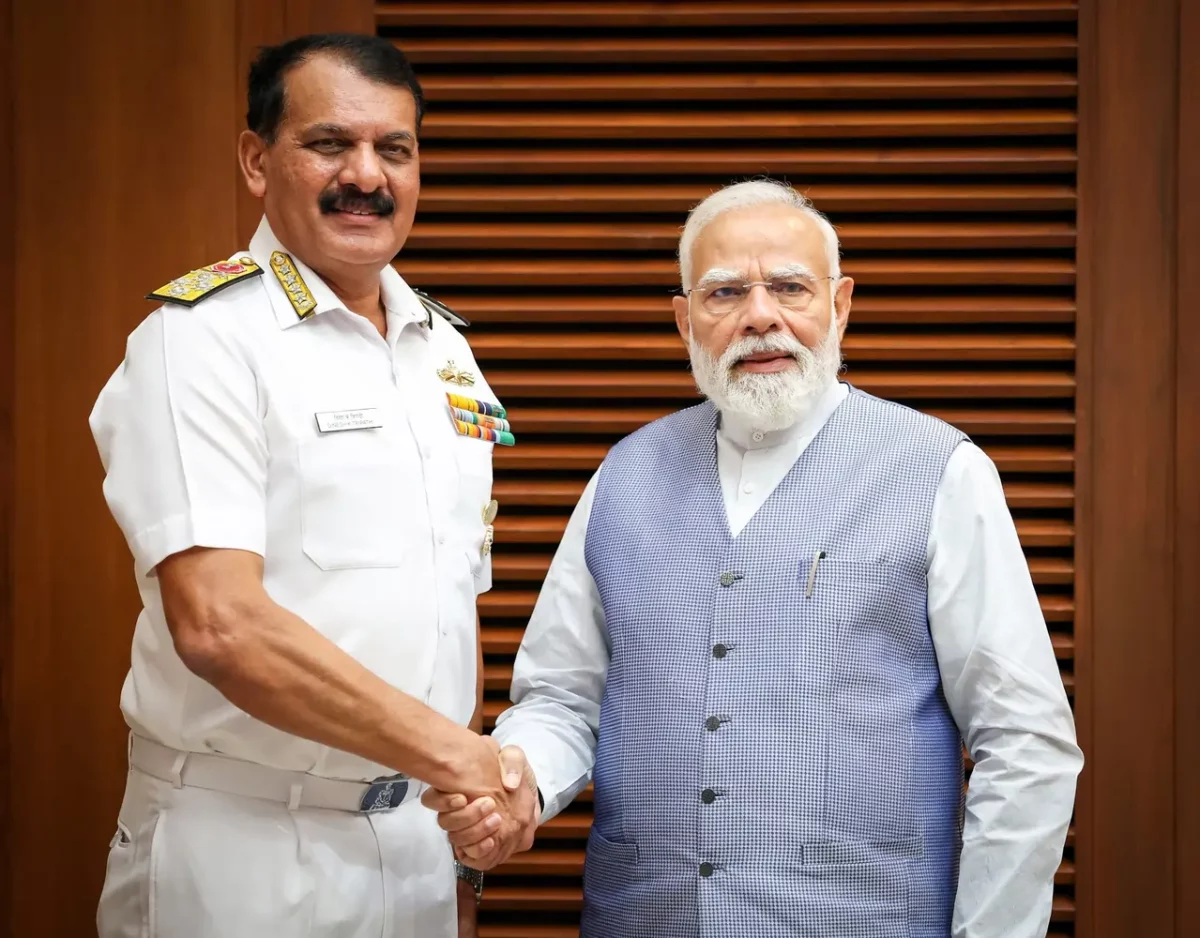
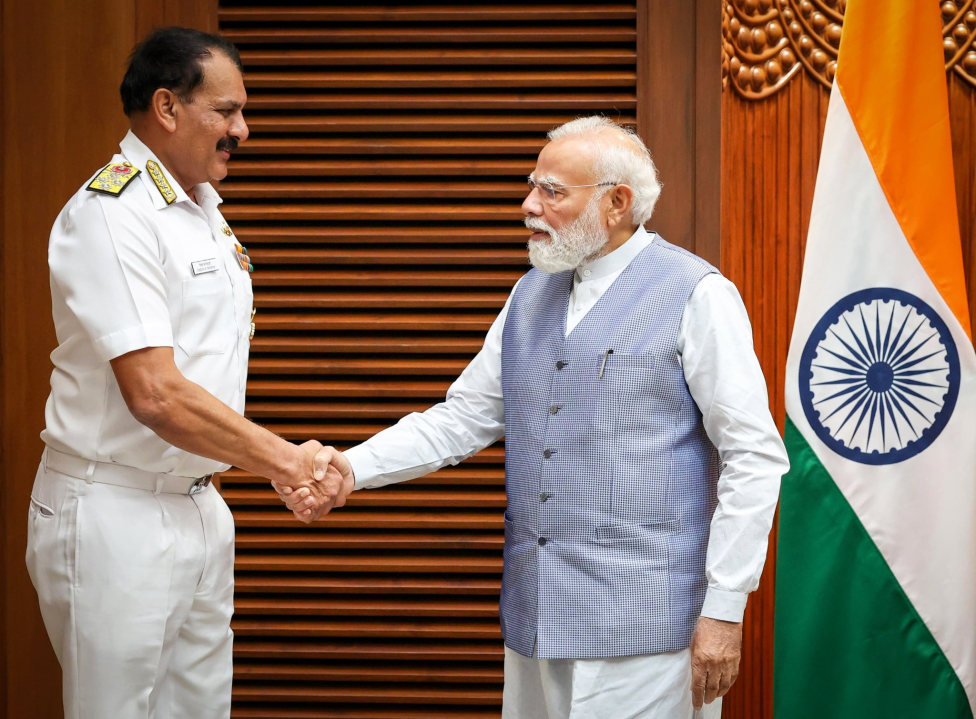
New Delhi, May 30, 2026: Chief of the Naval Staff Admiral Dinesh K Tripathi called on Prime Minister Narendra Modi on 29 May 2026, ahead of handing over command of the Indian Navy on 31 May 2026. The meeting marked one of the final official engagements of Admiral Tripathi as the Navy Chief before the scheduled leadership transition in the force.





During the meeting, Admiral Tripathi briefed the Prime Minister on the operational readiness of the Indian Navy and the overall maritime security situation in the Indian Ocean Region. The briefing also covered the impact of emerging challenges and rapidly advancing technologies in the maritime domain, which are increasingly shaping naval operations, surveillance, warfare, and strategic deterrence.
The Indian Ocean Region remains one of the world’s most vital maritime spaces, carrying critical sea lines of communication, energy routes, trade flows, and strategic chokepoints. For India, the region holds immense importance due to its direct impact on national security, economic stability, maritime trade, energy security, and regional influence.
Admiral Tripathi’s briefing comes at a time when the maritime environment is witnessing growing complexity due to increasing naval activity, grey-zone threats, unmanned systems, cyber and electronic warfare, piracy, illegal fishing, seabed security concerns, and the expanding role of artificial intelligence and autonomous platforms in naval warfare.
The Indian Navy has consistently projected itself as a combat-ready, credible, cohesive, and future-ready force, with a strong emphasis on self-reliance under the vision of Aatmanirbhar Bharat. From indigenous warship construction to advanced maritime surveillance, anti-submarine warfare capabilities, carrier battle group operations, and mission-based deployments, the Navy continues to enhance its ability to safeguard India’s maritime interests across the region.
Admiral Dinesh K Tripathi, who assumed charge as the 26th Chief of the Naval Staff on 30 April 2024, has led the Navy during a period of rapid technological transformation and evolving regional security challenges. Before becoming the Navy Chief, he served as Vice Chief of the Naval Staff and also held key operational and command appointments, including Flag Officer Commanding-in-Chief of the Western Naval Command.
The meeting also holds significance as Admiral Tripathi is set to retire on 31 May 2026. Vice Admiral Krishna Swaminathan has been appointed as the next Chief of the Naval Staff and will succeed Admiral Tripathi.
As India’s maritime responsibilities continue to expand, the Indian Navy remains focused on maintaining a high state of operational preparedness, ensuring maritime domain awareness, strengthening partnerships with friendly foreign navies, and protecting national maritime interests “anytime, anywhere, anyhow.”
The interaction between the outgoing Navy Chief and the Prime Minister underlined the strategic importance of India’s maritime security architecture and the Navy’s central role in ensuring peace, stability, and security in the Indian Ocean Region.