
New Delhi, May 21, 2026 — The Central Bureau of Investigation (CBI) has registered a First Information Report (FIR) against retired Indian Navy Captain Raminder Singh Wadhwa for allegedly amassing movable and immovable assets disproportionate to his known and legitimate sources of income during his service tenure. The case, filed under the Prevention of Corruption Act, pertains to the period from April 2010 to March 2020 and alleges criminal misconduct by a public servant.



According to the FIR, Captain Wadhwa, his wife, and two children accumulated assets valued at approximately Rs 6.90 crore by March 2020, representing a substantial increase from the Rs 2.31 crore recorded in April 2010. After accounting for the family’s legitimate income of around Rs 6.55 crore (primarily from salary and rental receipts) and documented expenditure of approximately Rs 5.15 crore during the check period, investigators determined that assets worth Rs 3.18 crore could not be satisfactorily explained. This figure represents roughly 46 per cent more than the family’s declared and lawful income. The CBI has noted that the quantum of disproportionate assets is likely to rise further once additional expenditures — including the construction and maintenance of a farmhouse, acquisition of vehicles, and expenses related to the education of the officer’s children — are fully examined.
The accused officer joined the Indian Navy as a Sub-Lieutenant on 1 July 1989 and was promoted to the rank of Captain on 6 August 2016, a rank equivalent to Colonel in the Indian Army. He retired from service in 2024. During his career, Captain Wadhwa held several sensitive and strategically important assignments. These included postings at the National Security Council Secretariat, the Directorate of Naval Design (particularly the Submarine Design Group responsible for indigenous warship and submarine programmes), the Directorate of Network Centric Operations, Headquarters Strategic Forces Command, the Naval Dockyard in Mumbai, and other technical entities. Officers in such positions have access to classified information concerning shipbuilding, procurement programmes, and advanced naval warfare capabilities.
The FIR specifically highlights the acquisition of multiple immovable properties in upscale locations, which the agency alleges were obtained through corrupt practices. Properties under scrutiny include a ground floor and basement in Delhi’s affluent Safdarjung Enclave; two land plots and a commercial space valued at approximately Rs 92 lakh in Gurugram’s Electronic City / Udyog Vihar area; land parcels in Panchkula, Haryana (where a farmhouse was constructed on land purchased in 2011); and additional holdings reportedly including a flat in Greater Noida and land in the Kalka region. The CBI has described the properties as situated in “posh areas” and has alleged that the officer and his family maintained a “lavish and extravagant lifestyle” inconsistent with their declared income.
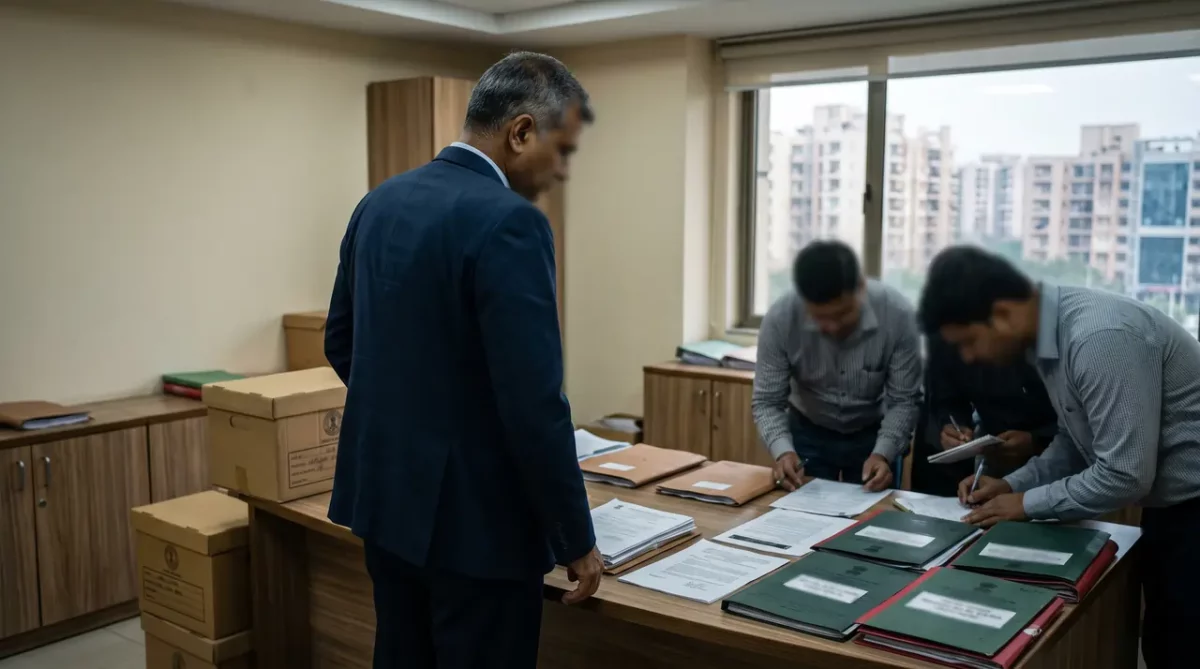
The case was registered on or around 15 May 2026 and became public earlier this week. No arrests have been made to date. The investigation remains at a preliminary stage, with the CBI currently verifying bank accounts, property documents, investment records, and other financial details pertaining to Captain Wadhwa and his family members. Further searches and forensic examination of records may be undertaken as the probe progresses.
This development follows closely on another recent CBI action involving a serving Army officer, underscoring the agency’s continued focus on allegations of financial irregularities within the armed forces. Captain Wadhwa has not yet responded publicly to the allegations. The CBI has stated that it will pursue the matter in accordance with due process under the law.
The registration of the FIR marks a significant development in the agency’s efforts to address cases of alleged disproportionate assets among senior public servants, including those who have held positions involving national security and defence procurement. Further updates are expected as the investigation advances.