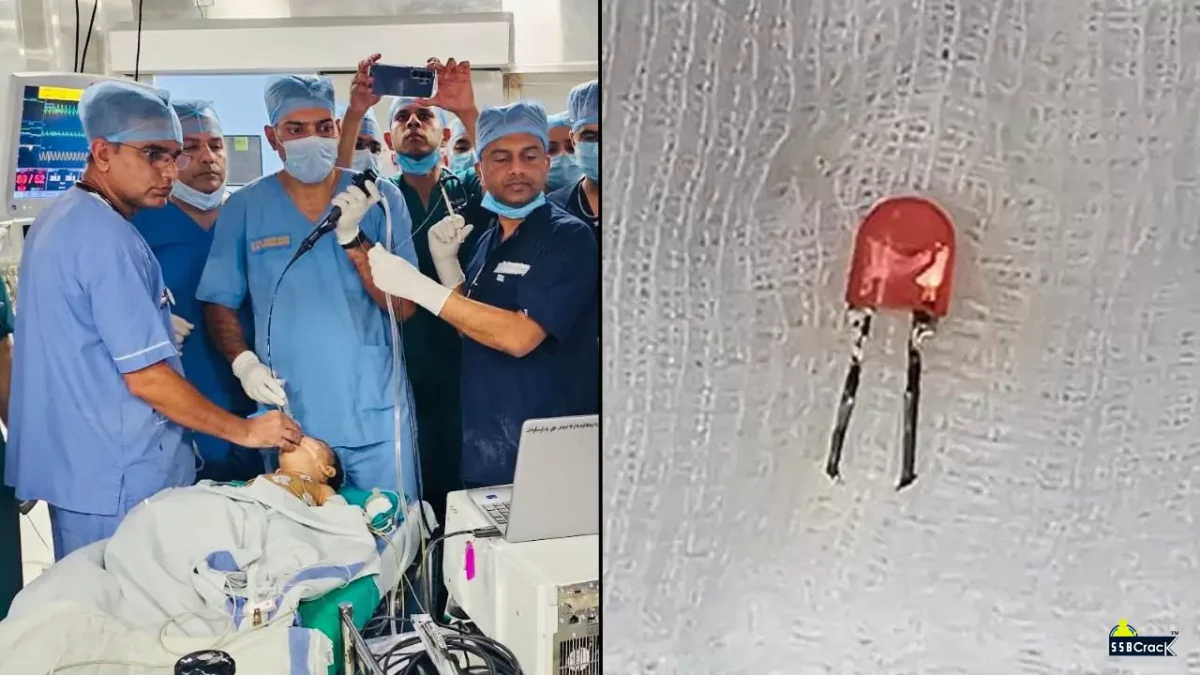
Pune, May 29, 2026 — In a remarkable display of medical precision and emergency response, specialists at the Army Institute of Cardio-Thoracic Sciences (AICTS), Pune, have saved the life of a nine-month-old infant by successfully removing a hazardous LED bulb with corrosive wires lodged deep inside the airway of the child’s left lung.





The life-threatening case was handled through a highly complex bronchoscopic procedure, which restored the infant’s normal breathing and helped avoid major lung surgery. The Indian Army’s Southern Command confirmed that the foreign body had been lodged deep inside the left lung airway and that the emergency carried the risk of airway collapse and potentially fatal complications.
According to reports, the infant had accidentally swallowed the small red LED bulb, a household object that became a serious medical hazard after entering the airway. The presence of corrosive wires attached to the bulb made the case even more dangerous, as it increased the risk of tissue injury, infection, internal damage, obstruction of breathing, and possible lung collapse.
Foreign-body aspiration in infants is considered a critical emergency because young children have narrow airways and limited respiratory reserve. Even a small object can quickly block airflow, cause wheezing, coughing, breathing distress, infection, or damage to the lungs if not removed in time. In this case, the object had travelled deep into the left bronchial passage, making the procedure technically demanding and time-sensitive.
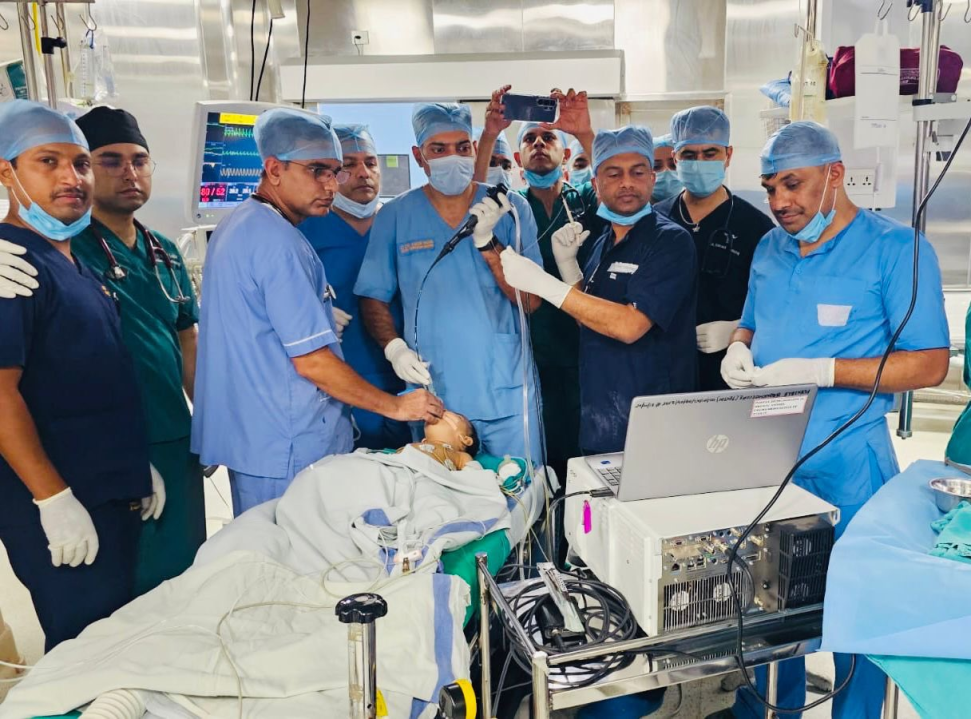
The medical team at AICTS, a premier cardio-thoracic care institution of the Armed Forces Medical Services, acted swiftly and opted for bronchoscopy, a minimally invasive procedure used to examine and treat conditions inside the airways. During bronchoscopy, a thin tube fitted with a camera and specialised instruments is passed through the nose or mouth into the respiratory tract, allowing doctors to directly visualise the lodged object and retrieve it without opening the chest.
The procedure was particularly challenging because of the infant’s tiny airway, the depth at which the LED bulb was stuck, and the risk that the attached corrosive wires could injure the surrounding tissue during extraction. Any sudden movement or breakage of the object could have worsened the obstruction or caused bleeding and airway trauma.
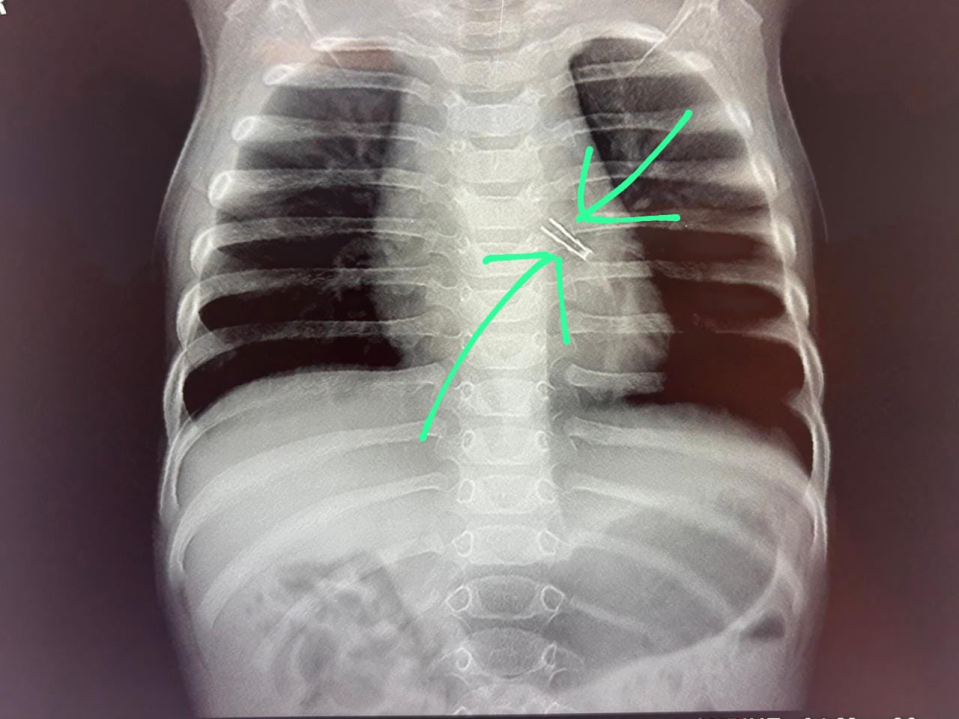
Despite these risks, the specialists successfully removed the LED bulb and wires with exceptional precision. Post-procedure checks confirmed that the object had been completely extracted and that there were no immediate complications. The infant’s breathing normalised after the intervention, marking a successful and timely outcome in what could have become a fatal emergency.
The Indian Army also shared radiographic images showing the pre- and post-procedure condition, along with a photograph of the extracted LED bulb, drawing widespread appreciation for the doctors and medical staff involved in the case. Social media users praised the Army medical team for their expertise, quick response, and dedication in saving the child’s life.
The incident also serves as an important reminder for parents and caregivers. Small objects such as toy parts, beads, coins, button batteries, LED bulbs, magnets, pins, and items with wires or sharp edges can pose serious dangers to infants and toddlers. Children under three years of age often explore their surroundings by putting objects in their mouths, making constant supervision essential.
Medical experts caution that objects containing batteries, chemicals, magnets, or corrosive components are especially dangerous because they can burn or damage internal tissues within a short time. In any suspected case of choking, aspiration, sudden coughing, breathing difficulty, wheezing, or unexplained respiratory distress after a child has handled a small object, immediate medical attention is crucial.
The successful intervention at AICTS Pune highlights the life-saving role of specialised paediatric bronchoscopy and the advanced capabilities available within the Armed Forces Medical Services. It also reinforces AICTS’s reputation as a centre of excellence for complex thoracic and airway emergencies.
What began as a frightening household accident ended as a story of medical skill, teamwork, and timely action. For the infant and the family, the expertise of the Army doctors at AICTS Pune made the difference between a potentially tragic outcome and a full recovery.