A set of images from SOF Week 2026 in the United States has triggered a sharp debate among Indian defence observers after social media users pointed out what appears to be a visible equipment gap among Indian Special Forces personnel during a high-profile joint demonstration with United States Special Operations Forces.





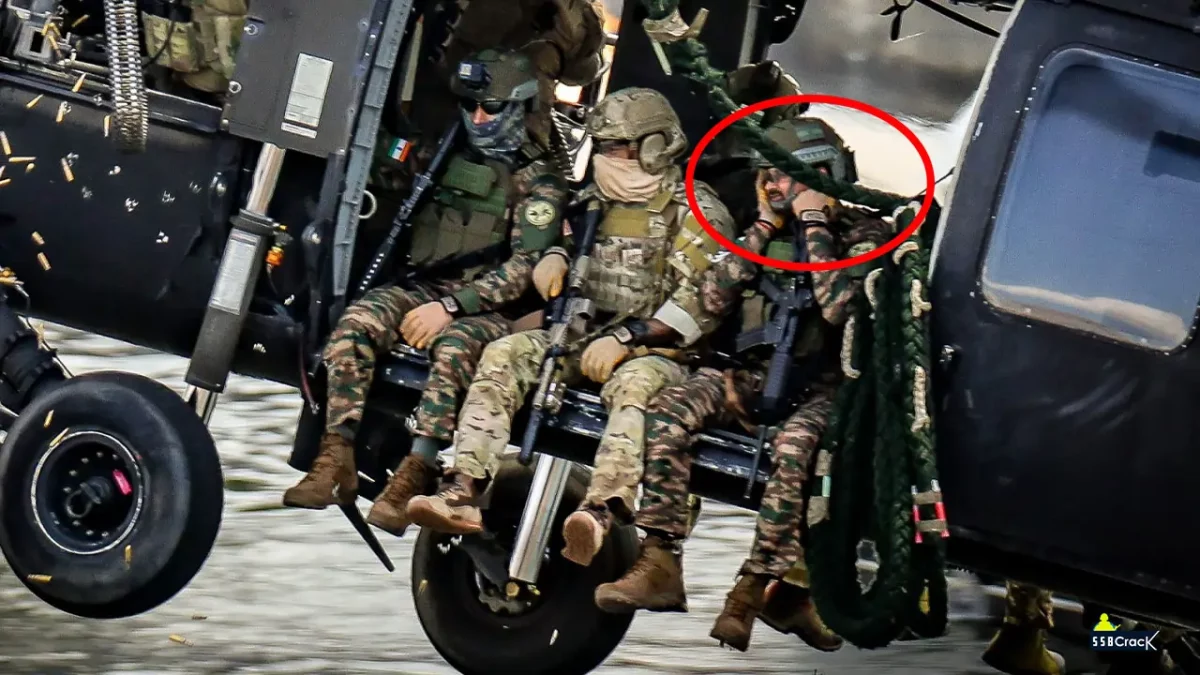
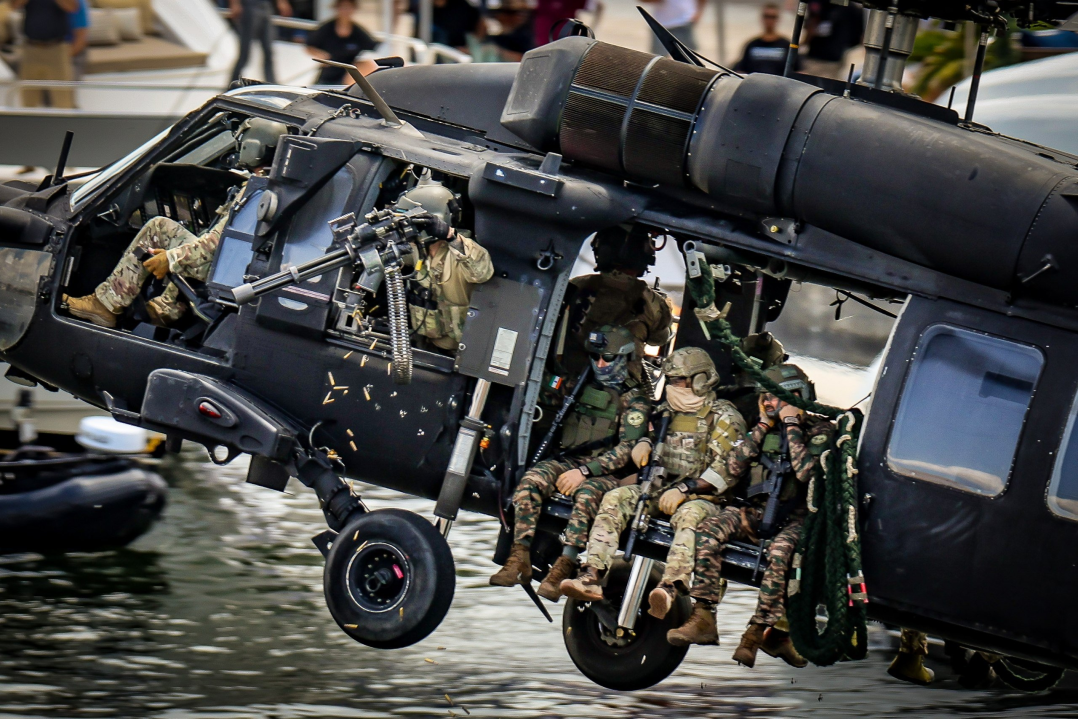
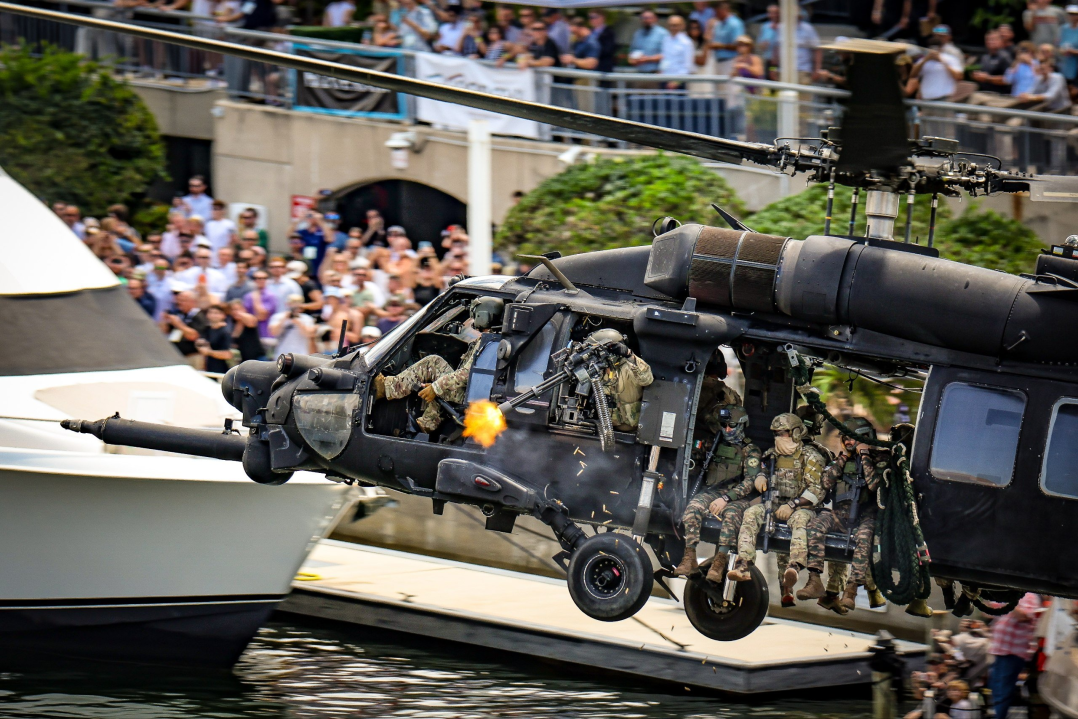
The images show armed personnel seated on the open side of a helicopter hovering low over water, with fast-rope equipment visible near the door. The scene appears to be from the “Battle in the Bay” capability demonstration held during SOF Week 2026 in Tampa, Florida, where Indian Army personnel made their debut alongside elite US special operations elements. SOF Week 2026 was held from May 18 to 21 in Tampa, and Indian participation was reported as a historic first for the Indian Army at the event.
What caught public attention was not the helicopter, the weapons, or the tactical formation, but a small detail in the middle of the frame: one soldier appears to be covering both ears with his hands while seated near the helicopter’s open door. The gesture, highlighted by users on X, immediately sparked questions about whether Indian Special Forces operators were operating without modern electronic hearing protection in an extremely loud aviation environment.
The concern is not cosmetic. Helicopters generate intense rotor and engine noise, and personnel seated near open doors during low-level flying are exposed to high-decibel sound for sustained periods. In special operations, hearing protection is not just about comfort. It protects soldiers from long-term hearing damage, allows them to receive commands clearly, and helps maintain coordination during high-risk activities such as fast-roping, rappelling, landing-zone insertion, and air assault operations.
Modern electronic hearing protection systems, such as active noise-reduction headsets used by many Western special operations forces, are designed to reduce harmful noise while still allowing operators to hear speech, radio communication, and environmental cues. These headsets can be integrated with helmets and communication systems, enabling soldiers to stay connected without sacrificing hearing safety.
That is why the image has gone viral. The visual contrast appears stark: elite Indian personnel, trained for some of the most demanding missions, are seen operating in a setting where their US counterparts would typically be equipped with advanced communication headsets and active hearing protection. Even if some personnel in the image may be wearing basic ear protection or older-style equipment, the absence of clearly visible modern integrated headsets has raised uncomfortable questions about soldier-level modernisation.
The debate gained traction after defence-focused social media accounts used the image to criticise what they described as a gap between India’s strategic ambitions and the basic equipment provided to soldiers on the ground. One line of criticism argued that while India spends heavily on major defence platforms, individual protective equipment for elite operators often receives less public scrutiny. Another pointed out that the issue should not be blamed on DRDO, HAL, or long indigenous development cycles because electronic hearing protection is already a mature, commercially available technology.
The timing has amplified the debate. This was not a remote counter-insurgency patrol or an old archival photograph. It was a high-visibility bilateral military event in 2026, held in the presence of global special operations communities. Reports described India’s participation in SOF Week as a major step in showcasing Special Forces capability and strengthening India-US defence cooperation.
For many observers, the image has become symbolic of a larger issue: Indian soldiers often display exceptional courage and professionalism, but their personal gear does not always match the standards expected of elite modern forces. The argument is not that Indian Special Forces lack capability. Rather, it is that capability must be supported by consistent investment in the small but mission-critical items that directly affect survivability, communication, and long-term health.
Hearing loss is a serious occupational risk for soldiers, particularly those exposed to helicopters, firearms, explosions, heavy vehicles, and artillery. For special operations personnel, the risk is even greater because they frequently operate around aircraft, conduct live-fire training, and work in environments where clear communication can determine mission success or failure. A soldier covering his ears with his hands is not just an awkward moment; it is a visible sign that the available protection may be inadequate for the task.
There is also a tactical concern. During fast-rope or heliborne operations, operators must be able to hear commands, react to changes, and remain aware of their surroundings. Covering the ears with both hands reduces readiness, grip, balance, and weapon control. In a real operation, even a few seconds of reduced situational awareness can matter.
The viral reaction should therefore be seen less as social media outrage and more as a demand for practical modernisation. India has invested heavily in major platforms, surveillance systems, missiles, drones, aircraft, and battlefield technologies. But modern warfare is also shaped by the quality of equipment issued to individual soldiers. Helmets, plate carriers, night-vision devices, combat communications, gloves, boots, eye protection, and hearing protection are not accessories; they are core combat enablers.
The image from SOF Week 2026 has created a rare moment where a small visual detail has opened a larger national conversation. India’s Special Forces are among the most respected elements of the armed forces, with a long record of high-risk operations in difficult terrain and hostile environments. Their training, courage, and operational experience are not in doubt. The question being asked is simpler: are they being given the best available personal equipment for the missions they are expected to perform?
A mature response would be to treat the viral image as feedback, not embarrassment. If the gap exists, it should be corrected quickly through urgent procurement, standardised issue, and better integration of communication and protection systems. If the image does not reflect the broader reality, the armed forces can still use the debate to highlight ongoing upgrades and reassure the public that elite personnel are being equipped to global standards.
Either way, the photograph has done what many official discussions fail to do: it has brought soldier-level equipment into public focus. In a country that rightly celebrates the bravery of its armed forces, the next step is ensuring that those soldiers do not have to cover their ears with their hands while operating from a helicopter in 2026.