
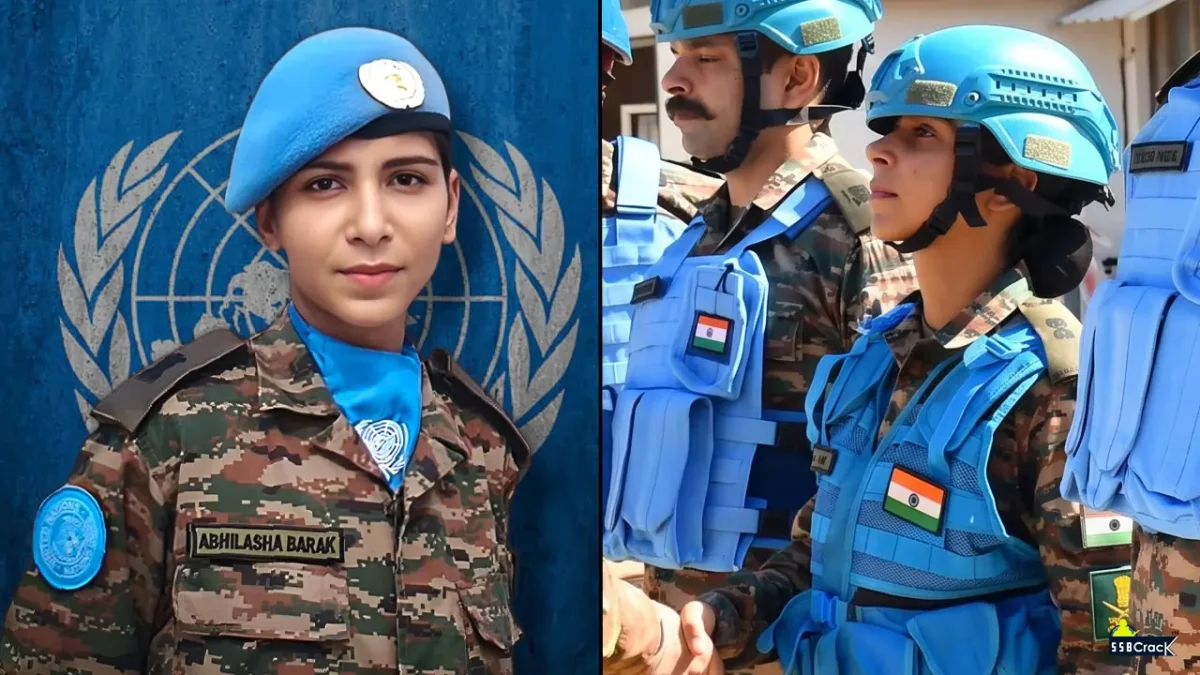
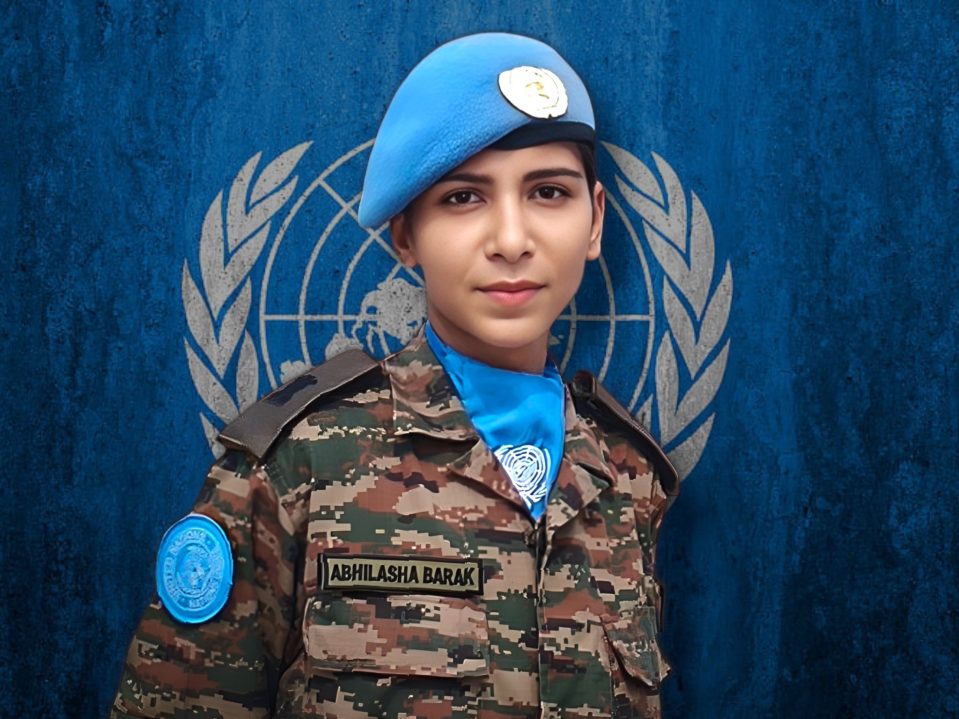
Major Abhilasha Barak of the Indian Army has added another proud chapter to India’s legacy in global peacekeeping by being named the recipient of the 2025 United Nations Military Gender Advocate of the Year Award. The honour recognises her exceptional contribution to gender-responsive peacekeeping while serving with the Indian Battalion in the United Nations Interim Force in Lebanon, commonly known as UNIFIL.
The award is a significant recognition not only for Major Barak but also for the Indian Army and India’s long-standing role in United Nations peacekeeping operations. She is being honoured for her leadership as Commander of the Female Engagement Team, where she played a key role in community outreach, engagement with women and adolescent girls, and gender sensitisation training for peacekeepers deployed in the mission area.
Major Abhilasha Barak’s achievement carries special importance because she is already a historic figure in the Indian Armed Forces. She is widely known as the first woman combat helicopter pilot of the Indian Army, a milestone that marked a major step forward for women officers in Army Aviation. Her latest international recognition now places her among India’s most inspiring women officers serving in both operational and peacekeeping roles.
Commissioned into the Army Air Defence Corps in September 2018, Major Barak later moved into Army Aviation and successfully completed her training at the Combat Army Aviation Training School in Nashik in 2022. With this achievement, she became the first woman officer to qualify as a combat aviator in the Indian Army. She is qualified to fly platforms including the Advanced Light Helicopter Dhruv and the armed Rudra variant, reflecting her professional competence in one of the most demanding military domains.
Her journey from an Army Air Defence officer to a combat aviator and then to a United Nations peacekeeping leader highlights the expanding role of women in the Indian Armed Forces. Major Barak’s career represents a new generation of Indian women officers who are breaking barriers in combat support roles, aviation, leadership, and international military missions.
In her current deployment with UNIFIL in southern Lebanon, Major Barak has been serving as Commander of the Female Engagement Team of the Indian Battalion. Female Engagement Teams play a crucial role in modern peacekeeping, especially in regions where cultural and social norms may restrict interaction between male peacekeepers and local women. Through such teams, peacekeepers are able to connect with women and girls, understand their concerns, and ensure that mission activities are more inclusive and effective.
Major Barak’s work has focused on building trust with local communities, especially women and adolescent girls. Her outreach initiatives helped strengthen communication between peacekeepers and the civilian population, while also supporting the broader objectives of the Women, Peace and Security agenda. In conflict-affected regions, such engagement is vital for understanding local needs, addressing protection concerns, and encouraging the participation of women in peacebuilding processes.
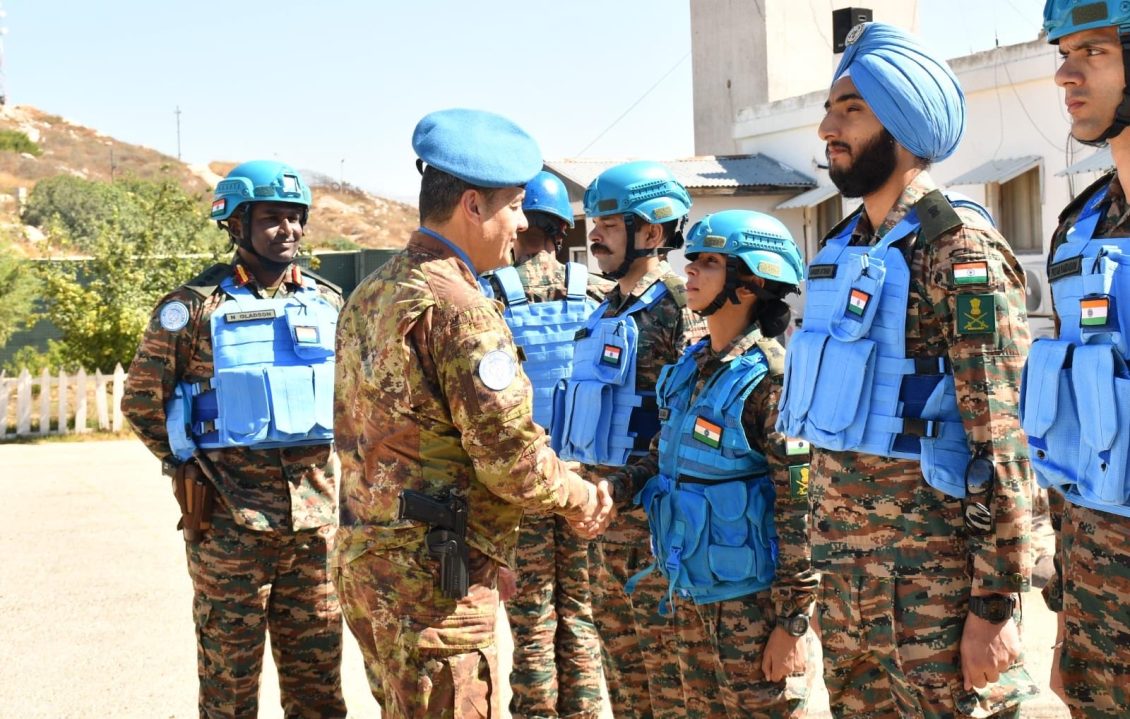
Apart from community engagement, Major Barak has also been recognised for conducting gender sensitisation training for fellow peacekeepers. Such training is important in ensuring that peacekeeping personnel understand the different ways in which conflict affects men, women, boys, and girls. It also helps missions respond more effectively to issues such as gender-based violence, protection of civilians, and inclusive community dialogue.
The United Nations Military Gender Advocate of the Year Award was established in 2016 by the Office of Military Affairs within the Department of Peace Operations. It honours individual military peacekeepers who have made outstanding efforts to integrate gender perspectives into peacekeeping work and promote the principles of United Nations Security Council Resolution 1325 on Women, Peace and Security.
This resolution, adopted in 2000, recognises the important role of women in conflict prevention, peace negotiations, peacekeeping, humanitarian response, and post-conflict reconstruction. It also calls for greater participation of women in peace and security processes and stronger protection of women and girls in conflict situations. Major Barak’s work in Lebanon reflects these principles in action.
Major Abhilasha Barak becomes the third Indian recipient of this prestigious award. Before her, Major Suman Gawani received the honour for her service with the United Nations Mission in South Sudan, while Major Radhika Sen was recognised for her work with the Indian Rapid Deployment Battalion in the United Nations Organization Stabilization Mission in the Democratic Republic of the Congo. Major Barak’s recognition continues this strong Indian lineage of women peacekeepers making a global impact.
The award will be formally presented at the United Nations Headquarters in New York on 29 May 2026 during the commemoration of the International Day of United Nations Peacekeepers. The occasion will honour the service, sacrifice, and commitment of peacekeepers from across the world who continue to work in challenging environments to maintain peace and security.
India has been one of the most consistent and respected contributors to United Nations peacekeeping since 1948. Over the decades, Indian military and police personnel have served in more than 50 UN missions across the world. Indian peacekeepers are widely recognised for their professionalism, discipline, community-oriented approach, and ability to operate in complex conflict zones.
The Indian contingent in UNIFIL continues this tradition in Lebanon, where peacekeepers work to maintain stability, support local communities, and assist in the implementation of the mission’s mandate. Major Barak’s work as part of this mission underlines India’s growing focus on gender-inclusive peacekeeping and the meaningful participation of women officers in international assignments.
Her recognition also highlights the importance of Female Engagement Teams in peacekeeping operations. These teams help missions reach sections of the population that may otherwise remain unheard. By engaging directly with women and girls, they contribute to better situational awareness, improved protection strategies, and stronger trust between peacekeepers and local communities.
Major Barak’s dual identity as a combat helicopter pilot and gender advocate makes her story especially inspiring. On one hand, she represents the technical and operational excellence required of a military aviator. On the other, she demonstrates the empathy, communication skills, and leadership needed in peacekeeping environments. Her achievements show that modern military leadership is not limited to battlefield capability alone, but also includes community engagement, humanitarian sensitivity, and inclusive decision-making.
For the Indian Army, Major Abhilasha Barak’s honour is a proud reflection of the increasing opportunities being created for women officers. From combat aviation to UN missions, women in uniform are taking on more challenging and visible roles. Their success is reshaping perceptions and inspiring young women across the country to consider careers in the armed forces.
Major Abhilasha Barak’s recognition by the United Nations is more than an individual achievement. It is a symbol of India’s commitment to global peace, gender equality, and professional excellence in military service. Her work in Lebanon stands as an example of how peacekeeping can become more effective when it includes the voices, needs, and participation of women.
As India celebrates this honour, Major Barak’s journey will continue to inspire countless defence aspirants, young officers, and citizens. From becoming the first woman combat helicopter pilot of the Indian Army to receiving one of the United Nations’ most prestigious peacekeeping awards, she has shown that courage, competence, and compassion can together create a powerful legacy of service.