
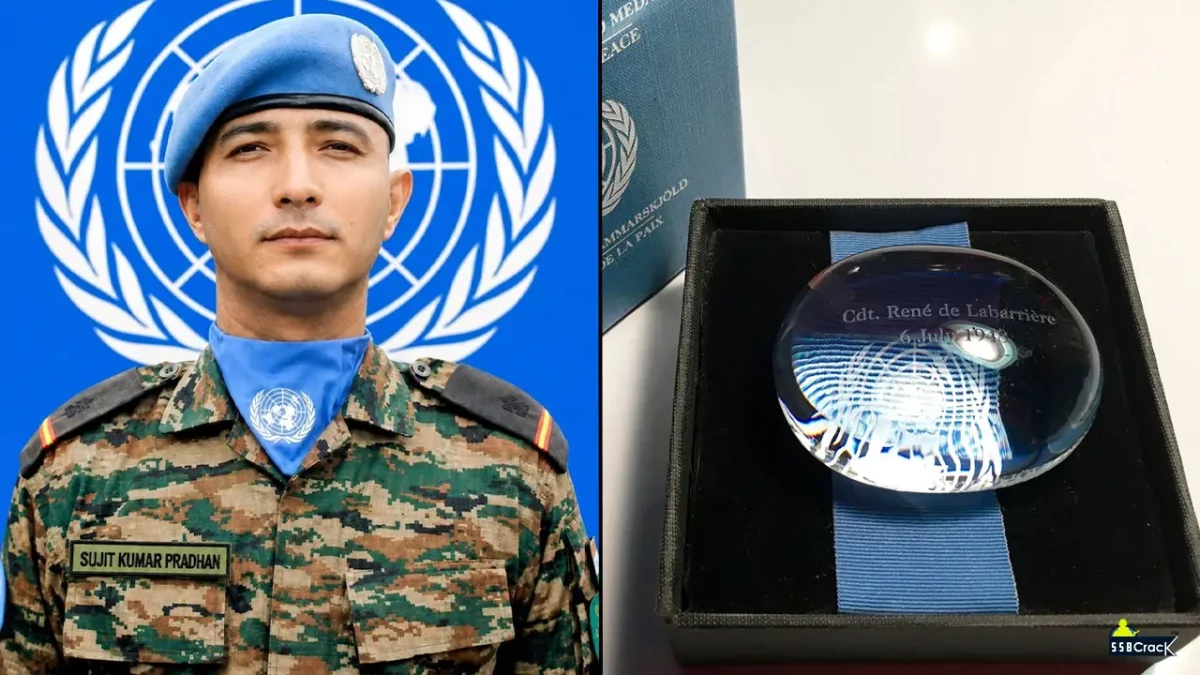
In a solemn and deeply moving tribute to valour and international service, the United Nations posthumously awarded the prestigious Dag Hammarskjöld Medal to Naib Subedar Sujit Kumar Pradhan of the Indian Army. This highest honour for peacekeepers who lose their lives in the line of duty was announced around the International Day of United Nations Peacekeepers on 29 May 2026, recognising his supreme sacrifice while serving with the United Nations Mission in South Sudan (UNMISS) in 2025.

Naib Subedar Pradhan’s story is one of quiet dedication, professional excellence, and the ultimate price paid in the noble pursuit of global peace. His recognition alongside another brave Indian soldier, Lance Havildar Harbhajan Singh (who served with MONUSCO in the Democratic Republic of the Congo), underscores the shared sacrifices of Indian peacekeepers across continents.
The Making of a Dedicated Soldier
Naib Subedar Sujit Kumar Pradhan served as a Junior Commissioned Officer (JCO) in the Indian Army — a rank that demands proven leadership, tactical acumen, and the ability to inspire and command troops effectively. JCOs form the vital bridge between commissioned officers and the rank and file, often shouldering significant operational responsibilities.
While detailed public information regarding his early life, hometown, family background, educational journey, or specific pre-UN deployment service record remains limited — a common aspect of privacy and operational security for such personnel — his selection for a demanding United Nations peacekeeping mission speaks volumes about his professional standing and the trust reposed in him by the Indian Army.
Indian soldiers chosen for UN missions undergo specialised training in peacekeeping principles, cultural sensitivity, rules of engagement, and mission-specific skills. They carry forward India’s proud legacy of contributing disciplined, impartial, and highly professional personnel to UN operations worldwide.
Serving Under the Blue Helmet in South Sudan
The United Nations Mission in South Sudan (UNMISS) was established in 2011 following the country’s independence. Operating in one of the world’s most fragile and conflict-affected states, UNMISS has a robust mandate that includes protecting civilians under imminent threat, facilitating humanitarian assistance, supporting the implementation of peace agreements, monitoring and investigating human rights violations, and contributing to security sector reform.
South Sudan has endured prolonged civil strife, massive internal displacement, food insecurity, and complex inter-communal tensions. In this challenging environment, Indian peacekeepers have consistently demonstrated professionalism through long-range patrols, community engagement programmes, protection of civilian sites, quick impact projects, and efforts to build confidence among local populations.
Naib Subedar Sujit Kumar Pradhan was deployed with UNMISS as part of India’s valued contribution to this critical mission. In his capacity, he worked alongside multinational colleagues to maintain stability, protect vulnerable communities, and advance the cause of sustainable peace in a region marked by hardship and hope. His service exemplified the Indian Armed Forces’ motto of “Service Before Self” extended to humanity at large.
The Supreme Sacrifice
In 2025, while faithfully executing his duties under the United Nations flag in South Sudan, Naib Subedar Sujit Kumar Pradhan made the supreme sacrifice. He laid down his life in the line of duty, becoming part of the distinguished and solemn roll of Indian peacekeepers who have paid the ultimate price for international peace and security.
Publicly available reports describe his death as occurring while he was contributing to efforts aimed at protecting vulnerable communities and maintaining stability. Specific operational details — including the exact date and circumstances of the incident — have not been extensively disclosed in open sources, consistent with standard practices regarding sensitive peacekeeping operations and respect for the privacy of the bereaved family.
His sacrifice stands as a testament to the risks inherent in peacekeeping work and the extraordinary courage required of those who volunteer to serve in some of the most difficult environments on earth.
Posthumous Dag Hammarskjöld Medal — A Global Tribute
The Dag Hammarskjöld Medal is the United Nations’ highest honour bestowed upon military, police, and civilian peacekeepers who lose their lives while serving under the UN flag. Named after Dag Hammarskjöld, the visionary second Secretary-General of the United Nations who himself died in the line of duty in 1961, the medal symbolises selfless service, courage, and commitment to the principles of the UN Charter.

On the occasion of the International Day of United Nations Peacekeepers, the UN announced that Naib Subedar Sujit Kumar Pradhan and Lance Havildar Harbhajan Singh would be posthumously awarded this distinguished medal. UN Secretary-General António Guterres presided over the solemn ceremony at United Nations Headquarters in New York, where 68 peacekeepers were honoured in total — including 59 who died in the line of duty during the preceding year.
This collective recognition not only pays tribute to individual heroism but also highlights the collective risks borne by peacekeepers globally and the international community’s responsibility to ensure their safety and security.
India’s Enduring Legacy in United Nations Peacekeeping
India has been one of the largest and most consistent contributors to United Nations Peacekeeping Operations since the 1950s. As of 2026, India continues to deploy over 4,200 military and police personnel (including a growing number of women peacekeepers) across various UN missions worldwide.
Tragically, India also bears the distinction of having suffered the highest number of fatalities among all troop-contributing countries, with nearly 180 Indian peacekeepers having made the supreme sacrifice over the decades. From the historic deployment in the Congo in the early 1960s to contemporary missions in South Sudan, the Democratic Republic of the Congo, Lebanon, and elsewhere, Indian soldiers have earned widespread international respect for their professionalism, impartiality, discipline, and courage.
Naib Subedar Sujit Kumar Pradhan’s supreme sacrifice adds a poignant and honourable chapter to this illustrious legacy. It reaffirms India’s unwavering commitment to multilateralism, global peace, and the protection of the most vulnerable populations, even at great personal cost to its brave soldiers.
An Enduring Legacy and Inspiration
The life and supreme sacrifice of Naib Subedar Sujit Kumar Pradhan serve as a powerful and humbling reminder of the human cost of peacekeeping and the extraordinary dedication of Indian soldiers who serve far beyond national borders. His story embodies the core values that the Indian Armed Forces seek to instil — integrity, leadership, selfless service, and an unwavering commitment to duty.
His family, the Indian Army fraternity, and the entire nation mourn his loss while taking immense pride in his contribution to global peace and stability. Such heroes strengthen India’s standing as a responsible and compassionate global power.
Conclusion
Naib Subedar Sujit Kumar Pradhan will forever be remembered as a brave and dedicated son of India who made the ultimate sacrifice while wearing the Blue Helmet in the service of humanity. His legacy lives on in the continued noble work of Indian peacekeepers around the world and in the inspiration he provides to countless young Indians who aspire to serve the nation and the cause of peace.