
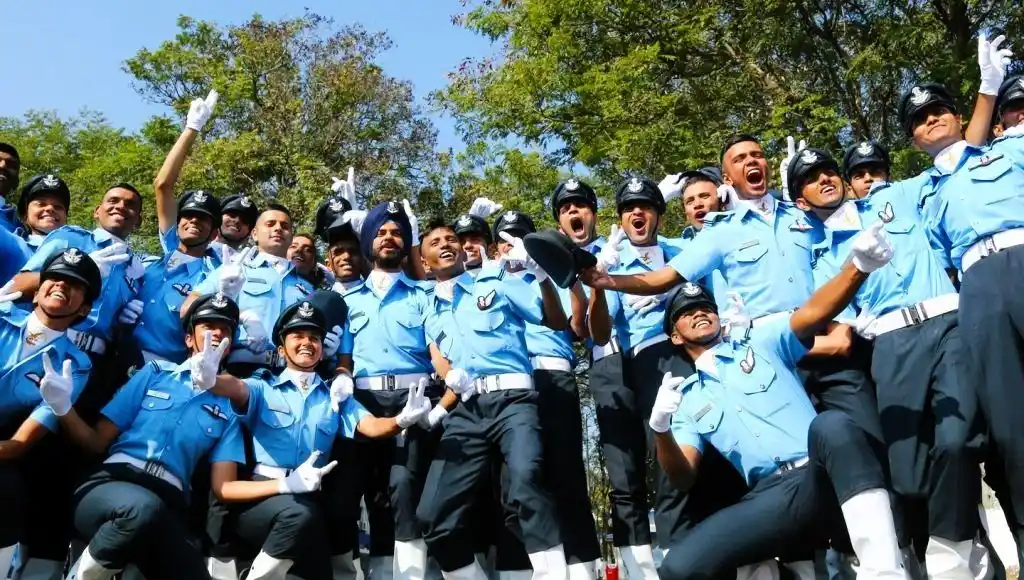
The Indian Air Force (IAF) offers one of the most prestigious and technologically advanced careers in the Indian Armed Forces. Whether you aspire to become a fighter pilot, transport or helicopter pilot, aeronautical engineer, or ground duty officer in administration, logistics, accounts, education, or meteorology, multiple entry routes exist in 2026.

The four best and most established pathways to join as a commissioned officer (training primarily at Air Force Academy, Dundigal) are:
- National Defence Academy (NDA) Entry
- Combined Defence Services (CDS) Entry
- Air Force Common Admission Test (AFCAT) Entry
- NCC Special Entry
These routes cover candidates after Class 12 and after graduation. (Note: For joining as an airman/other rank under the Agnipath scheme, the separate Agniveervayu recruitment is the main channel.)
All officer entries lead to training at the Air Force Academy (AFA), Dundigal (near Hyderabad), after which candidates are commissioned as Flying Officers. Candidates must be Indian citizens (or meet specified nationality criteria), generally unmarried at the time of joining, and clear rigorous written exams (where applicable), Air Force Selection Board (AFSB) interviews, and medical examinations. Exact age cut-offs, vacancies, and dates are notified in official advertisements — always verify on upsc.gov.in, afcat.cdac.in / careerairforce.gov.in, and indianairforce.nic.in.
1. National Defence Academy (NDA) Entry – Best for Class 12 Students
This is the earliest and most prestigious route for young aspirants aiming for a Permanent Commission.
Eligibility
- Age: 16.5 to 19.5 years
- Education: Passed or appearing in Class 12 (Physics, Chemistry, and Mathematics preferred/required for Air Force wing)
- Gender: Male and female
- Marital Status: Unmarried
Selection Process
UPSC conducts the NDA exam twice a year. It includes a written examination (Mathematics + General Ability Test), followed by SSB/AFSB interview (5 days), medical examination (especially stringent for Flying Branch), and final merit list.
Training Path
Three years of joint training at NDA, Khadakwasla (Pune), followed by specialized training at Air Force Academy, Dundigal (approximately one year or more, including flying training for pilots).
Why it ranks among the best in 2026
Early entry builds strong leadership foundations, joint-service exposure, and a clear path to Permanent Commission. High competition, but excellent long-term career progression.
2. Combined Defence Services (CDS) Entry – Strong Permanent Commission Route for Graduates
CDS is ideal for graduates seeking Permanent Commission, particularly in the Flying Branch.
Eligibility
- Age: Approximately 20–24 years (exact date-of-birth range notified in each UPSC advertisement; limited relaxation for CPL holders in some cases)
- Education: Graduation (degree with Physics and Mathematics at 10+2 level, or BE/B.Tech)
- Gender: Primarily males for Air Force Academy Flying Branch via CDS (women have stronger access via AFCAT)
- Marital Status: Unmarried
Selection Process
UPSC CDS written exam (English, General Knowledge, Elementary Mathematics) → AFSB interview → Medical examination → Merit list. Conducted twice a year.
Training
At Air Force Academy, Dundigal (typically around 74 weeks for Flying Branch).
Why it is one of the best options
It offers Permanent Commission and is a classic graduate pathway. Suitable for those who decide on a defence career during or after college.
3. Air Force Common Admission Test (AFCAT) Entry – Most Flexible and Popular for Graduates
AFCAT is the primary and most versatile entry for both men and women into Flying Branch as well as Ground Duty (Technical and Non-Technical) branches.
Eligibility (indicative for 2026 cycles)
- Flying Branch: Age 20–24 years (relaxable up to 26 years for valid current DGCA Commercial Pilot Licence holders). Graduation with minimum 60% marks + Physics and Mathematics at 10+2 (minimum 50% each), or BE/B.Tech with 60%.
- Ground Duty (Technical): Age 20–26 years. Engineering degree in notified streams with minimum 60%.
- Ground Duty (Non-Technical): Age 20–26 years. Graduation with minimum 60% (specific requirements for certain branches like Accounts, Education, Meteorology).
- Gender: Men and women
- Marital Status: Unmarried
Selection Process
Online AFCAT exam (plus Engineering Knowledge Test for Technical) → AFSB interview → Medical examination → Final merit. Conducted twice a year. For example, AFCAT 02/2026 applications opened around May–June 2026 for courses commencing in July 2027, with substantial vacancies across branches.
Training
At Air Force Academy, Dundigal. Flying Branch includes Pre-Flying Training (for non-NDA cadets), Stage-I flying at AFA, stream allocation (Fighter/Transport/Helicopter), and further stages. Ground Duty durations vary (around 52–74 weeks depending on branch).
Commission
Primarily Short Service Commission (10 years, extendable), with opportunities for Permanent Commission based on vacancies and performance.
Why it is one of the best in 2026
Widest branch options, open to both genders, relatively accessible after graduation, and the highest volume of vacancies among officer entries. Ideal for engineers and general graduates alike.
4. NCC Special Entry – Direct Advantage for NCC Cadets (Flying Branch)
This entry rewards candidates who have already demonstrated leadership and commitment through the National Cadet Corps.
Eligibility
- Age: 20–24 years (up to 26 with valid CPL)
- Education: Graduation with minimum 60% + Physics and Mathematics at 10+2 (50% each), or equivalent engineering qualifications
- Additional: Valid NCC Air Wing Senior Division ‘C’ Certificate
- Gender: Men and women
- Marital Status: Unmarried
Selection Process
Shortlisting based on NCC credentials (often linked to AFCAT notification cycles) → AFSB interview → Medical examination → Merit. Limited seats (historically a percentage of Flying Branch vacancies). No separate written exam in the pure special entry pathway.
Training
At Air Force Academy, Dundigal, following the Flying Branch curriculum.
Why it ranks among the best
It provides a preferential route for serious NCC cadets, reduces the written-exam barrier, and values prior service experience. Excellent for those who have invested time in Air Wing NCC during college.
Common Requirements Across All Entries
- AFSB Interview: Psychological tests, Group Testing Officer tasks, personal interview, and conference — assesses Officer-Like Qualities.
- Medical Standards: Very high, especially for Flying Branch (vision, colour perception, anthropometry, and overall fitness).
- Physical Fitness: Continuous emphasis during training and selection.
- Official Portals: upsc.gov.in (NDA/CDS), afcat.cdac.in or careerairforce.gov.in (AFCAT/NCC), indianairforce.nic.in.
Additional Notes for 2026 Aspirants
- Agniveervayu: The main route for joining as airmen (other ranks) under the Agnipath scheme. Separate recruitment with age roughly 17.5–21/22 years and Class 10/12 qualifications depending on the trade. Training occurs at Air Force training establishments (not primarily AFA Dundigal for officers).
- Women candidates enjoy expanded opportunities, particularly through AFCAT and NCC Special Entry.
- Preparation should focus on academic foundations (especially Mathematics and Physics for Flying), physical fitness, current affairs, and intensive AFSB personality development.
- Always download and read the latest official notifications carefully, as age ranges, exact educational percentages, vacancies, and application windows are course-specific.
Final Advice
Choose the entry that best matches your current educational stage and age. NDA suits ambitious Class 12 students, while AFCAT offers the broadest options after graduation. Consistency in preparation, medical fitness, and genuine motivation to serve are non-negotiable.
The Indian Air Force demands excellence, discipline, and a spirit of adventure. Success in any of these four pathways opens a career of leadership, technological challenge, and national service. Monitor official websites regularly, prepare systematically, and aim high. Jai Hind.