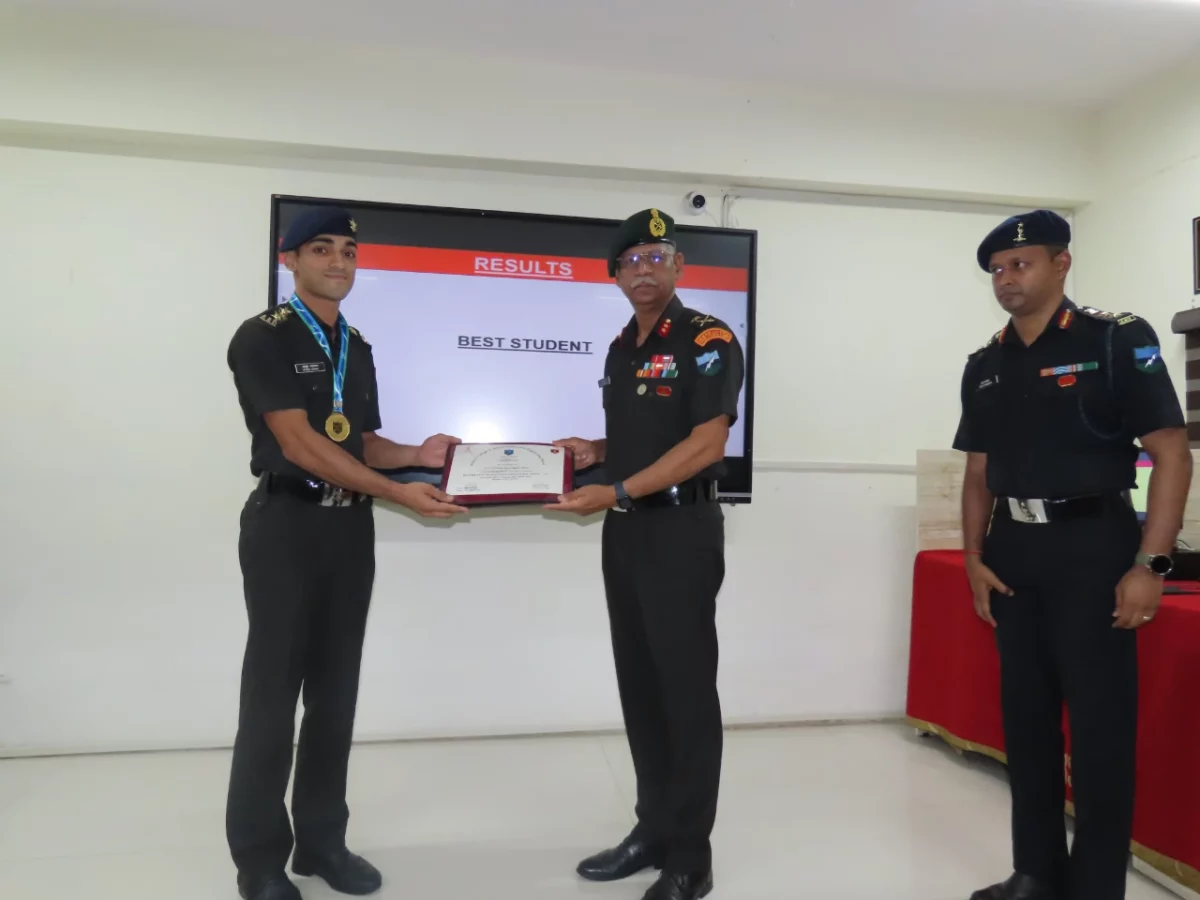
The Regimental Signaller Officers Course conducted at the Military College of Telecommunication Engineering (MCTE), Mhow, concluded on 20 August 2026, following professional training focused on strengthening officers’ proficiency in battalion-level signalling and military communications.





The course witnessed participation from officers representing various arms of the Indian Army, along with officers from Nepal, adding an important dimension of international military cooperation and professional exchange to the training programme.
Military communications form a critical component of modern battlefield operations, enabling commanders and formations to maintain connectivity, coordinate manoeuvres, exchange operational information and exercise effective command and control. The Regimental Signaller Officers Course is aimed at developing the professional knowledge required by officers responsible for communication arrangements at the battalion level.
During the course, the participating officers enhanced their understanding of battalion-level signalling and the communication requirements associated with military operations. Such training assumes increasing importance as contemporary operations become more dependent on secure, reliable and rapidly deployable communication networks.
The participation of officers from different arms of the Indian Army also contributed to a broader understanding of the communication requirements of various combat and support formations. Each arm operates under different tactical conditions, making the ability to establish and maintain dependable communications an essential element of operational effectiveness.
Officers from Nepal also attended the course, reflecting the longstanding defence cooperation and military-to-military relationship between India and Nepal. Training exchanges between the two armies provide opportunities for officers to share professional experiences, strengthen interoperability and develop lasting institutional relationships.
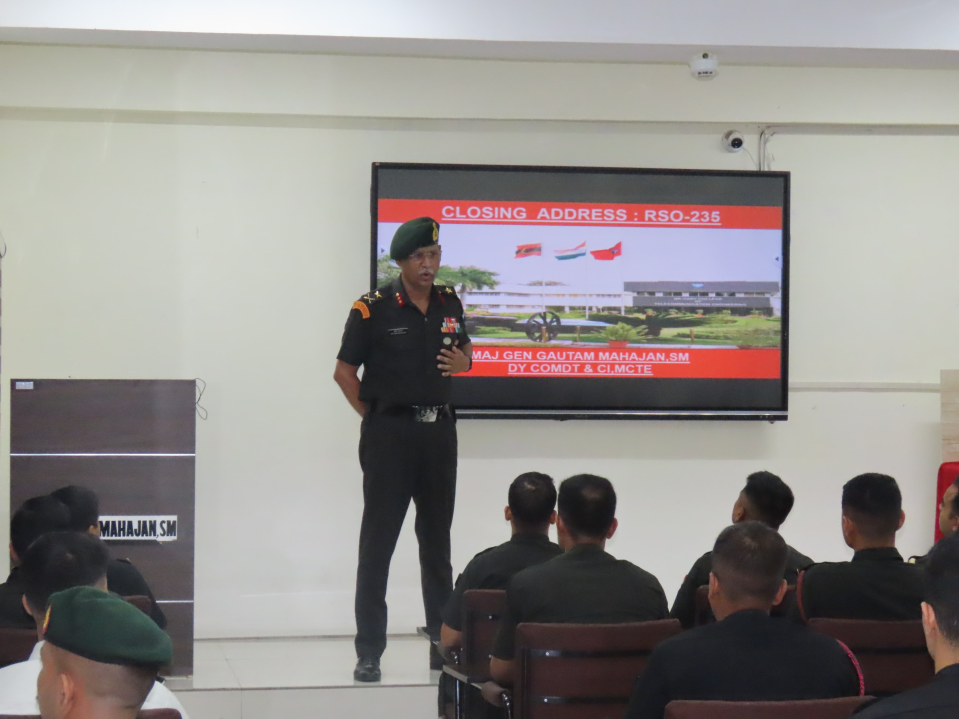
Major General Gautam Mahajan, SM, DCCI, MCTE, delivered the closing address to the student officers at the culmination of the course. He also felicitated officers who distinguished themselves through their performance during the training programme.
Captain Ayush Aswal of the Army Air Defence was adjudged the Best Student of the Regimental Signaller Officers Course, recognising his overall performance during the programme.
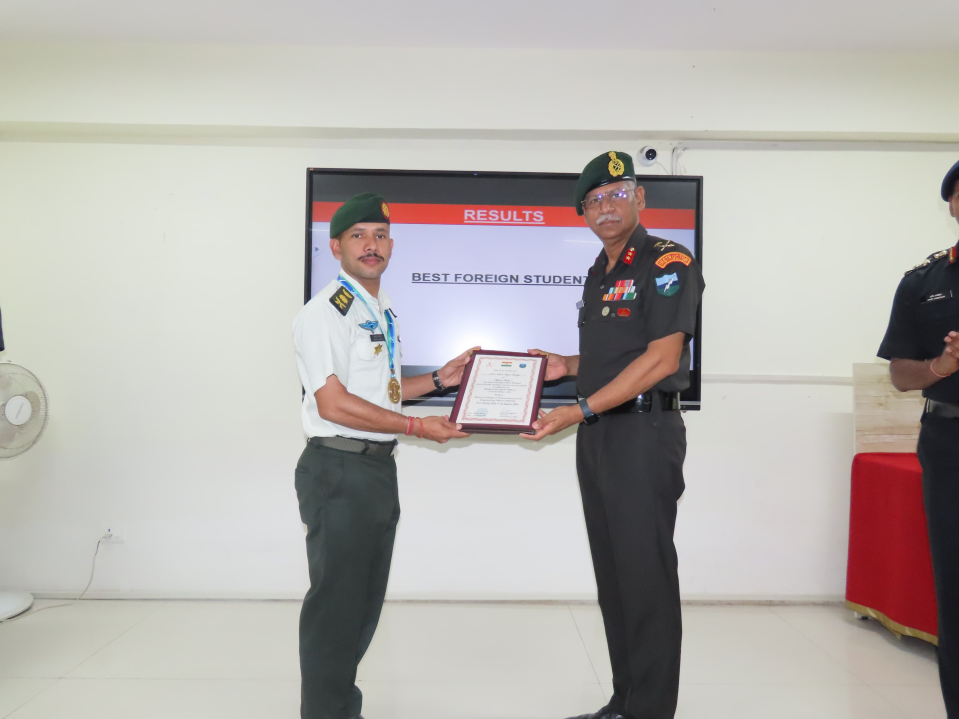
Captain Anjal Baniya from Nepal was adjudged the Best Foreign Student, highlighting the strong performance of the participating Nepalese contingent and the value of international participation in professional military courses conducted by the Indian Army.
The Military College of Telecommunication Engineering at Mhow is one of the Indian Army’s premier technical training institutions and plays a key role in developing expertise in military communications, information technology, telecommunications and related fields.
As battlefield communications continue to evolve with the introduction of digital networks, data-driven systems and increasingly sophisticated command-and-control capabilities, institutions such as MCTE have an important role in preparing officers and personnel for technology-intensive military operations.
At the battalion level, effective signalling remains essential for maintaining communication between commanders, subordinate units and supporting formations. Communications must remain dependable even in challenging terrain, adverse weather conditions and contested operational environments.
The growing importance of network-centric and technology-enabled warfare has further expanded the responsibilities associated with military communications. Officers dealing with signalling must possess both a strong understanding of communication systems and an appreciation of how those capabilities support tactical operations.
The Regimental Signaller Officers Course therefore contributes directly to operational preparedness by equipping officers with the professional knowledge required to plan and manage communications within their respective formations.
The successful completion of the course on 20 August marked another professional training milestone for the participating Indian and Nepalese officers. The recognition of Captain Ayush Aswal as Best Student and Captain Anjal Baniya as Best Foreign Student also highlighted the high standards of professional excellence encouraged during the programme.
Beyond its training objectives, the participation of Nepalese officers further reinforced the close military ties between India and Nepal and demonstrated the role of professional military education in strengthening cooperation between friendly armies.