
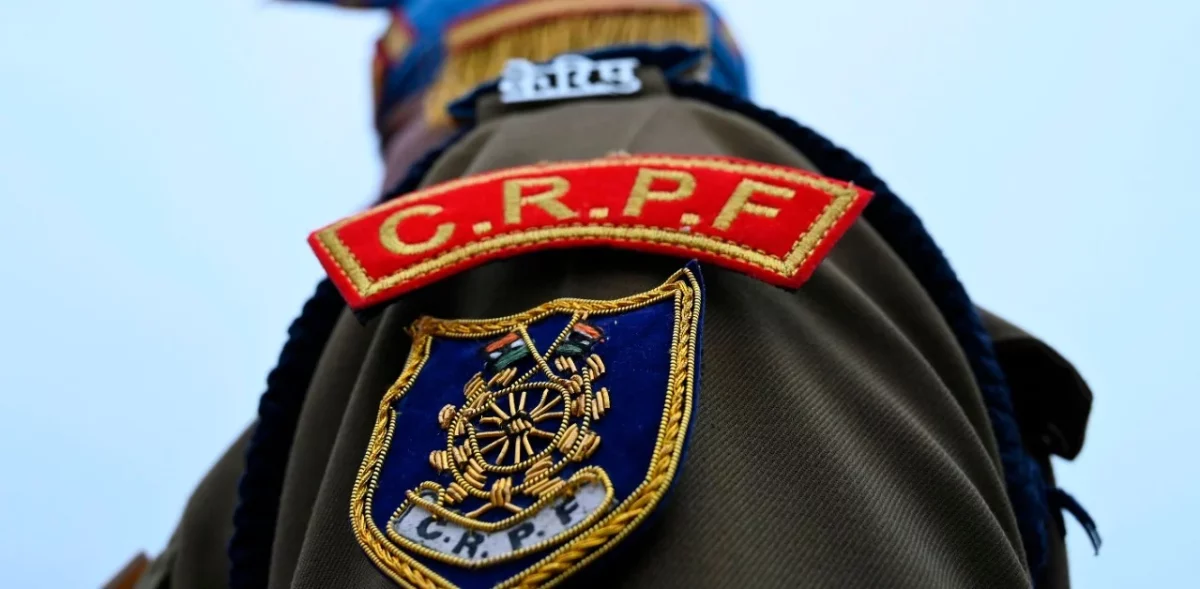
New Delhi: Alarmed by a five-year high in suicides among its ranks, the Central Reserve Police Force (CRPF) has constituted a 10-member high-level “core group” of senior officers to systematically review self-harm cases, identify recurring risk factors, and strengthen institutional preventive measures.



The country’s largest Central Armed Police Force, with a strength of approximately 3.25 lakh personnel, recorded 59 deaths by suicide in 2025 — the highest annual figure since 2021. Official data shows 57 cases in 2021, 43 in 2022, 57 in 2023, 46 in 2024 and 59 in 2025. Nineteen such deaths were reported till the end of May 2026.
Over the five-year period from 2021 to 2025, the force registered 262 suicides. In more than 77 per cent of these cases (202 out of 262), the personnel were on duty; the remainder occurred while they were on leave. Constabulary and other non-gazetted ranks accounted for more than 80 per cent of the deaths.
Structure and Functioning of the Core Group
The core group is headed by CRPF Director General G.P. Singh (also referred to as GP Singh or Gyanendra Pratap Singh). It comprises senior officers drawn from key verticals, including Special Directors General (Operations and Administration), Additional Director General (Headquarters), Inspectors General from Operations, Personnel, Administration and Medical, and two Deputy Inspectors General (including DIG Operations-2 and DIG Welfare, who serves as the convenor).
The group will meet once a month, preferably in the third week, at force headquarters to conduct a detailed review of self-harm incidents reported in the preceding period. For every case, the head of office or the Commandant of the concerned battalion is required to deliver a structured four- to five-slide presentation via video conference. The presentation must cover the individual’s background, circumstances leading to the incident, actions taken by the unit, welfare and medical interventions provided, findings of the preliminary inquiry, and specific measures initiated to prevent recurrence.
Supervisory operational officers in the chain of command — the relevant DIG, IG and ADG or SDG — will also join the review through video conference. The core group has been tasked with examining each case objectively and recommending preventive, welfare, administrative and medical measures wherever necessary. It will identify common trends and recurring risk factors across cases and propose institutional interventions at the force level. The DIG (Welfare) will coordinate meetings, compile case information, circulate agendas and minutes, and maintain records of recommendations and follow-up action.
The decision follows a high-level meeting at CRPF headquarters earlier this month in which senior officers discussed the absence of a structured, force-level mechanism to examine such incidents beyond individual unit-level handling.
NHRC Intervention
The move comes days after the National Human Rights Commission took suo motu cognisance of media reports on the rising suicides. On August 14, the NHRC issued notices to the Union Home Secretary and the CRPF Director General, seeking a detailed report within two weeks. The Commission observed that the reported figures, if true, raised serious issues concerning the right to life of personnel serving in the largest Central Armed Police Force.
Operational Context and Underlying Pressures
CRPF personnel operate under sustained high operational tempo. At any given time, an estimated 95–97 per cent of the force’s operational strength remains deployed on counter-insurgency, counter-terror, anti-Naxal or law-and-order duties across the country. Officials and earlier assessments have repeatedly pointed to a combination of factors: prolonged separation from families, difficulty in maintaining work-life balance, personal and domestic problems, financial stress, and the cumulative rigours of continuous hard duties.
Previous efforts by the force have included mental-health awareness programmes, financial literacy initiatives, chaupal-style informal group interactions, Standard Operating Procedures for monitoring behavioural red flags (such as sudden aggression, excessive leave requests, debt indicators or addiction to online gaming), company-level welfare committees, and interviews of personnel returning from leave. Officials have maintained that measures to safeguard the physical and mental well-being of troops are ongoing.
Significance of the New Mechanism
The creation of a standing DG-led core group marks a shift from purely reactive, unit-level responses to a continuous, headquarters-driven system of accountability and pattern recognition. By requiring structured presentations from unit commanders and ensuring senior operational officers participate in reviews, the mechanism aims to enforce timely intervention, fix responsibility, and enable force-wide institutional correctives rather than isolated battalion-level fixes.
Whether the new monthly review process, combined with existing welfare measures, can reverse the stubbornly high numbers — which have oscillated without a clear downward trend over the past five years — will be closely watched by the force leadership, the Ministry of Home Affairs, and the National Human Rights Commission.
The CRPF remains the primary internal security force of the country, bearing the heaviest burden of deployment in some of the most challenging operational environments. The establishment of this core group is an explicit acknowledgement that the human cost of that burden requires sustained, structured attention at the highest levels of the organisation.