

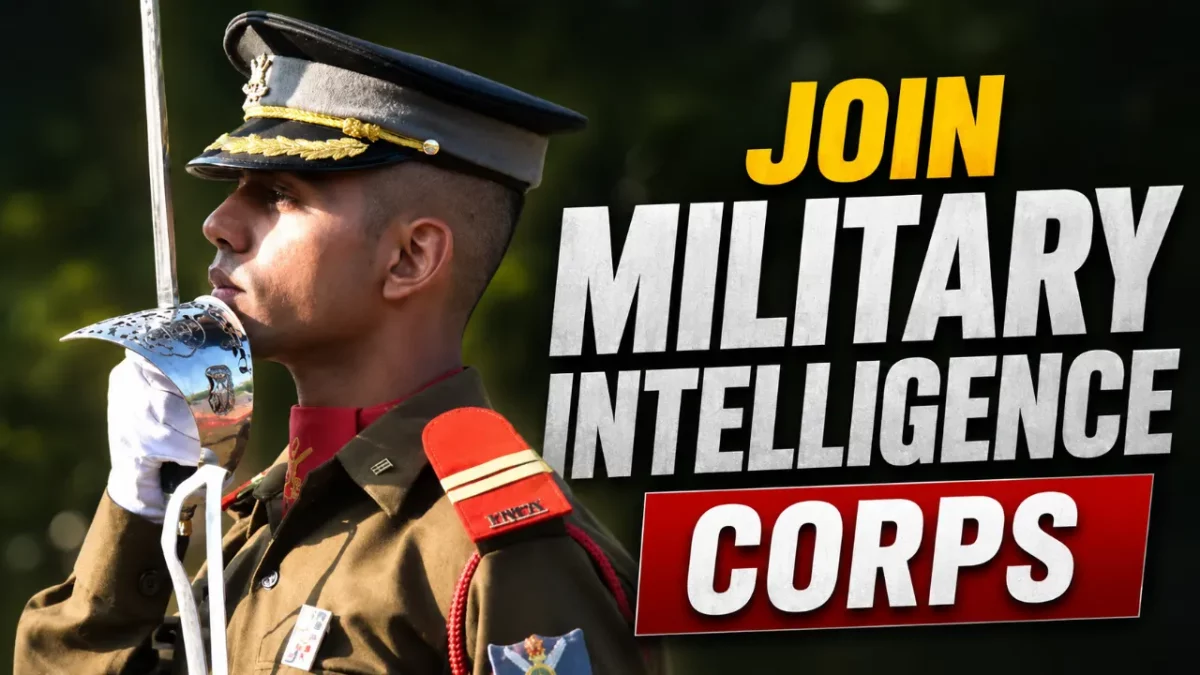
Military Intelligence (MI) forms a critical, often unseen pillar of the Indian Army’s operational effectiveness. The Directorate of Military Intelligence (DMI) serves as the intelligence arm of the Indian Army, while the Intelligence Corps provides the specialised cadre of officers and soldiers who perform intelligence and counter-intelligence duties. Personnel in this domain collect, analyse, and disseminate timely, accurate, and actionable intelligence to support tactical, operational, and strategic decision-making. They also conduct counter-intelligence to detect and neutralise adversarial threats within the force.




The operational geographical focus is primarily set around 50 km from the borders for field intelligence, though the organisation contributes to broader national security efforts, including cross-border operations, counter-terrorism support, and advisory roles to defence policymakers. The Corps motto is commonly rendered as “Sada Satark” (Always/Forever Alert). The DMI is headquartered at Sena Bhawan, New Delhi, and approximately 3,700 military personnel are assigned to intelligence duties.
This article provides a detailed, research-based overview of the pathways, processes, requirements, training, and realities of joining Indian Army Military Intelligence. Information draws from official-linked sources, institutional details, and consistent reporting from defence education platforms. Note that precise vacancy numbers, internal selection criteria, and certain operational details remain classified or managed internally by the Army; public information is therefore limited and aspirants should treat secondary accounts as indicative rather than absolute.
History and Institutional Background
The roots of organised military intelligence in the Indian Army trace back to the British Indian Army period. An Intelligence Branch evolved from a small Topographical Section of the Quarter Master General’s Department (pre-1881). Formal conceptualisation of a dedicated Intelligence Corps gained momentum in 1904 at Army Headquarters in Simla amid concerns over a potential Anglo-Russian confrontation on India’s western frontiers.
The modern structure was further shaped during World War II. The Military Intelligence Training School and Depot (MINTSD) originated modestly in Karachi in January 1941, moved through Murree (1947), Mhow (November 1947), and settled in Pune in September 1952. The Intelligence Corps (often colloquially linked with MI) observes its Raising Day around 1 November. The organisation has participated in major conflicts and operations, including the wars of 1947–48, 1962, 1965, 1971, Kargil, and various counter-insurgency and cross-border efforts.
Roles and Responsibilities
Personnel in Military Intelligence and the Intelligence Corps focus on:
- Combat and field intelligence collection and analysis to support commanders at various echelons.
- Counter-intelligence operations to identify and neutralise internal threats from adversarial intelligence agencies.
- Support to special operations, border management, and crisis response.
- Advisory inputs on organising, training, and equipping forces.
- Specialised disciplines that can include human intelligence (HUMINT), signals intelligence (SIGINT), imagery interpretation, and security tradecraft (exact current emphases are operational).
Work demands high levels of analytical ability, discretion, integrity, language skills, technological familiarity, and psychological resilience. Postings can involve field units, headquarters, training establishments, or inter-agency coordination. Public recognition is limited by the nature of the work; contribution is often measured by outcomes rather than visibility.
Training: Military Intelligence Training School and Depot (MINTSD), Pune
All intelligence professionals from the Army (and selected personnel from other services, paramilitary forces, civil agencies, and friendly foreign countries) receive specialised training at MINTSD in Pune. The institution offers diploma and postgraduate diploma programmes affiliated with Savitribai Phule Pune University, covering combat intelligence and security, intelligence tradecraft, management of intelligence teams, satellite and aerial imagery interpretation, counter-intelligence, and related fields.
Training is rigorous and combines theoretical instruction with practical exercises. Duration and exact curriculum vary by course and rank. Successful completion is essential for permanent assignment or specialised roles within the intelligence domain.
How to Join as a Commissioned Officer
There is no direct civilian entry exclusively into the Intelligence Corps or DMI as an officer. Candidates must first gain a commission in the Indian Army through standard entry schemes and then secure allotment to the Intelligence Corps (or later posting to intelligence appointments).
Primary entry routes include:
- National Defence Academy (NDA) – For 10+2 candidates (UPSC written exam + SSB + medical). Training at NDA followed by IMA.
- Combined Defence Services (CDS) – For graduates (UPSC written + SSB + medical). Training at IMA (Permanent Commission) or OTA (Short Service Commission).
- Technical entries – Technical Entry Scheme (TES), Technical Graduate Course (TGC), Short Service Commission (Technical).
- Other schemes – SSC (Non-Technical), University Entry Scheme (where applicable), and specialised entries.
After clearing the written examination (where required), Service Selection Board (SSB) interview, and medical examination, selected candidates undergo pre-commission training at the Indian Military Academy (IMA), Dehradun; Officers Training Academy (OTA), Chennai; or equivalent. At the end of training, cadets submit their Choice of Arms. The Intelligence Corps is one of the available options among combat arms, support arms, and services.
Key points on allotment:
- Allotment depends on the cadet’s overall merit (academics, physical performance, leadership, drill, etc.), medical category, declared preferences, and available vacancies released by Army Headquarters.
- Vacancies in the Intelligence Corps are limited. Secondary sources consistently report intense competition, with very few seats (often described as fewer than ten annually across technical, non-technical, and women candidates in some accounts). High academic and physical merit significantly improves chances.
- Earlier practice sometimes allowed joining a parent unit and later transferring; current guidance emphasises deciding and opting during the Choice of Arms phase at the academy.
- Technical streams (IT, computer science, electronics, electrical, chemical, etc.) and non-technical streams are both relevant, depending on the candidate’s background and the Corps’ requirements at the time.
- Women officers commissioned through OTA (CDS or SSC) can opt for and be allotted to the Intelligence Corps. There are documented examples of women officers serving in intelligence roles.
Officers from other arms and services may also be posted to MI appointments (staff, operational, or specialised) on tenure basis based on service needs, aptitude, and security clearance. Permanent cadre membership, however, is primarily through initial allotment to the Intelligence Corps.
Security clearance and suitability are critical. Candidates undergo thorough background verification. Any issues related to integrity, foreign contacts, or other risk factors can disqualify an individual even after strong performance elsewhere.
Pathways for Junior Commissioned Officers (JCOs) and Other Ranks (Soldiers)
Direct open recruitment specifically advertising “Intelligence Corps” vacancies for civilians is uncommon in public notifications. The predominant route is:
- Join the Indian Army through standard soldier recruitment (Agniveer scheme under the Agnipath programme, or earlier regular recruitment rallies) in an eligible trade or general duty category.
- After initial training and service, become eligible for internal selection or transfer to Intelligence Corps units or MI-related appointments.
- Selection typically involves additional psychometric tests, interviews, aptitude assessments, and medical/security screening conducted by the relevant authorities.
Some accounts mention visiting designated Intelligence Corps recruitment centres or responding to internal vacancy circulars, followed by specialised tests and training at MINTSD or unit level. Because processes are internal and evolve, candidates already serving should monitor unit orders and Army recruitment portals for opportunities. Direct civilian entry as a soldier into pure intelligence roles is not the standard public pathway.
Eligibility Criteria (General Overview)
Eligibility mirrors standard Indian Army officer and soldier entries:
- Nationality: Indian citizen (or subjects of Nepal/certain categories of persons of Indian origin as per rules).
- Age, educational qualifications, and marital status: As per the specific notification (NDA, CDS, TES, TGC, SSC, Agniveer, etc.). These are published periodically on the official website joinindianarmy.nic.in and UPSC site.
- Physical and medical standards: Strict Army medical standards apply. Certain roles may have additional requirements related to eyesight, hearing, or psychological fitness.
- Character and antecedents: Clean record essential for security clearance.
Always refer to the latest official notification for exact cut-offs, streams, and age limits, as these change.
Skills, Preparation, and Competitive Realities
Success requires more than clearing the written exam and SSB. Useful attributes include:
- Strong analytical and critical thinking skills.
- Proficiency or interest in languages (regional, neighbouring-country, or foreign languages).
- Comfort with technology, data analysis, maps, and open-source information.
- High integrity, emotional stability, and ability to work under secrecy and pressure.
- Physical fitness and adaptability.
Preparation tips for aspirants:
- Excel in academics and maintain peak physical standards to maximise merit for Choice of Arms.
- Develop general awareness of defence, geopolitics, current affairs, and basic intelligence concepts (without expecting classified knowledge).
- Practice SSB psychological tests, group discussions, and personal interview with emphasis on logical reasoning and integrity.
- For serving personnel, perform consistently in unit duties and express interest through proper channels.
- Build relevant soft skills: observation, report writing, cultural awareness, and basic cyber/technical literacy.
Competition is intense because vacancies are few and the role demands high trustworthiness. Even strong candidates may not secure the Corps on first allotment.
Career Progression, Lifestyle, and Challenges
Career progression follows standard Army rank structures (Lieutenant upward for officers; corresponding ranks for JCOs/OR), with opportunities for specialised courses, staff appointments, and higher responsibilities within the intelligence domain or broader Army. Some officers may serve in inter-service or national-level intelligence structures on deputation.
Lifestyle involves high operational tempo, frequent travel or field postings, strict security protocols, and limited public discussion of work. The role offers intellectual challenge, direct contribution to national security, and a sense of purpose, but it also carries stress, family separation in some postings, and the psychological demands of handling sensitive information. Recognition is often internal rather than public.
Important Caveats and Advice
- Processes and vacancy availability are subject to Army Headquarters decisions and can change.
- Secondary sources (defence coaching sites, aspirant YouTube channels) provide useful overviews but should be cross-checked against official notifications and latest Army instructions.
- There is no guaranteed “backdoor” or civilian direct entry into core MI roles. The legitimate path is through the Army’s established commissioning or recruitment systems followed by internal selection.
- Aspirants focused on SSB preparation (common among those targeting officer entries) should prioritise overall merit and genuine motivation for intelligence work rather than treating it as a fallback option.
Joining Indian Army Military Intelligence is a demanding but highly responsible career path. It requires first becoming a capable soldier or officer of the Indian Army and then demonstrating the aptitude, integrity, and performance needed for specialised intelligence duties. For the most current details on entry schemes, notifications, and eligibility, candidates must regularly consult the official websites of the Indian Army (joinindianarmy.nic.in), UPSC, and Directorate General of Recruiting.
Dedicated preparation, physical and mental fitness, and a clear understanding of the nature of intelligence work significantly improve the chances of contributing to this vital arm of the Indian Army.