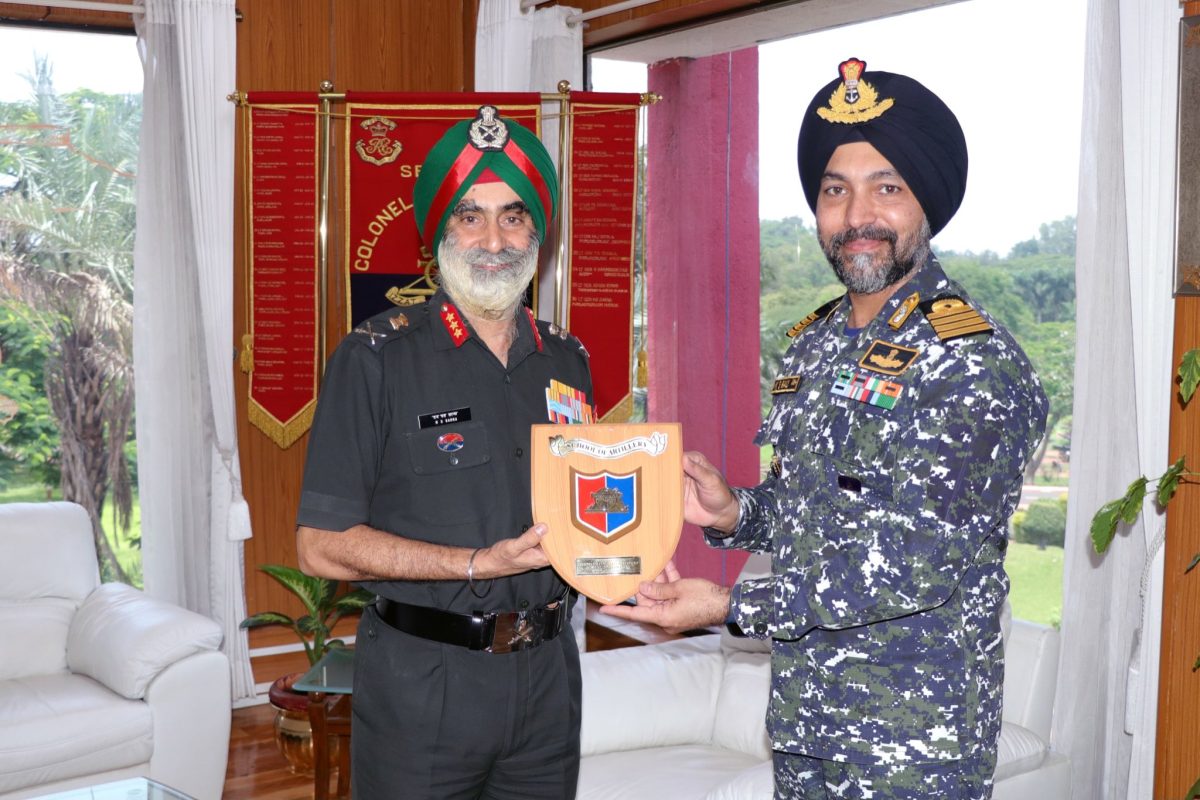
The Indian Navy’s premier gunnery training establishment, INS Dronacharya, and the Indian Army’s prestigious School of Artillery have reaffirmed their commitment to enhancing jointmanship and operational synergy during a high-level interaction held at Deolali, Maharashtra.





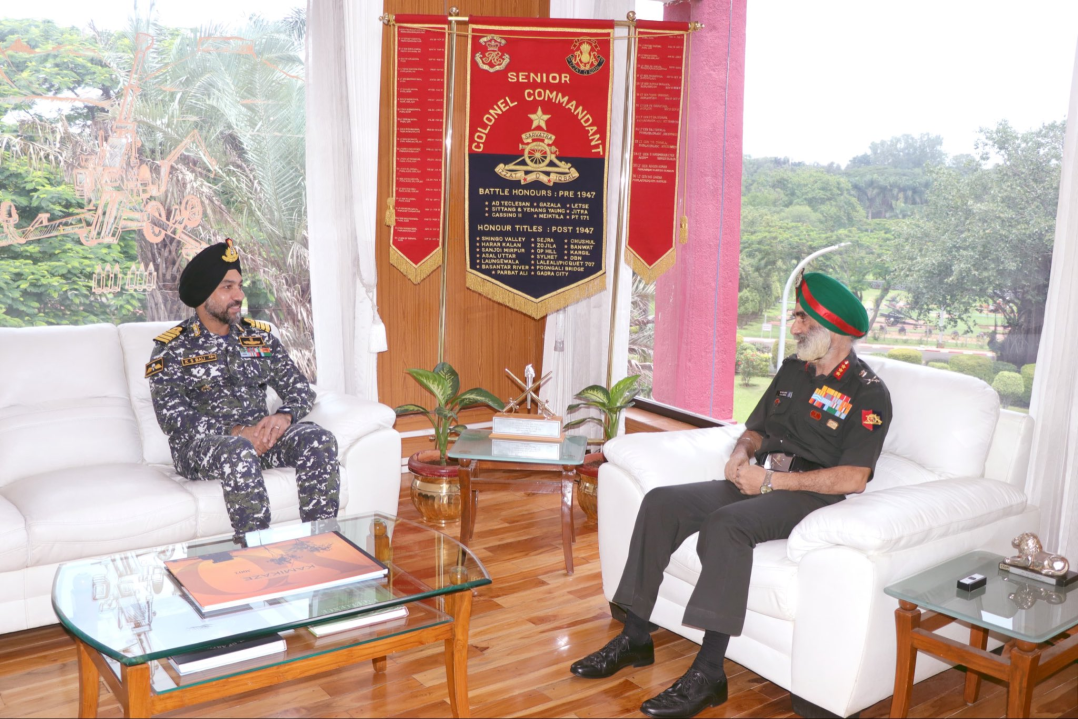
The Commanding Officer of INS Dronacharya visited the School of Artillery on 4 August 2026, where he called on the Commandant, Lieutenant General NS Sarna. The meeting highlighted the growing importance of closer coordination between the Indian Army and the Indian Navy as the nature of modern warfare continues to evolve.
Focus on Greater Inter-Service Synergy
The primary objective of the visit was to further strengthen cooperation between the country’s two premier gunnery institutions. Discussions centred on improving interoperability, sharing professional expertise, and fostering a common understanding of emerging operational challenges in the battlefield environment.
With warfare increasingly becoming multi-domain in nature—spanning land, sea, air, cyber, and space—effective coordination between the Armed Forces has become a key operational requirement. The interaction reflected the Armed Forces’ continued emphasis on integrated training and knowledge sharing to prepare personnel for future conflicts.
Two Premier Gunnery Institutions
INS Dronacharya, based in Kochi, serves as the Indian Navy’s premier gunnery school and is responsible for imparting advanced training in naval weapon systems, missile employment, fire control systems, anti-aircraft warfare, and modern naval combat techniques.
The School of Artillery at Deolali is the Indian Army’s principal institution for artillery training. It prepares officers and soldiers in the employment of field artillery, surveillance systems, target acquisition, precision firepower, drones, and network-centric battlefield operations. The institution has played a significant role in shaping the Army’s artillery doctrine and operational capabilities.
The interaction between the two institutions underscores the importance of cross-service learning, particularly as weapon systems and combat technologies become increasingly integrated across military domains.
Responding to the Changing Character of Warfare
Modern conflicts have demonstrated the decisive role of precision-guided munitions, drones, artificial intelligence, electronic warfare, and real-time intelligence in achieving battlefield superiority. As a result, military training institutions are continuously adapting their curricula to incorporate new technologies and operational concepts.
The discussions during the visit focused on ensuring that both institutions continue to evolve together by exchanging best practices, strengthening professional military education, and promoting interoperability between naval and land-based gunnery operations.
Such engagements also support India’s broader vision of integrated theatre operations, where seamless coordination between the Army, Navy, and Air Force is expected to become increasingly critical in future military campaigns.
Commitment to Jointmanship
The visit reflects the Indian Armed Forces’ ongoing commitment to building stronger inter-service cooperation through regular professional exchanges, collaborative training, and institutional partnerships. By leveraging each other’s expertise, INS Dronacharya and the School of Artillery aim to enhance combat readiness and ensure that personnel remain prepared for the rapidly changing demands of contemporary warfare.
As the operational environment continues to evolve, initiatives such as these reinforce the importance of jointmanship, integrated capability development, and a unified approach to national defence.