
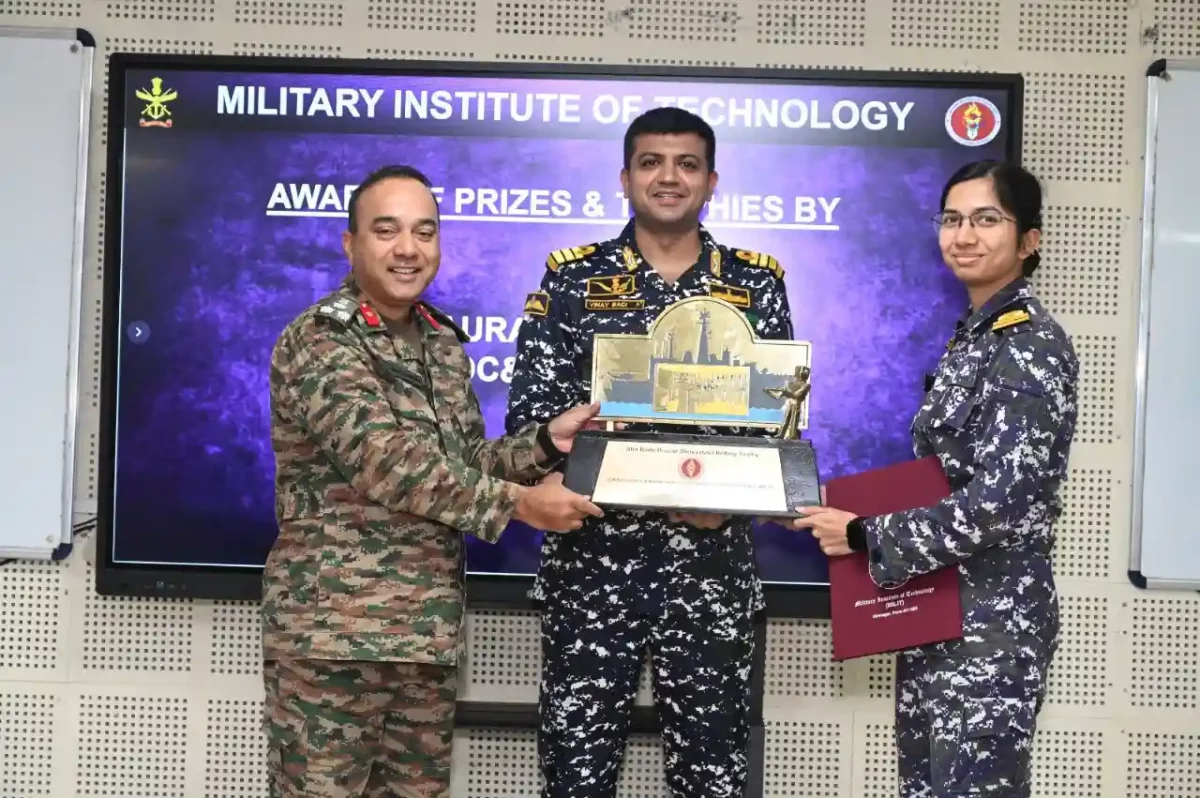
A total of 41 officers, including 17 from the Indian Navy, eight from the Indian Coast Guard and 16 officers from Friendly Foreign Countries, successfully completed the prestigious 10-week Marine Propulsion Controls Technology Course (MPCTC-78) at the Military Institute of Training (MILIT).
The international composition of the course highlighted the growing importance of professional military education and technology-based cooperation between India and partner countries. Officers from Namibia, Togo, Tanzania, the Philippines and Sri Lanka were among the foreign participants who underwent the specialised training alongside Indian officers.
The Marine Propulsion Controls Technology Course is designed to equip young officers with advanced competencies in technologies that increasingly underpin modern naval platforms and autonomous systems. The course covered controls, embedded systems, digital signal processing, sensors and instrumentation, microcontrollers and technologies associated with autonomous systems and platform management.
These technology areas have become increasingly important as naval warfare and maritime operations undergo rapid transformation. Modern warships and other platforms depend on increasingly sophisticated control architectures, sensors, embedded computing and automated systems for efficient operation and management of complex onboard functions.
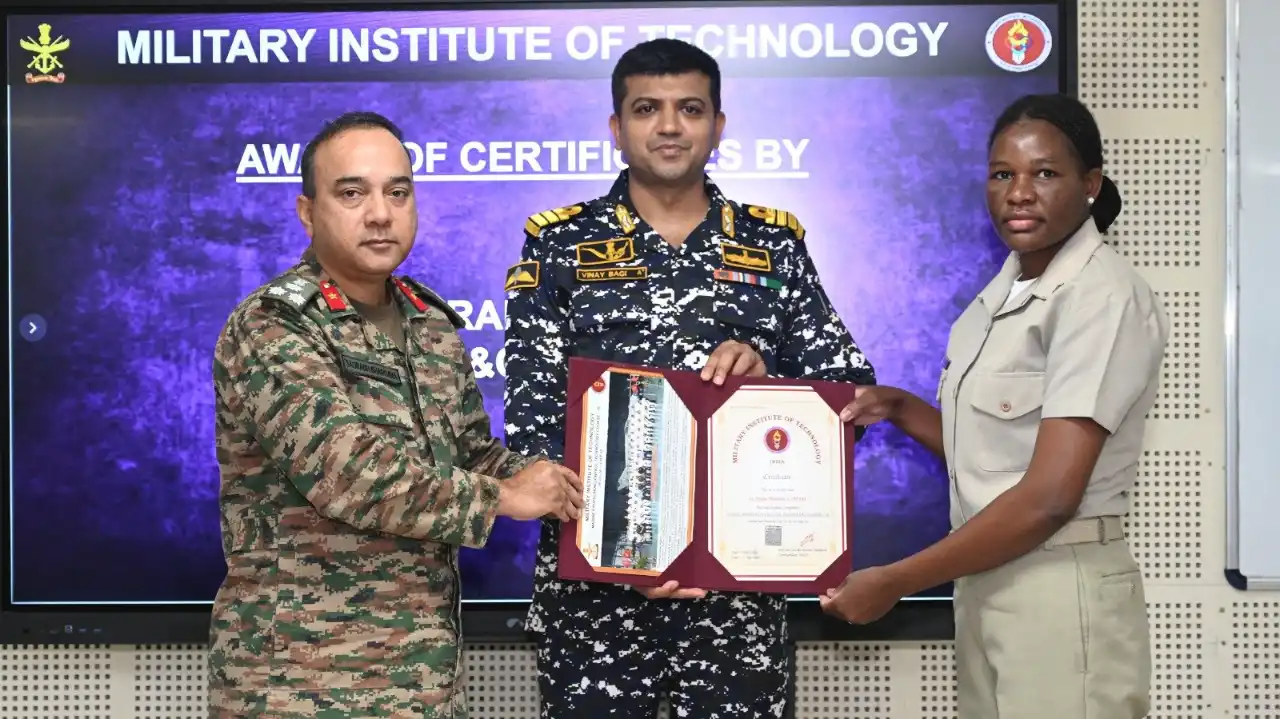
Addressing the graduating officers, Brigadier Saurabh Bhargava, DC&CI, MILIT, highlighted the rapid evolution of autonomous systems and the pace at which technological developments are reshaping military capabilities. He referred to developments witnessed globally during the three months in which the officers underwent their training, underscoring how quickly the technological landscape is changing.
The rapid emergence of autonomous technologies is creating new requirements for military professionals, who need to understand not only the operation of existing platforms but also the underlying technological principles that enable increasingly automated and interconnected systems.
Brig Saurabh Bhargava also highlighted the diverse range of naval platforms inducted recently, pointing to the expanding technological complexity of modern maritime forces. The growing variety of platforms and systems requires officers to continuously update their technical knowledge and develop the ability to understand and integrate emerging technologies.
The graduating officers were therefore urged to master core technology principles and continuously enhance their professional competencies. They were also encouraged to remain abreast of emerging technologies, reflecting the importance of continuous learning in an increasingly technology-intensive operational environment.
The course’s focus on controls and embedded systems is particularly relevant to modern naval platforms, where sophisticated control mechanisms are central to propulsion, platform management and automated functions. Sensors and instrumentation similarly provide the data required for monitoring and controlling complex systems, while digital signal processing enables the processing and exploitation of information generated by modern sensors.
Microcontrollers and embedded technologies form another important component of contemporary military systems, supporting increasingly compact and efficient electronic architectures. Together, these technologies provide the foundation for many of the automated and autonomous capabilities being developed and integrated across modern defence platforms.
The participation of officers from the Indian Navy and Indian Coast Guard alongside personnel from friendly foreign countries also contributes to greater professional interaction and exchange of technological knowledge. Such courses provide opportunities for officers from different maritime services and partner nations to develop common understanding of emerging technologies and their military applications.
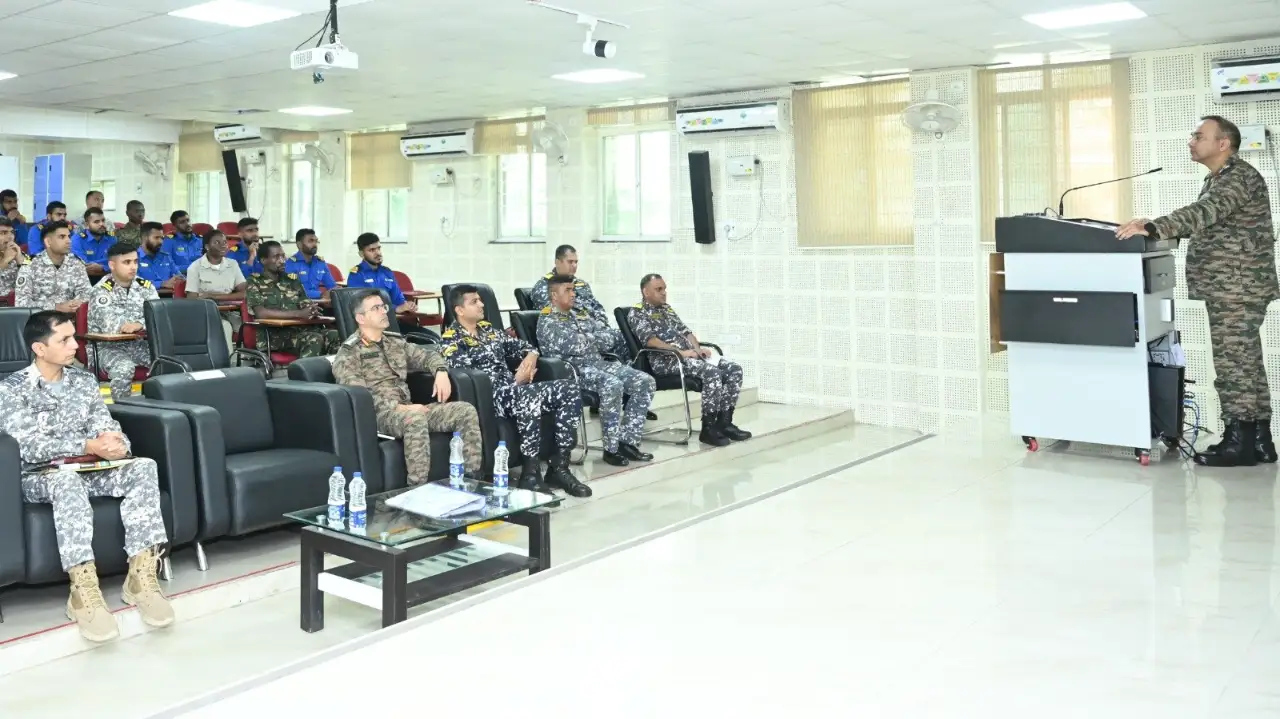
For the participating foreign officers, the programme provides exposure to India’s specialised military training ecosystem, while their participation strengthens the professional links between India’s maritime institutions and partner countries. Such interactions can contribute to broader defence cooperation through education, training and professional exchanges.
The course also reflects the increasing convergence between traditional platform engineering and emerging technologies. Naval officers operating in future maritime environments will increasingly be required to understand systems that combine propulsion, electronics, sensors, computing and autonomous functions.
The emphasis on continuous technological adaptation is particularly significant in the context of autonomous systems. Developments in unmanned and increasingly autonomous platforms are changing the way military forces approach surveillance, reconnaissance, logistics and other maritime missions. Officers who understand the technological foundations of these systems will be better positioned to employ and manage them effectively.
MILIT’s focus on advanced technology training therefore supports the broader requirement for developing technically proficient military leadership. As platforms become more sophisticated, operational effectiveness will depend not only on the capabilities of the equipment but also on the ability of personnel to understand, operate and adapt those systems.
The successful completion of MPCTC-78 by 41 officers marks another step in strengthening this technical competence. The course has brought together officers from India’s maritime services and five friendly foreign countries around a common focus on marine propulsion controls and emerging technology.
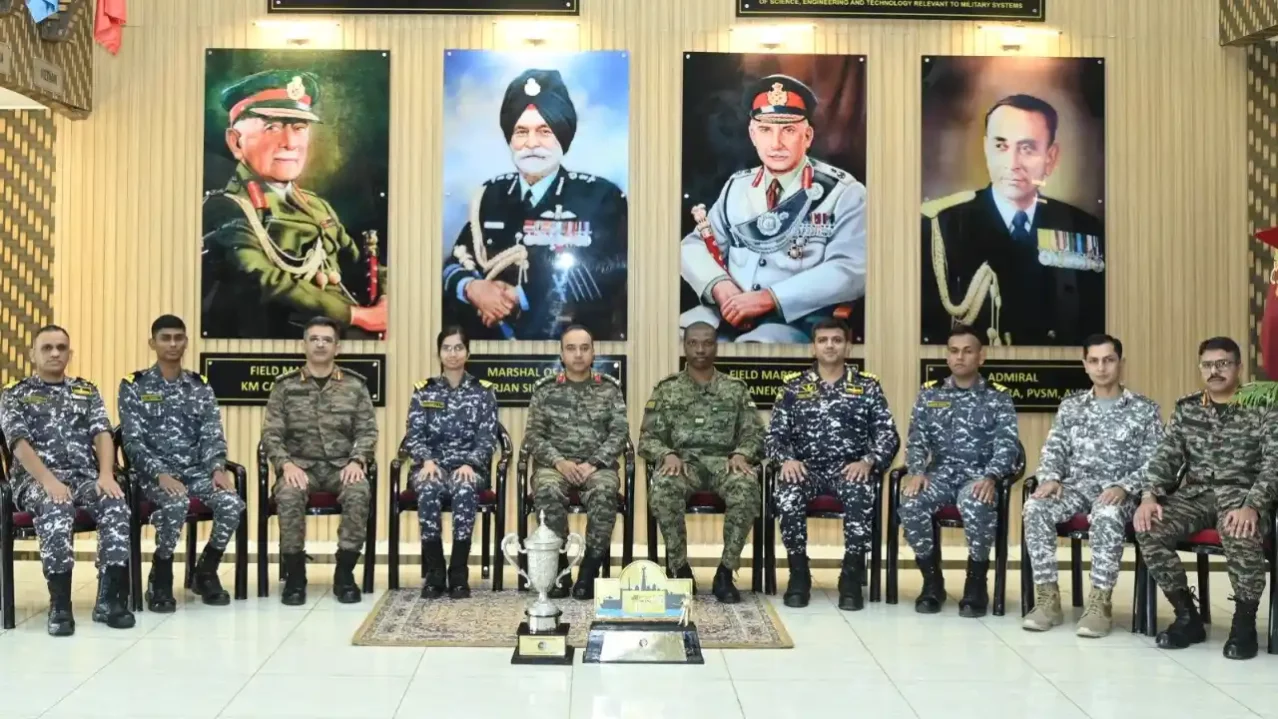
The message delivered at the conclusion of the course was clear: in a rapidly evolving technological battlespace, staying current is no longer merely an advantage but an operational imperative. For the next generation of naval and maritime officers, continuous learning, technological awareness and the ability to adapt will remain essential to maintaining operational effectiveness in future conflicts.
The completion of MPCTC-78 thus represents more than the conclusion of a 10-week training programme. It reflects the growing importance of specialised technology education, international professional exchange and continuous skill development in preparing maritime forces for an increasingly autonomous, interconnected and technologically complex battlespace.