New Delhi, September 3, 2026 — Group Captain Abhinandan Varthaman, the Indian Air Force fighter pilot who became a household name following the aerial engagement with Pakistan in February 2019, has begun a new chapter in his aviation career after taking premature retirement from the IAF and joining regional airline FLY91 as a commercial pilot.





Varthaman, who was promoted to the rank of Group Captain in December 2021, served for nearly 22 years as an Indian Air Force pilot before deciding to transition to civil aviation. He joined Goa-based FLY91 in August and is currently undergoing the required type training for commercial operations.
Once the necessary training and regulatory clearances are completed, Varthaman is expected to fly the airline’s ATR 72-600 turboprop aircraft on regional routes. These could include services such as the Goa-Hyderabad sector operated by the carrier.
FLY91 has confirmed Varthaman’s association with the airline but has chosen not to disclose further details. The company said information concerning individual employees was a private matter and indicated that Varthaman himself did not wish to publicly discuss his professional or personal journey in greater detail.
His transition from military fighter aircraft to commercial aviation comes more than seven years after the aerial engagement of February 27, 2019, which made him one of the most recognisable officers of the Indian Armed Forces.
A day earlier, on February 26, 2019, the Indian Air Force had carried out air strikes against a Jaish-e-Mohammed facility at Balakot in Pakistan’s Khyber Pakhtunkhwa province. Pakistan subsequently launched a retaliatory aerial operation across the Line of Control on February 27.
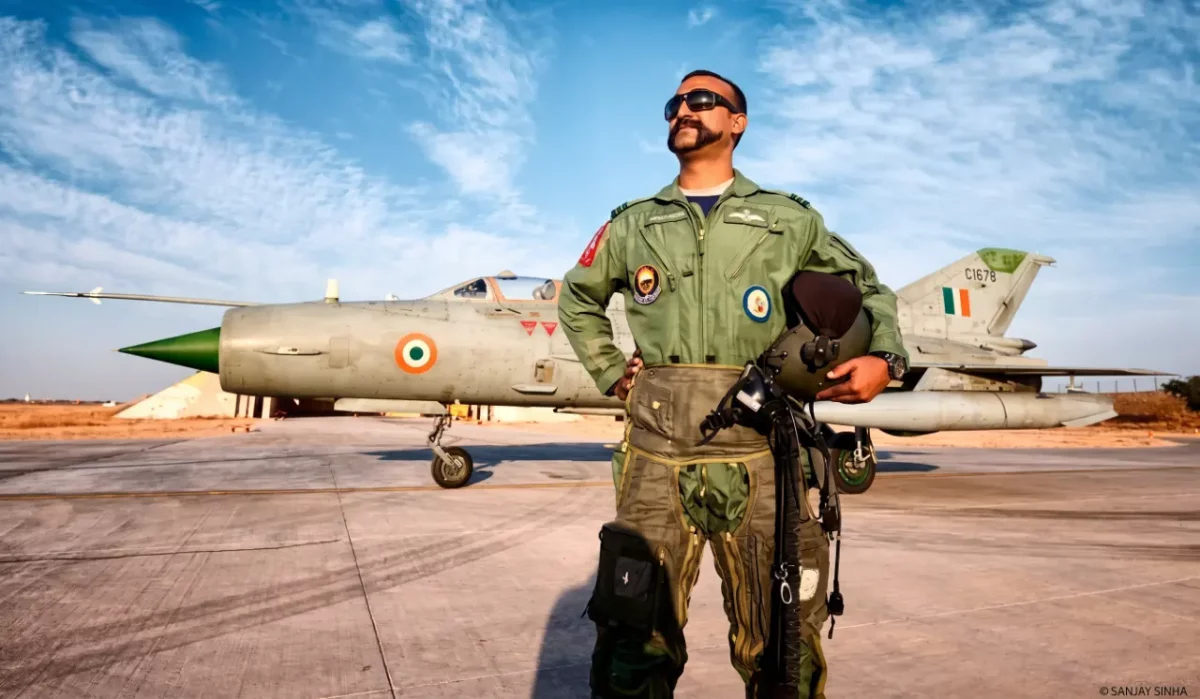
Then Wing Commander Abhinandan Varthaman was serving with the Indian Air Force at Srinagar and was flying a MiG-21 Bison when he was scrambled to intercept incoming Pakistan Air Force aircraft.
According to his official Vir Chakra citation, Varthaman engaged the opposing formation despite being at a tactical disadvantage, pursued one of the retreating aircraft and shot down a Pakistan Air Force F-16 using an on-board missile.
His MiG-21 was subsequently hit during the engagement. Varthaman was forced to eject and descended by parachute into Pakistan-administered territory, around seven kilometres from the Line of Control.
He was taken into Pakistani custody following his landing and remained there until his release at the Attari-Wagah border on March 1, 2019.
Pakistan has consistently disputed India’s claim that one of its F-16 fighters was shot down during the engagement. India has maintained its position, citing radar evidence and the account recorded in Varthaman’s official gallantry award citation.
Videos of Varthaman that emerged while he was in Pakistani custody received widespread attention in India. His calm demeanour and refusal to reveal sensitive military information beyond what a captured serviceman is permitted to disclose became defining images of the episode.
For his actions during the aerial engagement, Varthaman was awarded the Vir Chakra, India’s third-highest wartime gallantry decoration.
After returning to India and undergoing medical evaluation, he resumed flying duties with the Indian Air Force. Later in 2019, he also flew a MiG-21 sortie alongside then Chief of the Air Staff Air Chief Marshal B.S. Dhanoa.
Varthaman continued serving in the IAF and was promoted to Group Captain in December 2021.
His decision to move into commercial aviation is not unusual among experienced military aviators. Fighter pilots often spend the early and middle portions of their careers extensively involved in operational flying, while senior ranks increasingly involve command, staff and administrative responsibilities.
For pilots who continue to have a strong interest in cockpit flying, commercial aviation can therefore offer an opportunity to remain actively involved in aircraft operations after leaving military service.
The aircraft Varthaman is now expected to fly, however, represents a dramatically different form of aviation from the MiG-21 Bison that became closely associated with him.
The MiG-21 Bison was a single-seat supersonic fighter designed primarily for interception and combat missions. It demanded high-speed decision-making and was operated as part of India’s air-defence network.
The ATR 72-600, by comparison, is a twin-engine turboprop regional passenger aircraft designed to efficiently connect cities over relatively short distances. It is widely used by airlines operating routes where larger jet aircraft may not be commercially viable.
Rather than undertaking combat air patrols or operational-readiness scrambles, Varthaman will now be responsible for flying scheduled passenger services across India’s expanding regional aviation network.
The carrier has also been pursuing expansion of its ATR fleet as part of plans to increase connectivity between underserved regional airports.
Born on June 21, 1983, in Tamil Nadu, Abhinandan Varthaman comes from a family with deep roots in military aviation. His father, Air Marshal Simhakutty Varthaman, is a retired Indian Air Force officer.
After graduating from the National Defence Academy, Abhinandan Varthaman was commissioned into the fighter stream of the Indian Air Force on June 19, 2004.
During his career, he flew frontline fighter aircraft including the Sukhoi Su-30MKI before converting to the MiG-21 Bison.
Despite the enormous public attention surrounding the events of 2019, Varthaman has largely maintained a low public profile and rarely spoken publicly about the aerial engagement or his subsequent career.
His latest move marks one of the most significant transitions of his professional life. The cockpit is changing, but aviation remains at the centre of his career.
From flying a supersonic MiG-21 fighter during one of India’s most closely watched aerial confrontations to preparing to operate an ATR 72-600 carrying passengers between regional Indian cities, Group Captain Abhinandan Varthaman is beginning an entirely different kind of flight.