
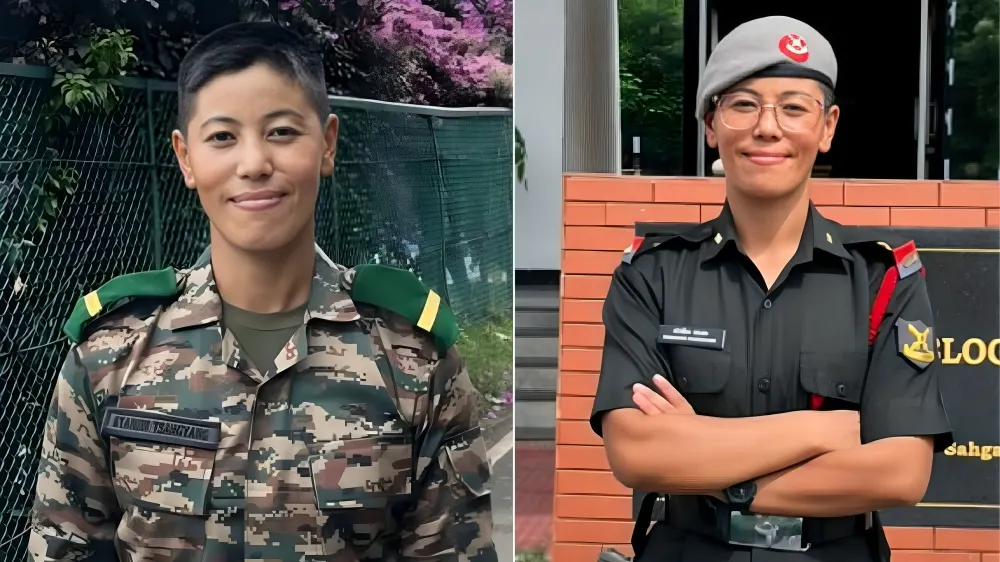
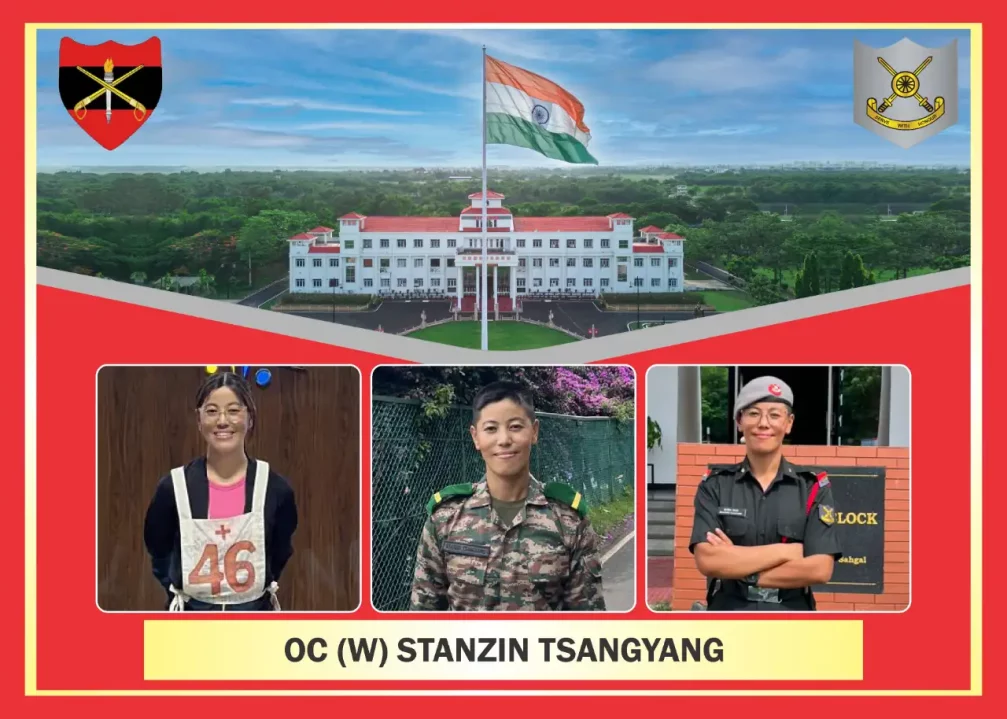
Born in the remote and breathtaking valley of Zanskar in Ladakh, Officer Cadet (Women) Stanzin Tsangyang has travelled a remarkable journey from the mountains of her homeland to the parade ground of the Indian Army. Growing up amid towering mountains, severe winters and the demanding terrain of the region, Tsangyang learnt the values of endurance, perseverance and resilience from an early age. On 5 September 2026, she is set to take a significant step in her journey as she proudly stands on the parade ground in the olive-green uniform.




The youngest child in her family, Stanzin Tsangyang grew up surrounded by the warmth and support of her parents and the close-knit environment of her homeland. Her formative years in Zanskar shaped her outlook towards challenges and instilled in her a determination to continue moving forward despite difficult circumstances. The mountains that surrounded her childhood would eventually become a defining part of the story of her journey towards military service.
Her pursuit of education took her away from her home and village at a young age. Seeking better educational opportunities, she joined Lamdon Model School in Leh, where she spent nearly fourteen years in a hostel, living away from her family. The experience required independence and adaptability from an early age, while also allowing her to pursue her academic ambitions in an environment far removed from her home in Zanskar.
Her academic performance opened another important door in her journey when she earned a scholarship for higher studies. She subsequently pursued Mechanical Engineering at Tezpur University in Assam, moving yet again far away from the mountains of Ladakh. Her engineering education provided her with a technical foundation while her experiences away from home continued to strengthen her confidence and independence.
It was during her college years that her association with the National Cadet Corps introduced her to the possibility of serving in the Indian Army. Through the NCC, she learnt about the various pathways available to young men and women aspiring to become Army officers. For Tsangyang, this exposure transformed an emerging interest into an ambition to serve the nation.
Her journey was particularly significant because she came from a completely civilian background. There was no history of military service in her family or community to serve as an established pathway into the armed forces. The prospect of becoming an Army officer was therefore an unprecedented ambition. Nevertheless, the idea of wearing the olive-green uniform gradually became a firm goal, driven by her desire to serve the country.
The decision to pursue a career in the Army brought its own set of challenges. The road demanded sustained effort, sacrifice and perseverance, accompanied by moments of uncertainty and doubt. For someone coming from one of the remotest and most challenging geographical regions of the country, the journey from Zanskar to an Army officer training pathway represented not only a personal achievement but also a major departure from the conventional expectations surrounding her early life.
Throughout this journey, the support of her parents remained an important source of strength. Their encouragement helped her continue pursuing her ambition during difficult periods. Alongside their support, the resilience that she had developed while growing up in the mountains of Ladakh became an enduring source of motivation.
Her story also highlights the changing aspirations of young people from remote and strategically important regions of the country. Ladakh’s rugged geography has historically demanded exceptional resilience from its communities, and Tsangyang’s journey represents how young women from such regions are increasingly seeking opportunities across professional and national institutions.
On 5 September 2026, Officer Cadet (Women) Stanzin Tsangyang is set to stand on the parade ground and take a historic step towards becoming an Army officer. Her achievement will make her the first woman officer from Kargil district and the first in her generation from her family and community to wear the uniform, marking a significant personal and regional milestone.
For a young woman who began her journey in the mountains of Zanskar, the transition to the olive-green uniform carries a significance that extends beyond a career choice. It represents years of education away from home, the support of her family, exposure to the NCC, determination to overcome uncertainty and an unwavering desire to serve the nation.
Her journey from Zanskar to the Army also underscores the expanding reach of opportunities for women in India’s armed forces. As increasing numbers of women pursue military careers across different branches and roles, stories such as Tsangyang’s demonstrate how aspirations for service are emerging from increasingly diverse geographical and social backgrounds.
The significance of her achievement is particularly pronounced for the Kargil region and Ladakh. Coming from a remote mountainous area and becoming the first woman officer from Kargil district gives her journey a wider inspirational dimension for young students, particularly girls, who may aspire to careers in the armed forces and other national institutions.
Stanzin Tsangyang’s story is ultimately one of perseverance. From the high-altitude landscape of Zanskar, where endurance is part of everyday life, to years spent away from her family in a hostel at Leh and then to engineering studies in Assam, every stage of her journey demanded adaptation and determination.
As she prepares to step onto the parade ground on 5 September, her journey will stand as an example of how ambition can overcome distance, circumstance and uncertainty. From the mountains of Zanskar to the olive greens of the Indian Army, Stanzin Tsangyang’s story reflects a dream that began in one of the remotest corners of the country and is now reaching a historic milestone.