
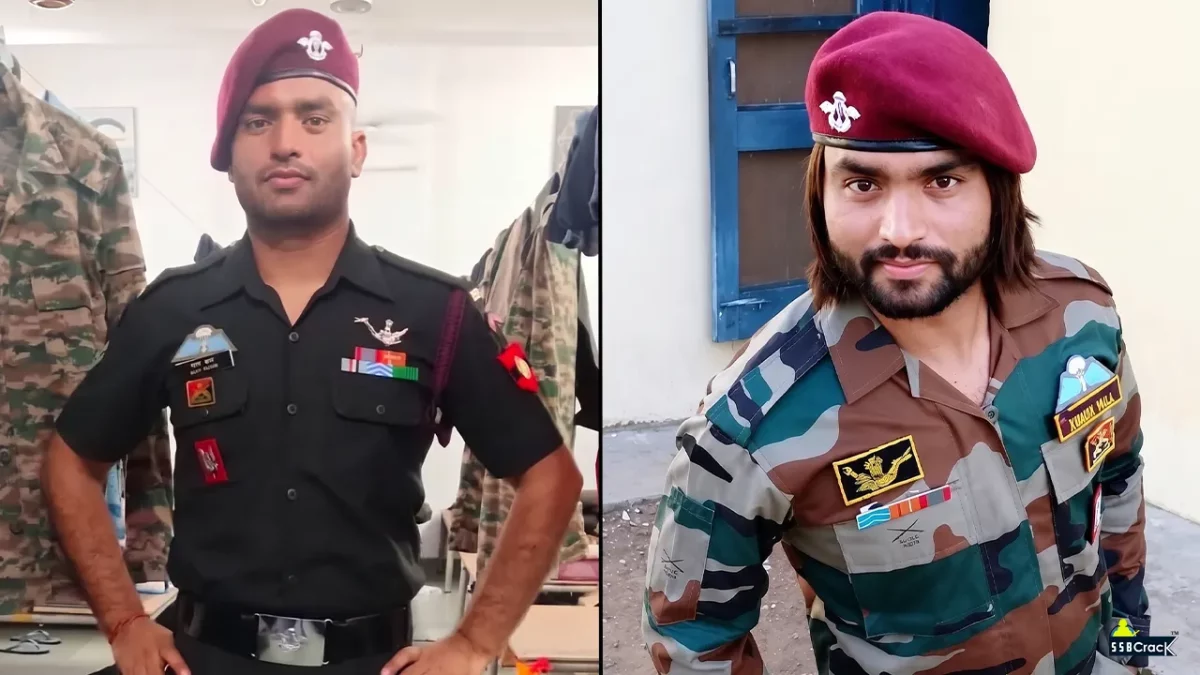
Paratrooper Ajay Bhagat of the Indian Army’s 1 Para (Special Forces) died after being swept away in the Yamuna River during a high-risk waterborne training exercise at Hathnikund Barrage in Haryana’s Yamunanagar district. His body was recovered on the night of 2 September near Bartha village in Saharanpur district, Uttar Pradesh, about 14 to 15 kilometres downstream of the barrage.
Bhagat, a resident of Akhnoor in Jammu, was one of five soldiers of 1 Para SF participating in the drill on Tuesday, 1 September. Local reports and police sources identified him as Ajay Bhagat. The Indian Army had not issued an official confirmation of individual identities at the time of writing.
The second missing soldier, Paratrooper Aryan Patil of Maharashtra, was found on Thursday morning nearly 200 kilometres downstream in the Hansi Branch canal near Amreheri village in Jind. A retired 1 Para SF officer residing in Jind identified the second body.
How the accident occurred
According to a statement issued by the Chandigarh-based defence public relations officer, five personnel were conducting a training exercise in an Army boat when the craft developed a technical snag. Strong currents carried the boat towards the downstream section of the barrage. Recovery teams attempted to retrieve it, but the boat became trapped in powerful eddies around the sluice gates and capsized. The crew was swept away. Three soldiers swam to safety. Two were carried downstream and later found dead.
Local reports added that the soldiers had jumped from a Chinook helicopter onto a motorboat positioned in the Yamuna as part of an aerial-to-water or flood-rescue drill. After the boat failed to start and began sinking, all five entered the river wearing diving kits and life jackets. Three reached the gates of the Western Yamuna Canal after swimming roughly 600 metres. Bhagat and Patil could not be located.
The exercise was reported to have been conducted with permission from the irrigation authorities. Some accounts stated that the team had come from the Special Forces training establishment in the Nahan area of Himachal Pradesh.
Search and recovery
A large joint operation followed immediately. The Indian Army, Indian Air Force, National Disaster Response Force, State Disaster Response Force units from Haryana and Uttar Pradesh, local police and civil administration took part. Helicopters and drones were used for aerial surveillance. Water discharge at the barrage and in the Western Yamuna Canal was reduced to assist divers. Army personnel formed human chains in the canal. Life jackets and a diving kit were recovered at Dadupur Head, about 15 kilometres from the site.
Bhagat’s body was recovered first, on Wednesday night, from the Yamuna bank in Uttar Pradesh. Patil’s body was recovered on Thursday after being carried a far greater distance through the canal system.
Unit and context
1 Para (Special Forces) is among the oldest special-forces battalions of the Parachute Regiment. Originally converted from 1 Punjab, it became the Army’s first dedicated special-forces unit in 1978 and has since been employed in counter-insurgency, counter-terrorism and high-risk operations. Water, boat and helicopter insertion drills form part of the unit’s routine preparation for flood rescue, riverine movement and special operations.
Training of this kind is inherently hazardous. The Hathnikund stretch of the Yamuna is known for sudden currents and turbulence near the barrage gates, particularly when water levels and discharge are high.
Official position
The defence PRO confirmed the circumstances of the capsize and the fact that two crew members were missing. Subsequent recoveries were reported by local administration, police sources and residents. A full official statement naming the deceased and outlining further arrangements, including last rites, was still awaited.
Bhagat’s death, and that of Patil, occurred in the course of duty during a sanctioned training exercise. Both soldiers belonged to one of the Army’s most demanding formations. Further details of service records, family particulars and funeral arrangements had not been released by the Army at the time of this report.