
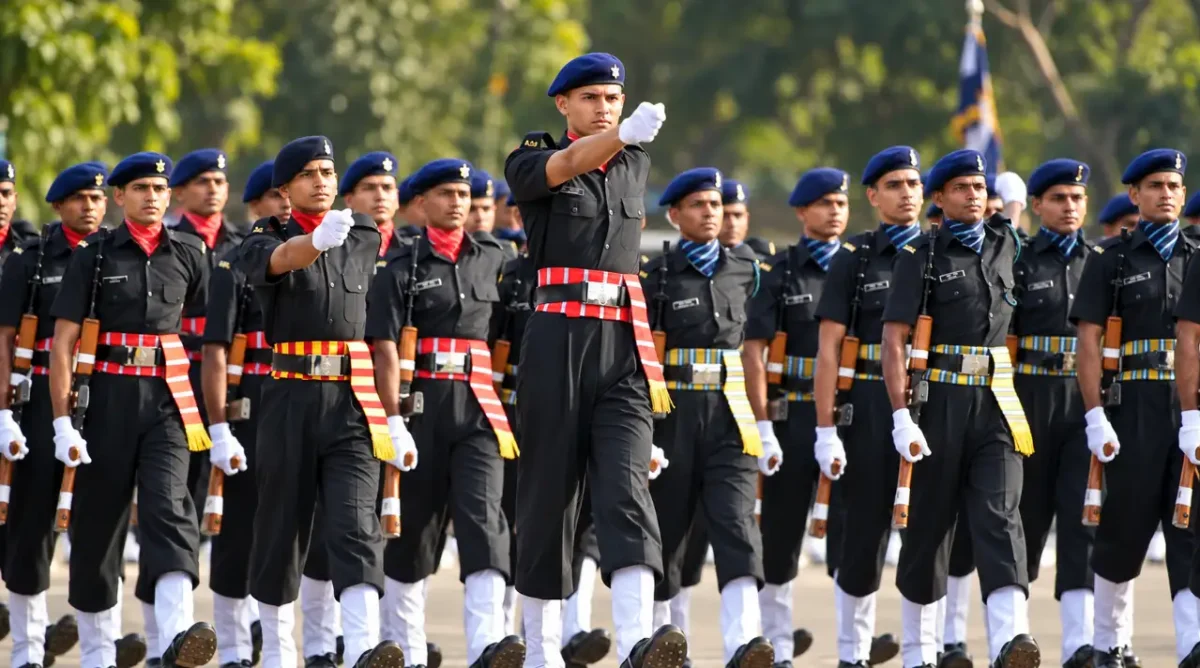
More than 18,000 Agniveers from the first batch recruited under the Agnipath scheme are scheduled to exit the Indian Armed Forces by 31 December 2026 upon completion of their four-year contractual tenure, officials familiar with the matter stated. Phased releases of 75 per cent of the first cohort will begin from mid-November, with the Indian Navy initiating the process, followed by the Indian Air Force and the Indian Army.





The first round of recruitment inducted approximately 24,400 Agniveers across the three services: around 19,000 in the Army, 2,850 in the Indian Air Force, and 2,550 in the Navy. Of these, about 18,300—three-fourths of the batch—are expected to leave service, while up to 25 per cent may be retained in the regular cadre for a further 15 years, based on medical fitness, organisational requirements, and individual performance.
The Indian Air Force has already retained 712 of the 2,850 Agniveer Vayu personnel in the first batch, consistent with the existing 25 per cent ceiling. Those not selected have been informed accordingly. The three services have expressed satisfaction with the performance of Agniveers across roles, including operational aptitude, weapon proficiency, physical fitness, and soldierly skills. Officials indicated that the scheme could be refined in future to retain a higher proportion of personnel with specialised skills, though no formal amendment has yet been notified. Recommendations from the services have been submitted to the Department of Military Affairs for consideration.
Seva Nidhi Package and Benefits
Agniveers exiting after four years will receive a tax-free Seva Nidhi package of ₹11.71 lakh. This comprises approximately ₹5.02 lakh contributed by the individual during service, a matching contribution from the government, and accrued interest. Those leaving do not receive pension or gratuity, in contrast to personnel recruited under the earlier system, who typically serve for about 20 years and retire in their late thirties with full retirement benefits. Agniveers were covered by a non-contributory life insurance of ₹48 lakh during service, with an additional ex-gratia of ₹44 lakh in case of death attributable to military service.
Annual in-hand remuneration under the scheme begins at ₹4.76 lakh in the first year and rises to ₹6.92 lakh in the fourth year, with 30 per cent of the package contributed to the Seva Nidhi corpus.
Second-Career Pathways
The government has put in place several measures to facilitate the transition of exiting Agniveers, who will be aged roughly 21½ to 25 years. The Ministry of Home Affairs has reserved 50 per cent of vacancies for the posts of Constable (General Duty) and Rifleman in the Central Armed Police Forces (BSF, CRPF, CISF, ITBP) and Assam Rifles for ex-Agniveers. They are exempted from the written examination, physical standard test (PST), and physical efficiency test (PET). CAPFs are preparing specialised training modules on internal security and law-and-order duties, as Agniveers receive primarily combat-oriented training.
Ex-Agniveers are also eligible for job quotas in state police forces, Indian Railways, the Coast Guard, and 16 defence public sector undertakings. Several states, including Haryana and Maharashtra, have indicated readiness to absorb them; some have announced 10–20 per cent reservation in entry-level posts. Chandigarh, for instance, has approved a 20 per cent horizontal reservation for ex-Agniveers in certain Group C posts such as Jail Warder. Gallantry awards earned during service provide an additional advantage in selection processes.
Background and Outlook
The Agnipath scheme was announced by the Union Cabinet in June 2022, replacing the decades-old recruitment model for personnel below officer rank. Its stated objectives were to maintain a youthful, combat-ready force and reduce the long-term pension burden. Recruits aged 17½ to 21 years (later adjusted) are enrolled for four years, including training. The first batches began training in late 2022, with the Navy’s initial intake reporting in November 2022.
The scheme has remained a subject of debate owing to the shorter tenure and absence of traditional pensionary benefits. The performance of Agniveers during Operation Sindoor has been cited by the services as demonstrating courage and resilience. Current Agniveer strength stands at approximately 270,000 in the Army, 27,000 in the Air Force, and 21,000 in the Navy. The coming months will test the effectiveness of resettlement mechanisms as the first large cohort transitions to civilian careers, while the Ministry of Defence continues to review performance data for possible future adjustments to retention norms.