
Chief of the Air Staff Air Chief Marshal AP Singh took a friendly dig at a senior US Air Force commander over restrictions on Indian access to the F-35 stealth fighter during Exercise Tarang Shakti, highlighting the gap between defence cooperation and Washington’s tightly controlled access to its most advanced military technologies.
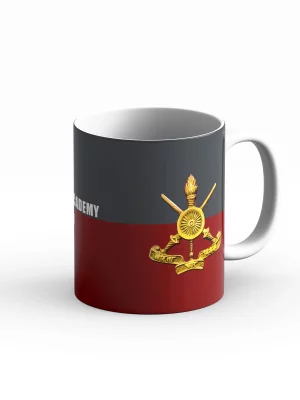

Speaking ahead of the conclusion of the two-week multinational exercise on October 12, Singh said the Indian Air Force had been unable to get close to the American fifth-generation fighter despite discussions about the possibility of India acquiring the aircraft. His remarks came during a 45-minute briefing in Jodhpur attended by senior air force leaders from around the world.
“I was telling the PACAF commander that your people don’t let us come anywhere close to the F-35, and you talk about selling it to us. There is no offer from the US for us to buy the F-35,” Singh said in response to a question about whether Washington had formally offered the aircraft to India.
Seated beside the IAF chief was General Kevin B Schneider, commander of US Pacific Air Forces (PACAF), along with other senior officials. Singh raised the issue repeatedly during the interaction, drawing attention to the restrictions Indian pilots faced in accessing the aircraft during the exercise.
Last year, US President Donald Trump announced that Washington was paving the way for India to acquire F-35 fighters. However, Singh’s remarks indicated that no formal offer had been made to New Delhi, despite the public discussion surrounding a potential acquisition.
Schneider, responding to questions about the apparent contradiction between joint combat exercises and restricted access to advanced US military technology, said access was governed by security protocols and classification requirements.
“There are programme-level security classification guides that determine…what we’re able to share, when we share it, as well as how we protect it,” Schneider said.
The PACAF commander explained that decisions concerning access to sensitive systems were not solely within his authority. Such policies could evolve, he added, but many decisions were taken centrally to ensure that classified technologies and capabilities remained protected.
Singh subsequently clarified that his comments were made in a light-hearted spirit and should be understood as friendly banter between defence partners. He compared the relationship between the two air forces to that of an extended family, in which cooperation coexists with boundaries over the sharing of sensitive information.
“It’s like one family, an extended family, and an extended neighbourhood. You have your own boundaries for what you share and what you don’t share. So that continues everywhere,” Singh said.
Explaining his remarks further, the IAF chief said his comment about getting closer to the F-35 was intended as a friendly suggestion to strengthen cooperation. The exchange underscored the balance between expanding military engagement and protecting advanced defence technologies.
Exercise Tarang Shakti marked the first time F-35 stealth fighters participated in an exercise in India. The United States deployed six of the aircraft to Jodhpur for the multinational drills, providing an opportunity for participating air forces to observe their presence during the exercise, although access to the aircraft remained restricted.
The episode also brought renewed attention to India’s choices regarding the development and acquisition of fifth-generation combat aircraft. Russia has been promoting its Su-57 fighter, but India has not yet made a decision on the aircraft.
New Delhi is pursuing its own fifth-generation stealth fighter under the Advanced Medium Combat Aircraft (AMCA) programme, which is intended to develop indigenous capabilities in advanced combat aviation technology.
Defence Minister Rajnath Singh highlighted the importance of the programme during the event, stating, “Looking ahead, the AMCA programme is an important step towards mastering fifth-generation stealth fighter technology.”
The AMCA initiative reflects India’s effort to strengthen domestic aerospace capabilities and reduce dependence on foreign suppliers for advanced combat aircraft technology. While the F-35 episode highlighted the restrictions associated with access to sensitive foreign platforms, India’s indigenous programme remains central to its long-term ambition of developing advanced stealth fighter capabilities.
Air Chief Marshal AP Singh, who is due to retire on October 31, made the remarks as the multinational exercise brought together air forces from across the world. IAF chief-designate Air Marshal Ashutosh Dixit was also among the senior officers present at the briefing.