

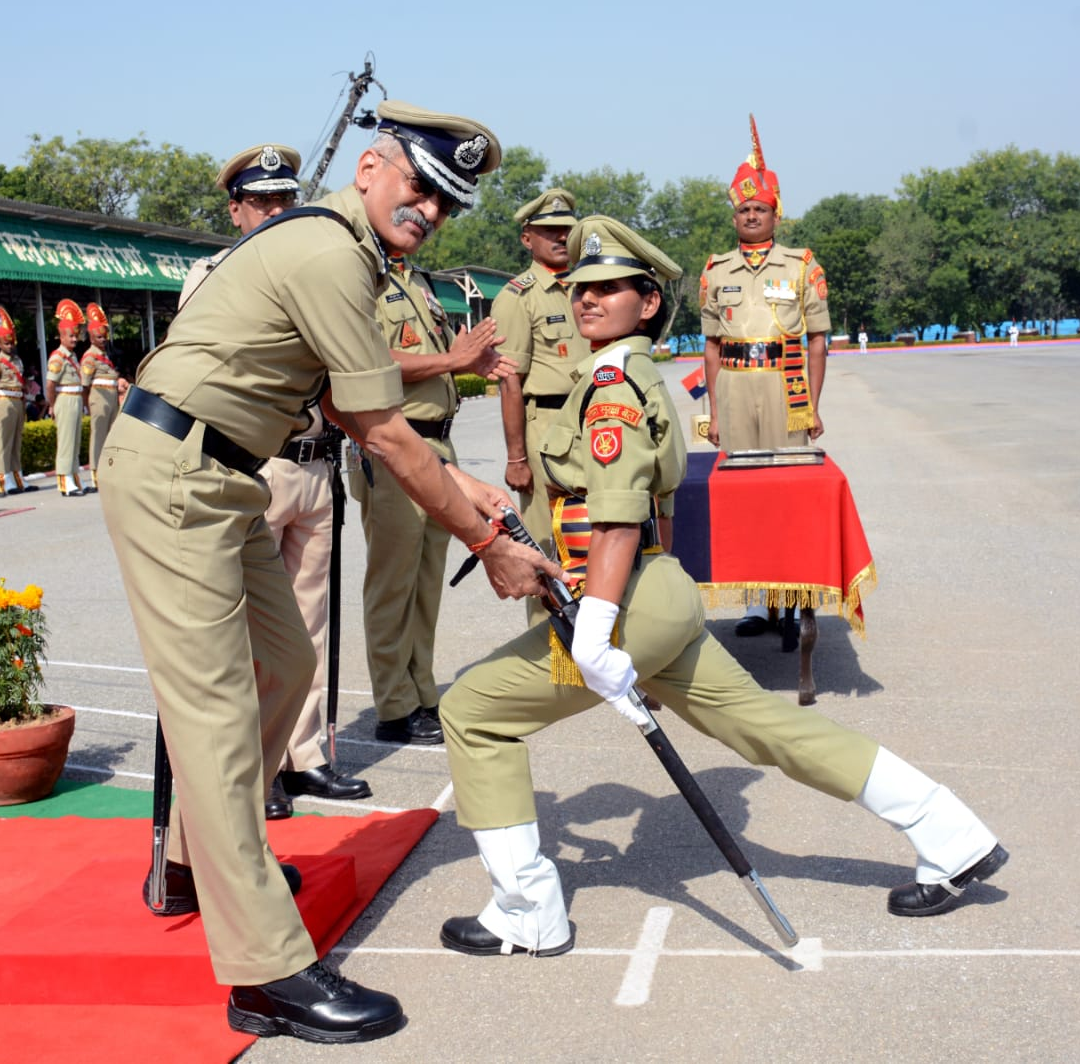
The Central Armed Police Forces (General Administration) Act, 2026 came into force on 8 October 2026. A Ministry of Home Affairs notification appointed that date as the day on which its provisions take effect, placing senior command posts in five forces on a statutory footing and locking in fixed shares for Indian Police Service officers on deputation.




The notification, issued under sub-section (2) of Section 1 of the Act (9 of 2026), states that the Central Government appoints 8 October 2026 as the date on which the provisions of the Act shall come into force. The law covers the Central Reserve Police Force, Border Security Force, Central Industrial Security Force, Indo-Tibetan Border Police and Sashastra Seema Bal. It provides a common framework for recruitment, promotion, deputation and other conditions of service of Group-A General Duty officers, replacing a patchwork of force-specific rules and executive orders.
Statutory quotas
Under the Act, senior posts are reserved for IPS officers on deputation in these proportions:
- 50 per cent of Inspector General posts
- At least 67 per cent of Additional Director General posts
- All Special Director General and Director General posts
These appointments were earlier governed by executive orders. The Act also empowers the Centre to prescribe the method and mode of recruitment, including deputation, and contains an overriding-effect clause. Reporting on the legislation notes that the Centre’s rule-making power is framed to operate notwithstanding existing laws, court orders or government orders.
Legislative timeline
The Bill was introduced in the Rajya Sabha on 27 March 2026, passed by the Rajya Sabha on 1 April and by the Lok Sabha on 2 April. President Droupadi Murmu gave assent on 9 April 2026. The government has said the absence of an umbrella law had produced fragmented service rules, litigation and administrative difficulty, and that a common statute was required because the forces operate under a strict command structure for border security and internal security duties.
The Supreme Court backdrop
Enforcement comes while the Supreme Court is hearing challenges to the Act, alongside contempt and implementation proceedings arising from its May 2025 judgment in Sanjay Prakash and Others versus Union of India.
In that judgment the Court held that the CAPFs are to be treated as Organised Group-A Services for cadre purposes, and directed that posts earmarked for deputation up to the Senior Administrative Grade be progressively reduced within an outer limit of two years. It also ordered a cadre review. The Court acknowledged the role of IPS officers in coordinating CAPF deployments with state administrations, while recording that delayed promotions of cadre officers can affect morale. The Centre’s review petition was dismissed in October 2025.
Cadre officers have argued that the 2026 Act continues the restriction the Court sought to ease, and have sought implementation of the May 2025 direction. The Centre has told the Court that appointments of Group-A General Duty officers are now governed by the Act, and that the 2025 judgment did not discontinue deputation altogether.
Union Home Secretary Govind Mohan informed the Court that 46 IPS officers were deputed to the five forces after the May 2025 direction, and that those deputations were in accordance with law. A break-up reported in coverage of the dispute is 13 in the BSF, 11 in the CISF, nine in the CRPF, seven in the SSB and six in the ITBP, largely at Deputy Inspector General and Inspector General ranks. The government has said deputations were made on requisition by the force chiefs, and that IPS officers remain necessary for Centre–state coordination given the national and inter-state role of the CAPFs.
Cadre officers, including retired officers, contend that the quotas create a ceiling on promotion for officers who spend their careers in the forces, and that the statute discriminates against a cadre that litigated the organised-service question for about a decade.
Contempt and implementation proceedings have been clubbed with the challenge to the Act. At the government’s request, the matters are listed for hearing on 18 November 2026. The Court will then have before it the May 2025 judgment, the ongoing cadre review, and the statutory quotas now in force.