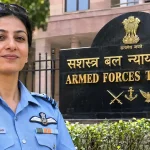

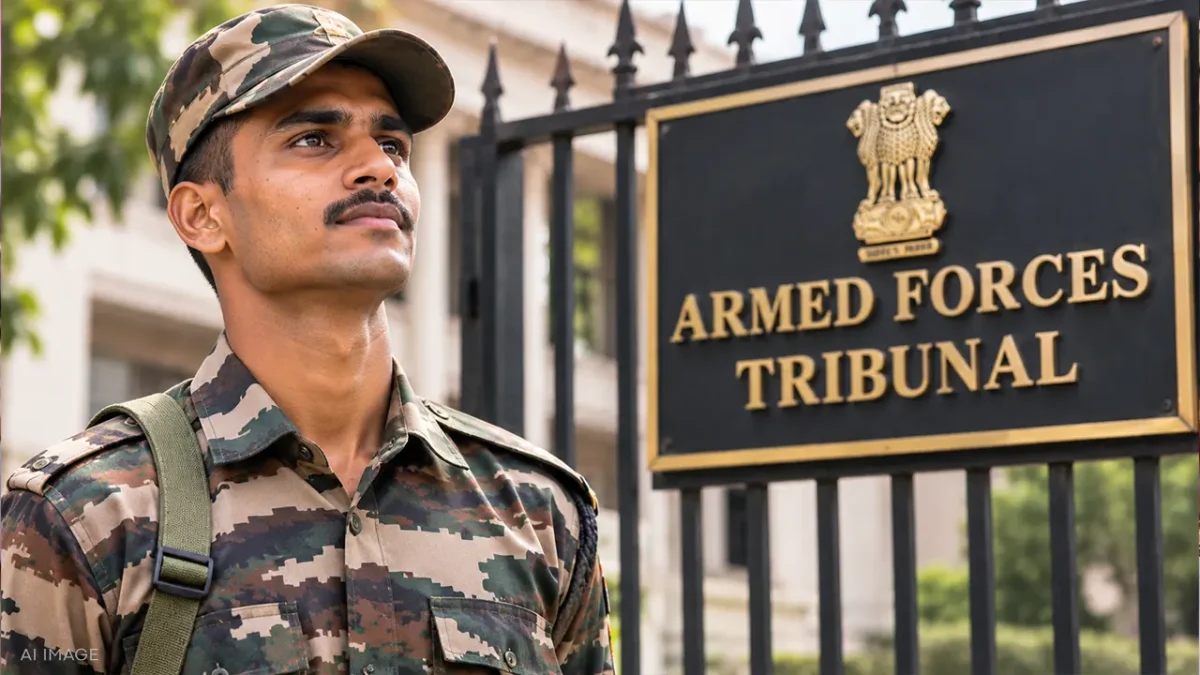
The Armed Forces Tribunal (AFT) has set aside the dismissal of an Indian Army recruit who was removed from service for allegedly concealing criminal cases registered against him when he was a minor. The tribunal ruled that criminal proceedings arising during juvenility could not be used to disqualify him from military service under the applicable juvenile justice law.
In its order dated November 2, 2026, the tribunal directed the Indian Army to reinstate the recruit and allow him to complete his military training. It also provided for consequential financial and pensionary benefits if actual reinstatement was not possible under applicable service rules.
The case involved Azim, a resident of Pauri Garhwal in Uttarakhand, who joined the Indian Army’s Parachute Regiment on March 24, 2017, through the Army Recruiting Office in Lansdowne.
During the recruitment process, Azim had declared that he had never been arrested and that no criminal complaint or report had been registered against him before the police or a magistrate.
However, subsequent character verification revealed that two criminal cases had been registered against him. One involved allegations of theft and dishonestly receiving stolen property under Sections 379 and 411 of the Indian Penal Code. The case dated back to 2007, when Azim was approximately 15 years old.
Police records also indicated that he had been arrested along with other accused persons on February 3, 2008, and that a chargesheet had been filed before the chief judicial magistrate.
The second case involved allegations under Sections 147, 323, 504 and 506 of the IPC, relating to rioting, voluntarily causing hurt, intentional insult and criminal intimidation. The High Court had quashed this case on August 10, 2016.
Following the verification report, Army authorities concluded that Azim had suppressed material information about his criminal antecedents during enrolment.
A summary court martial was conducted, and he was dismissed from military service on September 5, 2018. His subsequent representation seeking reinstatement was rejected by the competent authority on September 9, 2019, prompting him to approach the Armed Forces Tribunal.
Before the tribunal, Azim argued that he was a juvenile when the criminal proceedings arose and that the law protected him against subsequent disqualification on account of those proceedings. He also submitted that the cases had not resulted in any conviction.
The Army, meanwhile, maintained that personnel serving in uniform were expected to disclose their criminal antecedents and that the recruit had deliberately withheld important information concerning his arrest and involvement in criminal cases.
After examining the arguments, the tribunal considered the protections available under Sections 19 and 21 of the Juvenile Justice (Care and Protection of Children) Act, 2000.
The tribunal observed that the law was intended to prevent individuals from suffering lasting disqualifications because of offences committed during childhood. It held that the statutory protection also applied to the disclosure of such proceedings during recruitment.
The tribunal reasoned that even a conviction for an offence committed as a juvenile would not ordinarily result in employment-related disqualification under the applicable law. In Azim’s case, the proceedings had not resulted in a conviction, making his dismissal for non-disclosure legally unsustainable.
Accordingly, the tribunal quashed the disciplinary action and directed Army authorities to take Azim back into service and permit him to undergo the remaining military training.
The tribunal further directed that if actual reinstatement was not possible because of medical fitness requirements or other applicable service regulations, Azim should be treated as notionally reinstated and granted consequential pay, allowances and admissible pensionary benefits.
The ruling highlights the legal protections available to individuals who faced criminal proceedings as juveniles and their application to recruitment and disciplinary decisions in the Indian Armed Forces.